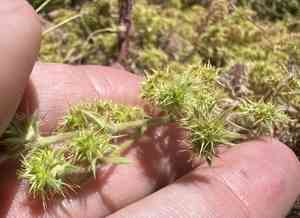
Narrow-leaf spineflower (Chorizanthe angustifolia)
Also known as: Narrowleaf Spineflower
The Narrow-leaf spineflower (Chorizanthe leptotheca) is true to its name, featuring delicate, linear leaves and small, pink to white flowers encased in spine-tipped bracts, giving it a distinctive, spiky appearance. This annual herb is native exclusively to California and is considered a species of concern, indicating it faces potential threats to its habitat and survival.
In This Article
Attributes of Narrow-leaf spineflower
Lifespan
Annual
Plant Type
Herb
Plant Height
10 to 30 cm
Spread
Not applicable, forms clumps or mats
Leaf Color
Green
Flower Size
1 to 2 mm
Flower Color
White to pinkish
Images of Narrow-leaf spineflower
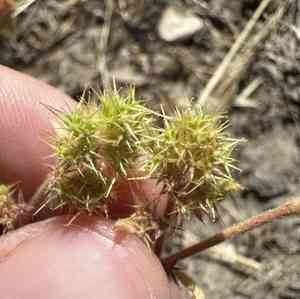

Quickly Identify Narrow-leaf spineflower
1
To identify Chorizanthe angustifolia, look for narrow, spine-tipped bracts surrounding the small, white to pinkish flowers. The plants are often low-growing and form dense mats or clumps.
Scientific Classification of Narrow-leaf spineflower
Phylum
Vascular plants
Class
Dicotyledons
Order
Caryophyllales
Family
Buckwheat
Genus
Spineflowers
Species
Narrow-leaf spineflower
Planting and Growing of Narrow-leaf spineflower
Care Difficulty
Moderate
Watering Schedule
Every 2 days
Sunlight Requirements
Full sun
Sunshine Duration
4-8 hours
Ideal Temperature
65-75℉
Soil Type
Potting Mix, Peat Mix
Soil pH
6.5-7.5
Fertilizer Type
Balanced
Pruning Season
Spring, Summer
Pruning Area
Branches, Leaves
Pruning Frequency
Once a year
Repotting Season
Spring
Pot Type
Plastic, Ceramic
 How to Water Narrow-leaf spineflower?
Chorizanthe angustifolia requires a moderate amount of water. Each watering session should provide approximately 200 milliliters of water. Make sure the water reaches the root zone without leaving the soil waterlogged. The general rule is to allow the top inch of soil to dry out between waterings to prevent root rot.
What are the symptoms of an underwatered Narrow-leaf spineflower?
›
What should I do if my Narrow-leaf spineflower is not getting enough water?
›
What are the symptoms of an overwatered Narrow-leaf spineflower?
›
How to save an overwatered Narrow-leaf spineflower?
›
 What Are the Sunlight Requirements for Narrow-leaf spineflower?
Chorizanthe angustifolia thrives in full sun conditions, ideally receiving 8 to 10 hours of sunlight daily. Adequate light ensures robust growth and frequent blooming.
What is the ideal light condition for Chorizanthe angustifolia?
›
How can you achieve the ideal lighting for Chorizanthe angustifolia?
›
What are the benefits of providing ideal light conditions?
›
 What Is the Ideal Temperature Range for Narrow-leaf spineflower?
The ideal temperature range for Chorizanthe angustifolia is between 65°F and 75°F. This range provides optimal conditions for growth and ensures that the plant's physiological processes, such as photosynthesis and respiration, occur efficiently. Maintaining this temperature range helps in sustaining healthy foliage and vibrant flowering.
 What Soil is Best for Narrow-leaf spineflower?
Chorizanthe angustifolia thrives in well-drained soil, as it helps prevent root rot and fungal diseases by ensuring excess water doesn't linger around the roots. This optimal drainage supports healthy growth and vigor. This plant naturally adapts to nutrient-poor soils, ensuring it does not get outcompeted by other plants in richer soils. By cultivating it in poor soil, you'll allow it to thrive without excessive fertilization. Chorizanthe angustifolia prefers soil with low organic matter. This mirrors its native habitat conditions, making it less prone to pests and diseases often attracted to richer organic soils.
 How to Fertilize Narrow-leaf spineflower?
For Chorizanthe angustifolia, a balanced liquid fertilizer should be diluted to half its recommended strength. This delicate plant doesn't require heavy feeding, so applying 50 ml of solution per plant is generally adequate.
 How to Prune Narrow-leaf spineflower?
Begin by identifying dead, diseased, or damaged stems and cut them back to healthy tissue. Focus on maintaining a rounded, natural shape, which enhances aesthetic appeal while supporting the plant's structural integrity. Always cut just above a leaf node to encourage new growth. Thinning crowded areas enhances light penetration and air circulation, vital for preventing fungal diseases. Selectively remove excess branches, focusing on inward-growing stems that can cause tangling and poor ventilation. This approach fosters a healthier microenvironment around the plant.
More About Pruning Techniques→
 How to Propagate Narrow-leaf spineflower plant?
1
Select ripe, healthy seeds from Chorizanthe angustifolia plants. It's crucial to ensure seeds are viable by performing a float test, where viable seeds will sink in water within a few hours.
2
Sow seeds thinly on the surface of a pre-moistened sterile potting mix. Cover the seeds lightly with a thin layer of the mix. Ensure even spacing to provide each seedling enough room to grow.
3
Water gently to avoid displacing seeds. Maintain consistent moisture levels but avoid overwatering. Good drainage is critical to prevent fungal diseases like damping off.
 How to Repot Narrow-leaf spineflower plant?
1
Chorizanthe angustifolia should be repotted when you observe significant root-bound conditions, indicated by roots growing out of the drainage holes. Another signal can be slowed growth or frequent wilting, even with regular watering. These are clear signs that your plant needs a larger space to thrive, particularly in late spring or early summer.
2
Selecting the right pot for Chorizanthe angustifolia involves ensuring it has adequate drainage holes to prevent waterlogging. Opt for a pot that's only slightly larger than the current one, which helps in managing moisture levels efficiently and encourages natural root growth without overwhelming the plant.
3
For Chorizanthe angustifolia, use a well-draining sandy mix. This soil type ensures proper aeration and prevents root rot by allowing excess water to escape. The sandy texture mimics the plant's natural habitat, providing stability and promoting healthy, vigorous growth.
Learn More About Narrow-leaf spineflower Diseases
Bacterial Leaf Spot
Bacterial Soft Rot
Bacterial Wilt
Chemical Injury
Crown Gall
Cyst Nematode
Damping-off
Drought Stress
Fusarium Wilt
Gray Mold
Leaf Spot
Mosaic
Nutrient Deficiency
Nutrient Toxicity
Powdery Mildew
Root Rot
Root-knot Nematode
Rusts
Sooty Mold
Spider Mites
Temperature Stress
Thrips Damage
White Mold



