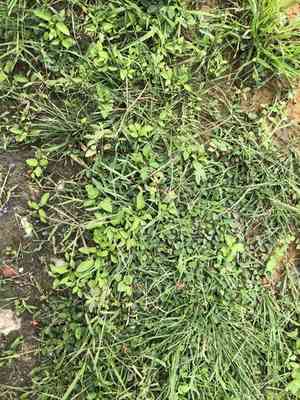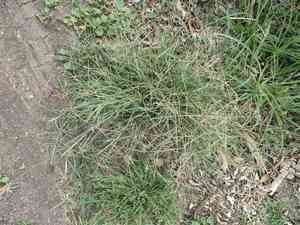
Spreading windmill grass(Chloris divaricata)

Spreading windmill grass (Chloris divaricata)

Also known as: Slender chloris, Australian rhodes-grass

Spreading windmill grass (Chloris truncata) is a hardy perennial known for its adaptability and unique appearance. It thrives in sunny, open environments and can grow in a range of soil types. Some key features include:

- **Seed Heads**: The grass is easily recognizable by its windmill-like seed heads with multiple spikes radiating from a central point, giving it a windswept look.
- **Leaves**: It has long, slender leaves that enhance its distinctive form.

**Environmental Preferences**:
- **Light**: Prefers full sunlight.
- **Soil Versatility**: Can grow in various soil conditions, from sandy to clay soils.
- **Resilience**: Its ability to withstand different environments contributes to its wide distribution and ecological success.

This grass is commonly found in disturbed sites, along roadsides, and in open fields.

Attributes of Spreading windmill grass

Lifespan
Perennial
Plant Type
Grass
Plant Height
Chloris divaricata typically reaches a height of 30 to 90 cm when mature.
Spread
The crown diameter is typically around 30 to 60 cm.
Leaf Color
Green
Flower Size
The flowers are small, generally less than 1 cm in diameter.
Flower Color
Greenish to purplish

ForwardPlant - Identify plants with a snap

Identify and diagnose plants, get toxicity alerts, and explore safety guides for all types of fungi.

Try for Free

Images of Spreading windmill grass

Spreading windmill grass(Chloris divaricata)

Quickly Identify Spreading windmill grass

1
Chloris divaricata can be identified by its characteristic inflorescence, which consists of multiple spikes arranged in a whorl at the top of the stem. The plant tends to form clumps and has a spreading habit.

Scientific Classification of Spreading windmill grass

Phylum
Vascular plants
Class
Monocotyledons
Order
Poales
Family
Grass
Genus
Windmill grasses
Species
Spreading windmill grass

Planting and Growing of Spreading windmill grass

Care Difficulty
Easy
Watering Schedule
Every 2 days
Sunlight Requirements
Full sun
Sunshine Duration
6-10 hours
Ideal Temperature
65-75℉
Soil Type
Potting Mix, Peat Mix
Soil pH
6.5-7.5
Fertilizer Type
Balanced
Pruning Season
Spring, Summer
Pruning Area
Branches, Leaves
Pruning Frequency
2 times a year
Repotting Season
Spring
Pot Type
Plastic, Ceramic

water icon How to Water Spreading windmill grass?

For Chloris divaricata, the watering amount should be sufficient to moisten the root zone but not to the point of waterlogging. Aim for about 300 milliliters per watering. This allows the soil to absorb water without causing excess moisture, which could lead to root rot.
What are the symptoms of an underwatered Spreading windmill grass?
What should I do if my Spreading windmill grass is not getting enough water?
What are the symptoms of an overwatered Spreading windmill grass?
How to save an overwatered Spreading windmill grass?

sunlight icon What Are the Sunlight Requirements for Spreading windmill grass?

Sunlight Requirements: Full sun, Partial sun
Duration of light: 4-6 hours daily
Partial to full sun exposure is ideal for Chloris divaricata, as it maximizes photosynthesis for optimal growth. This light range supports healthy foliage and encourages flowering, improving its aesthetic appeal in garden settings.
What is the best sunlight for Chloris divaricata?
How can you achieve ideal sunlight for Chloris divaricata?
What benefits does Chloris divaricata gain from ideal sunlight?

temperature icon What Is the Ideal Temperature Range for Spreading windmill grass?

Ideal Temperature: 65 ~ 75℉
The ideal temperature range for Chloris divaricata growth is between 65°F and 75°F. During this range, the plant exhibits optimal metabolic functioning and growth patterns. Ensuring the temperature remains within this range helps the plant establish a robust root system and facilitates efficient photosynthesis.

soil icon What Soil is Best for Spreading windmill grass?

Soil type: Sandy loam, Loam
Soil PH: 6.5 ~ 7.5
Chloris divaricata thrives in nutrient-rich soils that provide the necessary minerals and elements for optimal growth. Enriching the soil with organic compost can significantly boost plant health and encourage vibrant foliage. The plant requires well-draining soil to prevent waterlogging and root rot. Ensuring proper drainage facilitates oxygen flow to the roots, promoting robust root development and reducing disease susceptibility. While drainage is crucial, maintaining adequate moisture levels is equally important. Sandy loam offers the perfect blend, holding sufficient moisture without retaining excess water, thus supporting consistent growth and resilience.

fertilize icon How to Fertilize Spreading windmill grass?

Fertilizer type: Balanced
Chloris divaricata appreciates a moderate amount of nutrients. Use approximately 1 teaspoon of a balanced liquid fertilizer diluted to half strength for every liter of water. For slow-release granules, apply about 10 grams per square meter. Adjust amounts based on plant size and soil fertility.

prune icon How to Prune Spreading windmill grass?

Pruning Time: Spring, Summer, Autumn
Begin by sanitizing your pruning shears to prevent the spread of disease. Identify and remove any dead or damaged stems. Aim to maintain a naturally open shape to promote air circulation. Trim back leggy branches to encourage new growth and maintain an even shape throughout the plant. More About Pruning Techniques

propagate icon How to Propagate Spreading windmill grass plant?

Propagate Time: Spring, Early Spring
1
Soak the seeds in warm water for 24 hours before sowing. This softens the seed coat, improving germination rates by allowing moisture to penetrate more easily.
2
Use sharp scissors to cut a healthy stem about 4-6 inches long. Make sure each cutting has at least two nodes, as these are necessary for rooting.
3
Use a well-draining potting mix for planting. Bury the seeds or cuttings at a depth recommended for their size and keep the soil consistently moist.
More About Propagating Techniques

repot icon How to Repot Spreading windmill grass plant?

Repotting frequency: Every 1-2 years
1
Chloris divaricata shows signs of needing repotting when roots start to grow out of the pot's drainage holes or when growth appears stunted. Ideally, repot in spring or summer when the plant is actively growing.
2
Select a pot that is slightly larger than the current one, with adequate drainage holes. A ceramic or clay pot is ideal as it provides stability and allows soil to dry properly, preventing root rot and allowing room for growth.
3
Opt for a well-draining potting mix, possibly containing sand or perlite. This type of soil ensures proper aeration and drainage, which are crucial for Chloris divaricata, as it prevents waterlogging and encourages root health.

ForwardPlant - Identify plants with a snap

Find the best spots for them to optimize their health, simply using your phone.

Try for Free