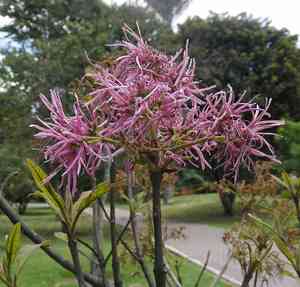
Fringetrees (Chionanthus) (Chionanthus)
Also known as: White Fringe Tree, Old Man's Beard
Fringetrees are small trees or shrubs recognized for their distinctive, fragrant white flowers that resemble delicate fringe. They are primarily deciduous and feature glossy green leaves. These plants are mainly native to eastern North America and certain regions of Asia, rather than tropical or subtropical areas.
In This Article
Attributes of Fringetrees (Chionanthus)
Lifespan
Perennial
Plant Height
10 to 20 feet (3 to 6 meters)
Spread
10 to 15 feet (3 to 4.5 meters)
Leaf Color
Green
Flower Size
0.5 to 1 inch (1.3 to 2.5 cm)
Flower Color
White
Images of Fringetrees (Chionanthus)
Quickly Identify Fringetrees (Chionanthus)
1
To identify Chionanthus, look for its distinctive fringed white flowers that bloom in late spring, opposite leaves that are simple and ovate, and dark blue to black fleshy drupes that appear in the fall.
Scientific Classification of Fringetrees (Chionanthus)
Phylum
Magnoliophyta
Class
Magnoliopsida
Order
Lamiales
Family
Oleaceae
Genus
Chionanthus
Planting and Growing of Fringetrees (Chionanthus)
Care Difficulty
Moderate
Watering Schedule
Every 4 days
Sunlight Requirements
Full sun
Sunshine Duration
4-8 hours
Ideal Temperature
60-75℉
Soil Type
Potting Mix, Peat Mix
Soil pH
6.5-7.5
Fertilizer Type
Balanced
Pruning Season
Spring, Summer
Pruning Area
Branches, Leaves
Pruning Frequency
2 times a year
Repotting Season
Spring
Pot Type
Plastic, Ceramic
 How to Water Fringetrees (Chionanthus)?
Chionanthus typically requires about 500 ml of water per session. It’s important to water deeply, ensuring the soil is moist but not waterlogged. This allows the roots to absorb necessary moisture without drowning them. Monitor the soil moisture level regularly to maintain balance.
What are the symptoms of an underwatered Fringetrees (Chionanthus)?
›
What should I do if my Fringetrees (Chionanthus) is not getting enough water?
›
What are the symptoms of an overwatered Fringetrees (Chionanthus)?
›
How to save an overwatered Fringetrees (Chionanthus)?
›
 What Are the Sunlight Requirements for Fringetrees (Chionanthus)?
Chionanthus prefers partial to full sun exposure, which promotes lush growth and vibrant blooms while preventing stress from extreme light conditions.
Optimal Sunlight Quest
›
Solutions for Ideal Lighting
›
Benefits of Ideal Lighting
›
 What Is the Ideal Temperature Range for Fringetrees (Chionanthus)?
Chionanthus plants thrive best in temperatures ranging from 60°F to 75°F. This range provides the right thermal environment that supports optimal metabolic processes such as photosynthesis and nutrient uptake which are essential for healthy growth.
 What Soil is Best for Fringetrees (Chionanthus)?
Chionanthus thrives in well-draining soil. Proper drainage prevents root rot, ensuring the roots receive sufficient oxygen and reducing the risks of overwatering. A soil with moderate fertility is ideal for Chionanthus. It provides essential nutrients without promoting excessive, weak growth, fostering a healthier plant development. While drainage is important, the soil should also retain enough moisture to keep the roots hydrated, aiding in consistent growth throughout the growing season.
 How to Fertilize Fringetrees (Chionanthus)?
When fertilizing Chionanthus, it's important to use a balanced formula, preferably an N-P-K ratio like 10-10-10. Each application should provide around 1/4 to 1/2 pound of fertilizer per plant, evenly spread around the base to ensure thorough soil integration.
 How to Prune Fringetrees (Chionanthus)?
Begin by assessing the shape of your Chionanthus tree. Early spring is ideal for removing any dead, damaged, or inward-growing branches. Focus on shaping the young plant and ensuring that it has a strong central leader. This foundation helps prevent future overcrowding and ensures uniform growth. After the flowering period, it's time for selective pruning. Remove spent flower clusters and cross-branching to maintain the aesthetic appeal. This step encourages new growth and ensures the plant's energy is directed towards forming strong new branches rather than producing seeds.
 How to Propagate Fringetrees (Chionanthus) plant?
1
Fill the seed tray with a quality seed-starting mix that is light and well-drained. Moisten the mix before sowing the seeds. This ensures that seeds have immediate access to the moisture required for germination.
2
Select healthy, disease-free stems and cut just below a node. Cuttings should be about 4-6 inches long. Remove lower leaves and dip the cut end in rooting hormone to promote root development.
3
For layering, choose a low-growing stem and gently bend it to the ground. Make a small cut on the underside and bury it in the soil while the tip remains above the ground. Secure with a pin to ensure contact with the soil.
 How to Repot Fringetrees (Chionanthus) plant?
1
Chionanthus needs repotting when you notice that the roots start to circle around the pot's bottom or emerge from drainage holes. Additionally, a decline in growth or water retention issues can signal that it’s time for a new pot. Early spring or summer is the best time to repot, as the plant is entering its active growth phase.
2
Select a pot that is 2-3 inches wider in diameter than the current one. A slightly larger space allows the roots to spread comfortably, promoting healthier and more vigorous growth. Ensure it has ample drainage holes to prevent waterlogging, which can lead to root rot.
3
A well-draining soil mix is crucial for Chionanthus. Choose a loamy mix with added perlite to enhance aeration and drainage. This type of soil helps prevent water retention, which can suffocate the roots, while also providing sufficient nutrients for the plant's ongoing development.

