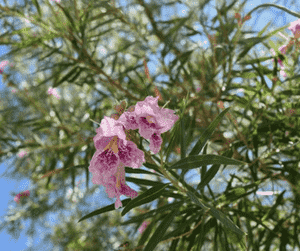
Desert willow (Chilopsis linearis)
Also known as: Willowleaf catalpa
The Desert willow, scientifically known as *Chilopsis linearis*, isn't a true willow but resembles one in appearance. It is part of the catalpa family and is native to the southwestern regions of North America, commonly found near streambeds and dry creeks. The genus name *Chilopsis* originates from the Greek words "cheilos" (lip) and "opsis" (resembling), as the flowers are thought to resemble lips.
In This Article
Attributes of Desert willow
Lifespan
Perennial
Plant Type
Tree, Shrub
Plant Height
4 m to 6 m
Spread
3 m to 6 m
Leaf Color
Green
Flower Size
2.5 cm to 4 cm
Flower Color
Pink Purple White Yellow Red
Images of Desert willow
Quickly Identify Desert willow
1
Slender, willow-like leaves 4-12 inches long, not a true willow.
2
Delicate trumpet-shaped flowers in shades of pink, lavender, or white.
3
Narrow, elongated seed pod 6-12 inches long with winged seeds for wind dispersal.
4
Narrow lanceolate leaves 4-6 inches long, glossy green with parallel veins.
5
Smooth, slender stem 0.1-0.2 inches in diameter, frequent branching for airy form.
Scientific Classification of Desert willow
Phylum
Vascular plants
Class
Dicotyledons
Order
Lamiales
Family
Bignonia
Genus
Desert willow
Species
Desert willow
Planting and Growing of Desert willow
Care Difficulty
Easy
Watering Schedule
Every day
Sunlight Requirements
Full sun
Sunshine Duration
6-8 hours
Ideal Temperature
65-85℉
Soil Type
Potting Mix, Peat Mix
Soil pH
6.5-7.5
Fertilizer Type
Balanced
Pruning Season
Spring, Summer
Pruning Area
Branches, Leaves
Pruning Frequency
Once a year
Repotting Season
Spring
Pot Type
Ceramic, Plastic
 How to Water Desert willow?
Chilopsis linearis, commonly known as Desert Willow, is a drought-tolerant plant. When watering, it's important to ensure the soil is thoroughly moistened but not waterlogged. A typical watering will require about 500 ml of water, allowing the soil to absorb it gradually. This ensures the water reaches deeper roots without causing saturation which could lead to root rot.
More About Watering Techniques→
What are the symptoms of an underwatered Desert willow?
›
What should I do if my Desert willow is not getting enough water?
›
What are the symptoms of an overwatered Desert willow?
›
How to save an overwatered Desert willow?
›
 What Are the Sunlight Requirements for Desert willow?
Full sun exposure is ideal for Chilopsis linearis as it maximizes photosynthesis, promoting healthy growth and beautiful flowering. This exposure allows the plant to develop vibrant foliage and produce more blooms, enhancing its ornamental value.
More About Sunlight Requirements Techniques→
How much sunlight does Chilopsis linearis need?
›
What are the solutions to achieve ideal sunlight conditions?
›
What benefits does Chilopsis linearis gain from ideal lighting?
›
 What Is the Ideal Temperature Range for Desert willow?
The ideal temperature range for Chilopsis linearis, also known as Desert Willow, is between 65°F and 85°F. This range provides a stable environment that supports optimal growth and development of the plant, ensuring vibrant flowering and healthy foliage. Within this range, metabolic processes occur efficiently, encouraging resilience against pests and diseases.
 What Soil is Best for Desert willow?
Chilopsis linearis thrives in well-drained soil to prevent root rot, promoting healthy growth and vibrant blooms by ensuring the roots receive adequate oxygen. This plant doesn't require rich soil; it can prosper in poorer conditions, making it suitable for less fertile sandy or rocky environments and reducing maintenance efforts. While drought-tolerant, Chilopsis linearis appreciates occasional watering during dry spells to support new growth and flower production, increasing its ornamental appeal.
More About Soil→
 How to Fertilize Desert willow?
For Chilopsis linearis, a modest fertilization plan works best. During the growing season, use a balanced liquid fertilizer diluted at half strength. This should be around 1 tablespoon per gallon of water, applied every other week. Avoid over-fertilization, as this can harm flowering.
More About Fertilizing Techniques→
 How to Prune Desert willow?
Start by removing any dead, damaged, or diseased branches. Use clean, sharp pruning shears to make clean cuts just above a healthy bud or branch node. Next, focus on shaping the Chilopsis linearis by pruning back longer, unruly branches to promote a bushier growth. Always try to maintain a balanced form to ensure even growth distribution. To encourage prolific blooming, trim back previous year's growth to a few buds above where you want new flowers to appear. This pruning should be done in early spring just before new growth begins. By understanding the plant's growth habit, you can strategically prune to ensure maximum floral display during the blooming season.
More About Pruning Techniques→
 How to Propagate Desert willow plant?
1
Collect seeds from mature pods in autumn and store them in a cool, dry place. Before sowing, soak seeds in water for 24 hours to enhance germination.
2
Select healthy, semi-hardwood cuttings approximately 6 inches long. Remove leaves from the lower half to reduce transpiration.
3
Dip the cut end of the cutting into a rooting hormone and plant it in a well-draining soil mix. Keep the cuttings moist and in indirect sunlight.
 How to Repot Desert willow plant?
1
Repot Chilopsis linearis when roots outgrow their current container, showing signs like roots poking out of drainage holes or slowed growth. This usually happens every 2-3 years. Choose a time before active growth in spring or summer. Regularly check for signs of overcrowded roots to prevent stunting.
2
Select a pot that is 1-2 inches larger in diameter than the current one, ensuring it has good drainage holes. This prevents waterlogged soil conditions, which can lead to root rot. A well-sized pot promotes healthy root spread and proper plant development by providing ample space for growth.
3
Opt for a well-draining sandy loam soil. This type allows roots to breathe and prevents waterlogging, which could cause root rot. The sandy texture helps maintain proper aeration and drainage, essential for the health and stability of desert-adapted Chilopsis linearis.



