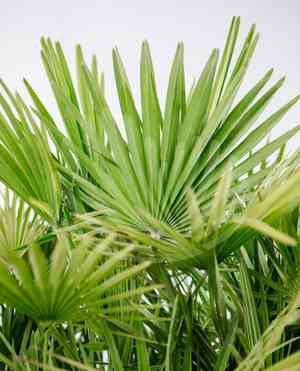
European fan palm (Chamaerops humilis)
Also known as: Mediterranean dwarf palm, Palmetto
The European fan palm (Chamaerops humilis) is a unique palm species indigenous to Europe. It thrives at latitudes more northerly than any other palm species native to the continent. This palm is also commercially valuable for crafting woven products such as baskets.
In This Article
Attributes of European fan palm
Lifespan
Perennial
Plant Type
Palm
Plant Height
1.8 m to 4.5 m
Spread
1.8 m to 6 m
Leaf Color
Green Blue Gray Silver
Flower Size
2.5 cm
Flower Color
Yellow Cream Gold
Images of European fan palm
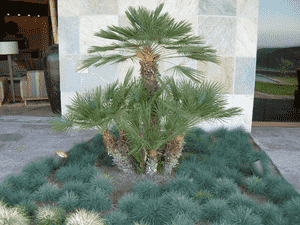
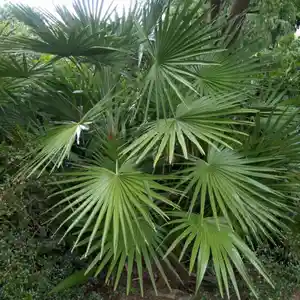
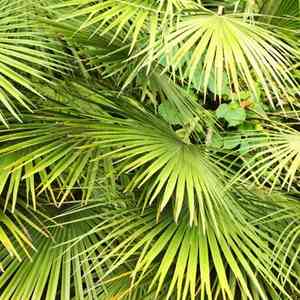
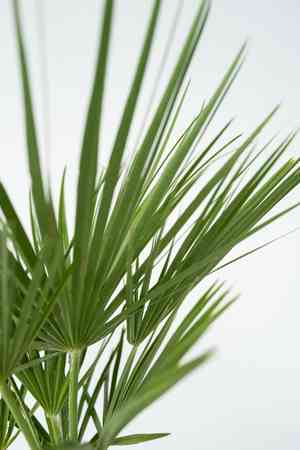
Quickly Identify European fan palm
1
Large, palmate-compound leaves with 10-20 finger-like leaflets and distinctive silver-green coloration.
2
Robust trunk with fibrous, shaggy bark covered in old leaf bases, creating a rough, hirsute texture.
3
Bright yellow flowers, inconspicuous but dense on branched inflorescences, blooming in early to mid-spring.
4
Clusters of fleshy drupes resembling berries, varying in color and texture, ripening to 0.5-1 inch (1.3-2.5 cm).
5
Cold-resistant, shrubby growth habit adaptable to full sunlight, reaching 6-8 feet (1.8-2.4 meters) in height.
Scientific Classification of European fan palm
Phylum
Vascular plants
Class
Monocotyledons
Order
Arecales
Family
Palm
Genus
European fan palm
Species
European fan palm
Planting and Growing of European fan palm
Care Difficulty
Easy
Watering Schedule
Every 4 days
Sunlight Requirements
Full sun
Sunshine Duration
6-10 hours
Ideal Temperature
55-77℉
Soil Type
Potting Mix, Peat Mix
Soil pH
6.5-7.5
Fertilizer Type
Balanced
Pruning Season
Spring, Summer
Pruning Area
Branches, Leaves
Pruning Frequency
2 times a year
Repotting Season
Spring
Pot Type
Plastic, Ceramic
 How to Water European fan palm?
Chamaerops humilis, also known as the dwarf fan palm, requires watering so that the soil feels consistently moist but not waterlogged. Aim for about 250 milliliters per watering session to maintain optimal hydration without oversaturating the roots.
More About Watering Techniques→
What are the symptoms of an underwatered European fan palm?
›
What should I do if my European fan palm is not getting enough water?
›
What are the symptoms of an overwatered European fan palm?
›
How to save an overwatered European fan palm?
›
 What Are the Sunlight Requirements for European fan palm?
Chamaerops humilis flourishes in full sun to partial sun environments. By providing 4 to 6 hours of sunlight each day, you promote lush foliage and a robust growth pattern, enhancing its natural elegance and resilience.
More About Sunlight Requirements Techniques→
What is the best sunlight exposure for Chamaerops humilis?
›
How can I ensure my Chamaerops humilis gets ideal sunlight?
›
What benefits does Chamaerops humilis receive from ideal sunlight?
›
 What Is the Ideal Temperature Range for European fan palm?
The ideal temperature range for Chamaerops humilis, also known as the European fan palm, is between 55°F and 77°F. This range helps ensure optimal growth and health, providing a balanced environment that mimics its native Mediterranean habitat.
 What Soil is Best for European fan palm?
Chamaerops humilis thrives in well-drained soil that prevents waterlogging. Proper drainage helps avoid root rot and supports healthy plant growth, especially in regions with frequent rainfall. This plant prefers soil with moderate nutrients, promoting balanced growth. Too rich soil can cause excessive green growth at the expense of flowering. A mix of sandy and loamy soil works best for Chamaerops humilis. This blend provides enough aeration and stability for the roots, ensuring optimal growth.
More About Soil→
 How to Fertilize European fan palm?
For the Chamaerops humilis, apply liquid fertilizer at a rate of about 1 teaspoon per gallon of water. For granular slow-release fertilizers, use approximately 2 to 3 ounces per plant annually. Be sure to follow specific product instructions, as too much fertilizer can damage the plant. Applying the correct amount ensures healthy growth and vibrant foliage.
More About Fertilizing Techniques→
 How to Prune European fan palm?
Begin by identifying any brown, yellow, or decaying fronds, which can be pruned using clean, sharp pruning shears. Cut as close to the base as possible without damaging the main stem. Focus on removing any inward-facing fronds to enhance the palm’s aesthetics and structure. Additionally, check for any flower stalks if you want to prevent seed production. It's crucial to retain a good number of healthy green fronds for optimal photosynthesis. Rejuvenation pruning is executed less frequently but is important for plants that have become overly dense or leggy. This involves cutting back some of the healthy fronds to control size and revitalize growth. Make selective cuts to thin out the canopy, ensuring sunlight can penetrate and foster new growth from interior branches. However, avoid removing too many green fronds as it might stress the plant.
More About Pruning Techniques→
 How to Propagate European fan palm plant?
1
Soak the seeds in warm water for 24 to 48 hours to break dormancy and improve germination rates. This step mimics natural conditions found in their native environments.
2
Place the soaked seeds into the seed starting tray filled with sterile potting mix. Ensure that seeds are sown at a depth of approximately half an inch to provide enough coverage and protection.
3
Keep the seeds consistently moist but not waterlogged, as this helps to prevent rot. Maintain a warm environment, ideally around 70 to 75 degrees Fahrenheit, to aid in germination.
 How to Repot European fan palm plant?
1
The ideal time to repot Chamaerops humilis is when you've noticed that roots are beginning to emerge from the drainage holes or the growth appears stunted. It's a clear sign the plant has outgrown its current pot. Early spring or summer offer the plant optimal recovery time and reduce stress, as it coincides with the peak growing season.
2
Opt for a pot that is just one size larger than the current one and ensure it has excellent drainage holes. A slightly larger pot prevents excessive soil moisture, which can lead to root rot. The added space allows for root expansion, supporting healthier growth and development. Material-wise, terra cotta is preferred for its breathability, which helps excess moisture escape.
3
Select a well-drained potting mix that can mimic the natural arid habitats of Chamaerops humilis. A blend of peat, perlite, and sand works best, ensuring moisture retention without waterlogging. This composition provides adequate aeration to the roots, facilitating nutrient uptake and reducing the risk of root diseases.



