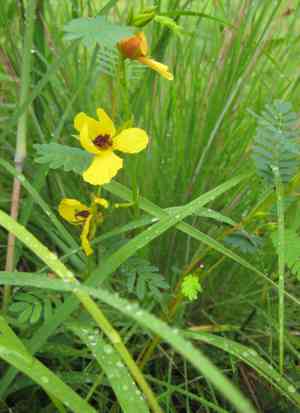
Partridge pea (Chamaecrista fasciculata)
Also known as: Sensitive plant, Golden cassia, Locust weed, Sleeping plant
The Partridge Pea (Chamaecrista fasciculata), also called Sleepingplant and Sensitive Plant, is notable for its delicate yellow flowers that close when touched. This annual legume is beneficial for several reasons:
1. **Wildlife Support**: It provides excellent cover for wildlife and serves as a food source for deer and various pollinators, including bees and butterflies.
2. **Soil Health**: As a nitrogen-fixing plant, it enhances soil fertility by converting atmospheric nitrogen into a usable form for other plants.
3. **Erosion Prevention**: Its robust root system helps stabilize soil, effectively preventing erosion.
4. **Inedibility**: While useful in many ways, it is not suitable for consumption by humans or domestic animals.
In addition to these practical uses, the Partridge Pea is appreciated for its resilience, thriving in poor, sandy soils and contributing to the health and stability of various ecosystems.
Attributes of Partridge pea
Images of Partridge pea
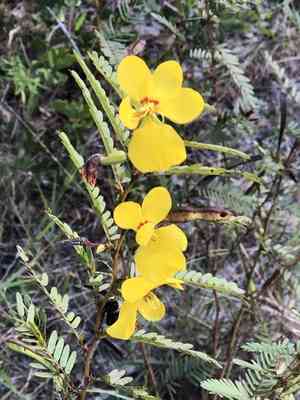
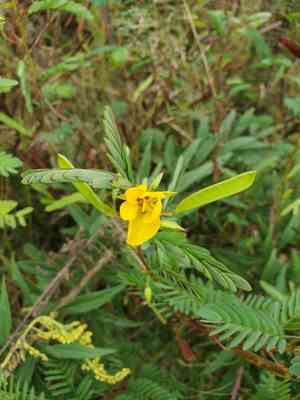
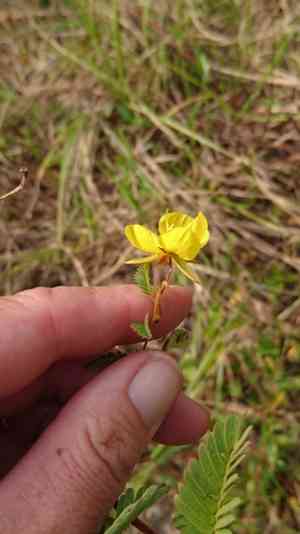
Quickly Identify Partridge pea
Scientific Classification of Partridge pea
Planting and Growing of Partridge pea
 How to Water Partridge pea?
 What Are the Sunlight Requirements for Partridge pea?
 What Is the Ideal Temperature Range for Partridge pea?
 What Soil is Best for Partridge pea?
 How to Fertilize Partridge pea?
 How to Prune Partridge pea?
 How to Propagate Partridge pea plant?
 How to Repot Partridge pea plant?
Toxicity of Partridge pea
Is Partridge pea toxic to humans?
Partridge pea can be harmful if consumed in significant amounts. Its stems, leaves, flowers, and seeds harbor a potentially dangerous chemical. Ingestion of this toxin may lead to abdominal discomfort accompanied by vomiting, nausea, and diarrhea. Additionally, the leaves are known to contain a cathartic substance that has the potential to impair both heart and respiratory functions. Nevertheless, considerable quantities of the plant, whether cooked or raw, are required to trigger these intense symptoms. Children are particularly vulnerable to accidental poisoning incidents. The tiny seed pods resemble peas and lack any bitter or acidic flavor.



