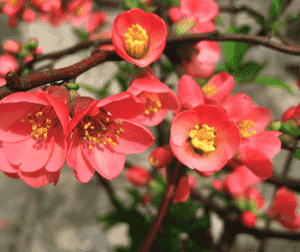
Flowering quince (Chaenomeles speciosa)
Also known as: Chinese quince, Japonica
Goumi (Elaeagnus multiflora) is a deciduous shrub originating from China. It yields edible red fruits in the autumn, which can be enjoyed fresh or used in various culinary applications. Known for its thick foliage, Goumi can serve as an effective privacy hedge while also attracting hummingbirds with its appealing flowers.
Attributes of Flowering quince
Images of Flowering quince
Quickly Identify Flowering quince
Scientific Classification of Flowering quince
Planting and Growing of Flowering quince
 How to Water Flowering quince?
 What Are the Sunlight Requirements for Flowering quince?
 What Is the Ideal Temperature Range for Flowering quince?
 What Soil is Best for Flowering quince?
 How to Fertilize Flowering quince?
 How to Prune Flowering quince?
 How to Propagate Flowering quince plant?
 How to Repot Flowering quince plant?
Toxicity of Flowering quince
Is Flowering quince toxic to humans?
The flowering quince is known to have a relatively low toxicity level for humans, largely attributed to the ingestion of its seeds. These seeds contain hydrogen cyanide, a chemical that can be harmful and potentially lead to poisoning. Consuming the seeds may trigger symptoms such as difficulty in breathing, dizziness, headaches, and nausea. In more severe instances, individuals may experience convulsions and a significant drop in blood pressure. Therefore, it is essential for people to refrain from eating the seeds of flowering quince to avoid such negative health impacts. Although the other parts of the plant are non-toxic, caution should be exercised with the seeds to minimize the risk of accidental ingestion, particularly among children who might be attracted to their appearance.
Is Flowering quince toxic to cat?
Flowering quince possesses a low degree of toxicity to cats, potentially resulting in discomfort if they consume any parts of the plant, especially its seeds. Poisoning typically happens when a cat inadvertently eats the seeds, which harbor hydrogen cyanide, a toxic substance. Following ingestion, affected cats may show a range of symptoms such as stomach upset, respiratory distress, or excess drooling. It is crucial to closely observe your pet and obtain prompt veterinary assistance if poisoning occurs. Timely intervention can be essential for effectively managing the recovery of the cat.
Is Flowering quince toxic to dog?
The flowering quince has a low toxicity risk for dogs. Canines may unknowingly ingest parts of this plant, especially the seeds, which have been identified to contain harmful compounds. If eaten, a dog could show signs like gastrointestinal disturbance or more serious reactions depending on the quantity consumed. It is vital for pet owners to supervise their dogs and restrict their access to the seeds of flowering quince. Should poisoning be suspected, prompt veterinary attention is vital to guarantee swift and suitable treatment.



