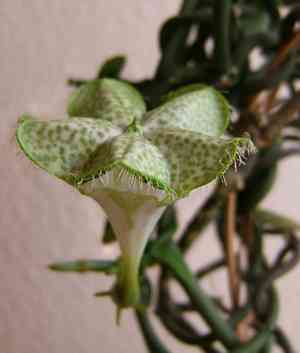
Parachute plant (Ceropegia sandersonii)
Also known as: Parachute Plant, Umbrella Plant
The parachute plant derives its name from its distinct, parachute-like flowers. These unique blooms, which look similar to those of carnivorous plants, use sticky hairs to trap insects, aiding in pollination. If the insects survive, they are eventually released. This plant is favored as an ornamental choice due to its striking appearance and ease of cultivation.
In This Article
Attributes of Parachute plant
Lifespan
Perennial
Plant Type
Herb, Vine
Plant Height
50 cm
Spread
50 cm
Leaf Color
Green
Flower Size
Up to 5 cm
Flower Color
Green
Images of Parachute plant
Quickly Identify Parachute plant
1
Look for the distinctive parachute-shaped flowers that possess green and white striped patterns. The leaves are opposite, fleshy, and slightly ovate, and the stems can trail or climb using twining capabilities.
Scientific Classification of Parachute plant
Phylum
Vascular plants
Class
Dicotyledons
Order
Gentians, dogbanes, madders, and allies
Family
Dogbane
Genus
Lantern flowers
Species
Parachute plant
Planting and Growing of Parachute plant
Care Difficulty
Easy
Watering Schedule
Every 2 days
Sunlight Requirements
Partial sun
Sunshine Duration
4-6 hours
Ideal Temperature
68-77℉
Soil Type
Potting Mix, Peat Mix
Soil pH
6.5-7.5
Fertilizer Type
Balanced
Pruning Season
Spring, Summer
Pruning Area
Branches, Leaves
Pruning Frequency
2 times a year
Repotting Season
Spring
Pot Type
Plastic, Ceramic
 How to Water Parachute plant?
For Ceropegia sandersonii, a.k.a. the Parachute Plant, ensure each watering session is thorough but not excessive. It's crucial to water until about 200ml has been applied, enough to moisten the soil but not leaving it soggy. Think of a gentle soaking that penetrates the top inch or two of soil, allowing just a bit of drainage from the pot bottom.
What are the symptoms of an underwatered Parachute plant?
›
What should I do if my Parachute plant is not getting enough water?
›
What are the symptoms of an overwatered Parachute plant?
›
How to save an overwatered Parachute plant?
›
 What Are the Sunlight Requirements for Parachute plant?
Ceropegia sandersonii benefits from partial sunlight exposure, enhancing growth and leaf coloration, which idealizes its aesthetic and health.
What is the best type of lighting for Ceropegia sandersonii?
›
How can I achieve the ideal lighting for my Ceropegia sandersonii?
›
What benefits will my Ceropegia sandersonii receive from ideal lighting?
›
 What Is the Ideal Temperature Range for Parachute plant?
The ideal temperature range for Ceropegia sandersonii is between 68°F to 77°F. This range creates an optimal environment for growth, allowing the plant to efficiently perform photosynthesis and other metabolic processes. Keeping the temperature within this range ensures vibrant growth behavior and prevents potential stress factors.
 What Soil is Best for Parachute plant?
Ceropegia sandersonii thrives in well-draining soil that prevents water from pooling and causing root rot. This allows the roots to stay aerated, promoting healthy growth and preventing common issues like root rot. The plant prefers soil that is moderately fertile, supplying enough nutrients for steady growth without overwhelming the plant's delicate root system. This balance helps sustain vibrant foliage and supports flowering. A pH range of 6.5 to 7.5 is ideal, as it allows for optimal nutrient uptake. This soil characteristic helps support the plant's general health and vigor by ensuring essential minerals are available.
 How to Fertilize Parachute plant?
Ceropegia sandersonii requires a balanced fertilization approach. Use a diluted liquid fertilizer at half the recommended strength for houseplants to avoid over-fertilization. Typically, a teaspoon per gallon of water is adequate. When using slow-release fertilizers, only a small amount is necessary, about a tablespoon spread around the base of the plant every four months.
 How to Prune Parachute plant?
Identify and cut back overgrown stems, especially those invading other spaces or tangling with surrounding plants. Using clean garden shears, cut just above a node to stimulate new growth in a bushier habit. Pinching back the tips of vines promotes fuller, more compact growth. Gently use your fingers or small scissors to remove the very tips of vines, encouraging branching and a thicker appearance. Inspect the plant for any discolored or dead leaves. Carefully cut them off at the base to prevent any disease from spreading and to ensure the plant's energy is directed towards healthy growth.
More About Pruning Techniques→
 How to Propagate Parachute plant plant?
1
Choose a healthy, disease-free vine from the plant. Look for a section that is green and vigorous, approximately 4-6 inches in length, and has multiple nodes, as these nodes will form roots.
2
Make a clean cut just below a node using sharp scissors or a knife. Remove a few of the lower leaves to prevent them from rotting when planted in soil or water.
3
Dip the cut end in rooting hormone and plant it in a pot filled with well-draining soil. Ensure that at least one or two nodes are buried in the soil to encourage root development.
 How to Repot Parachute plant plant?
1
Repot Ceropegia sandersonii when you notice root-bound roots or soil compacted and losing drainage efficacy. Yellowing leaves or slowed growth can also indicate the need for a new pot.
2
Select a pot that is just slightly larger than the current one, with drainage holes to prevent waterlogging. Terracotta pots are great as they allow the soil to breathe, preventing root rot.
3
Opt for a well-draining cactus or succulent mix enriched with perlite or sand, which replicates Ceropegia sandersonii's natural environment. This mix provides excellent aeration and water management.



