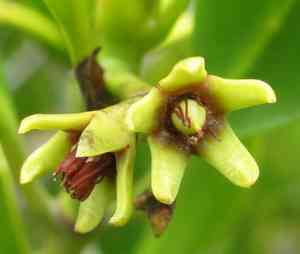
Spurred mangrove, (Ceriops tagal)
Also known as: Indian mangrove
The spurred mangrove (*Bruguiera hainesii*) thrives in coastal wetlands and is known for its saltwater tolerance. It is commonly used as firewood, and its bark is valuable in Malaysia for creating dark dyes for batik. Additionally, the bark aids in tanning hides and strengthening fishing lines. Due to commercial exploitation and habitat loss, the spurred mangrove is classified as vulnerable on Singapore's Red List of Threatened Plants.
In This Article
Attributes of Spurred mangrove,
Lifespan
Perennial
Plant Type
Tree
Plant Height
25 m
Spread
Can spread up to around 5 meters
Leaf Color
Dark green
Flower Size
5 mm to 7 mm
Flower Color
Yellow Green Brown
Images of Spurred mangrove,
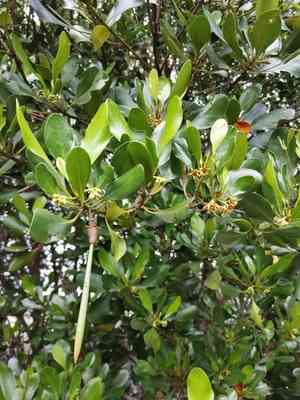
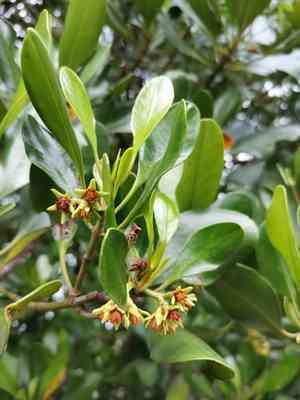
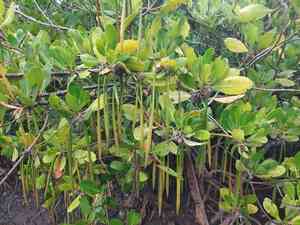
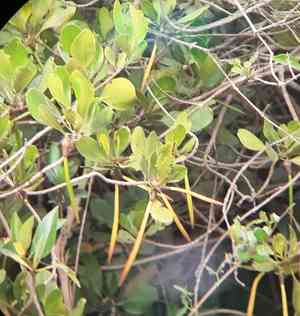
Quickly Identify Spurred mangrove,
1
Look for knee-like pneumatophores, glossy green leaves, and small white to pale yellow flowers. The tree often has prop roots and thick, leathery leaves.
Scientific Classification of Spurred mangrove,
Phylum
Vascular plants
Class
Dicotyledons
Order
Malpighiales
Family
Red mangrove
Genus
Yellow mangroves
Species
Spurred mangrove,
Planting and Growing of Spurred mangrove,
Care Difficulty
Hard
Watering Schedule
Every 3 days
Sunlight Requirements
Full sun
Sunshine Duration
4-8 hours
Ideal Temperature
75-86℉
Soil Type
Potting Mix, Peat Mix
Soil pH
6.5-7.5
Fertilizer Type
Balanced
Pruning Season
Spring, Summer
Pruning Area
Branches, Leaves
Pruning Frequency
2 times a year
Repotting Season
Spring
Pot Type
Plastic, Ceramic
 How to Water Spurred mangrove,?
Ceriops tagal prefers to be watered with a moderate amount of water, ensuring the soil is evenly moist but not waterlogged. Watering should be consistent, approximately 500 milliliters each time, but make sure excess water drains away to prevent root rot.
What are the symptoms of an underwatered Spurred mangrove,?
›
What should I do if my Spurred mangrove, is not getting enough water?
›
What are the symptoms of an overwatered Spurred mangrove,?
›
How to save an overwatered Spurred mangrove,?
›
 What Are the Sunlight Requirements for Spurred mangrove,?
Ceriops tagal benefits from full to partial sun, as this range supports optimal growth and health by facilitating effective photosynthesis.
What is the best light condition for Ceriops tagal?
›
How to achieve ideal lighting for Ceriops tagal?
›
What are the benefits of providing ideal light to Ceriops tagal?
›
 What Is the Ideal Temperature Range for Spurred mangrove,?
Ceriops tagal thrives best in warm environments with an ideal temperature range between 75 and 86 degrees Fahrenheit. This temperature range mimics its natural habitat in coastal and mangrove areas, where warm conditions prevail. Maintaining this temperature helps ensure optimal growth and health for the plant.
 What Soil is Best for Spurred mangrove,?
Ceriops tagal thrives in well-drained soil which allows for good air circulation at the root zone. This increases oxygen access, essential for root respiration, reducing disease potential and promoting vigorous growth. Well-drained soil ensures water doesn't collect around the roots, preventing root rot. A nutrient-rich substrate is critical for Ceriops tagal growth. Incorporating organic matter like compost not only improves soil structure but also slowly releases nutrients, offering a continuous supply. This supports the plant's development, enhancing its leaves' and branches' health. Known for its ability to handle saline conditions, Ceriops tagal can grow in soil with higher salt content. This adaptability is crucial for growth in coastal and mangrove areas where salinity can be significant, supporting the plant's survival and competitive advantage in such environments.
 How to Fertilize Spurred mangrove,?
Ceriops tagal, being a robust mangrove species, demands a balanced nutrient supply to thrive. For liquid fertilizers, a dilute solution of about 1/4 strength is generally sufficient. This prevents over-fertilization and allows the plant to uptake nutrients at a natural rate. For slow-release granules, approximately 50 grams per square meter should suffice, evenly distributed around the base but not directly on the stem to prevent root burn.
 How to Prune Spurred mangrove,?
Before pruning, observe the natural growth pattern of Ceriops tagal. This mangrove species tends to exhibit dense foliage with hard, woody stems. Identifying the tree's structural framework helps in making precise cuts. Aim to prune back to a node or bud that's outward facing to direct growth naturally. Start by removing any dead or diseased branches to prevent pest infestation. Focus on thinning out crowded areas to improve air circulation. Use clean, sharp pruning shears to make crisp cuts close to the trunk without damaging the branch collar. This preserves the tree's ability to heal itself efficiently.
More About Pruning Techniques→
 How to Propagate Spurred mangrove, plant?
1
Collect ripe seeds from the Ceriops tagal plant when they are mature. Look for seeds that have a brownish color and appear ready to detach from the parent plant.
2
Use pruning shears to cut healthy stems from the parent plant. The cuttings should be around 15-20 cm long and free from disease or pest infestation.
3
Dip the cut end of the cutting in rooting hormone and plant it in a well-draining potting medium. Water the cutting and place it in a warm, humid environment for optimal growth.
 How to Repot Spurred mangrove, plant?
1
Ceriops tagal should be repotted when you notice its roots are overcrowding, breaching out from the pot's drainage holes. Additionally, if the growth seems stunted despite adequate care, it might be time for a new home. Spring and summer are the optimal seasons as the plant is in its growth phase and can recover more quickly from the stress of repotting.
2
Select a pot that is slightly larger than the current one, ensuring it has good drainage holes. This will provide Ceriops tagal ample space to spread its roots without waterlogging, thereby reducing the risk of root rot and encouraging healthy growth. A pot made of breathable material like terracotta can help manage soil moisture levels effectively.
3
Use a well-draining sandy soil mix, ideally one designed for coastal plants or mangroves. This type of soil mimics the natural habitat of Ceriops tagal, ensuring the roots access necessary aeration while preventing moisture stagnation. The sand enhances drainage and supports root health, promoting vigorous growth.
Toxicity
Ingestion
WARNING
The judgment on toxicity and danger is for reference only. We DO NOT GUARANTEE any accuracy of such judgment. Therefore, you SHALL NOT rely on such judgment. It is IMPORTANT TO SEEK PROFESSIONAL ADVICE in advance when necessary.



