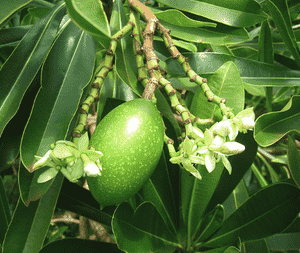
Rubbertree(Cerbera manghas)

Rubbertree (Cerbera manghas)

Also known as: Pong-pong

The rubbertree (Cerbera manghas) is commonly referred to as the "sea mango." Found near mangrove forests in coastal areas, it is also a favored ornamental plant in Hawaii. However, be cautious, as its fruits and leaves contain the toxic compound cerberin.

Attributes of Rubbertree

Lifespan
Perennial
Plant Type
Tree
Plant Height
8 m to 11 m
Spread
6 m to 8 m
Leaf Color
Dark green
Flower Size
2.5 cm to 5 cm
Flower Color
White

ForwardPlant - Identify plants with a snap

Identify and diagnose plants, get toxicity alerts, and explore safety guides for all types of fungi.

Try for Free

Images of Rubbertree

Rubbertree(Cerbera manghas)

Quickly Identify Rubbertree

1
Cerbera manghas can be identified by its glossy, dark green leaves, white star-shaped flowers with pink centers, and its large, green, mango-like fruits. The tree's milky sap can also be a distinguishing feature.

Scientific Classification of Rubbertree

Phylum
Vascular plants
Class
Dicotyledons
Order
Gentians, dogbanes, madders, and allies
Family
Dogbane
Genus
Cerbera
Species
Rubbertree

Planting and Growing of Rubbertree

Care Difficulty
Hard
Watering Schedule
Every 2 days
Sunlight Requirements
Full sun
Sunshine Duration
8-12 hours
Ideal Temperature
75-86℉
Soil Type
Potting Mix, Peat Mix
Soil pH
6.5-7.5
Fertilizer Type
Balanced
Pruning Season
Spring, Summer
Pruning Area
Branches, Leaves
Pruning Frequency
2 times a year
Repotting Season
Spring
Pot Type
Plastic, Ceramic

water icon How to Water Rubbertree?

Cerbera manghas requires an adequate amount of water to thrive, particularly given its preference for coastal and tropical environments. Each watering session should involve approximately 500 milliliters of water, ensuring the soil is moistened thoroughly but not waterlogged.
What are the symptoms of an underwatered Rubbertree?
What should I do if my Rubbertree is not getting enough water?
What are the symptoms of an overwatered Rubbertree?
How to save an overwatered Rubbertree?

sunlight icon What Are the Sunlight Requirements for Rubbertree?

Sunlight Requirements: Full sun, Partial sun
Duration of light: 4-6 hours of sunlight
Cerbera manghas benefits most from full sun to partial sun exposure. Adequate lighting supports healthy photosynthesis, leading to vibrant foliage and strong growth.
How much sunlight does Cerbera manghas prefer?
What are the solutions to achieve ideal light conditions?
What are the benefits of providing ideal lighting?
More About Sunlight Requirements Techniques

temperature icon What Is the Ideal Temperature Range for Rubbertree?

Ideal Temperature: 75 ~ 86℉
Cerbera manghas thrives best within an ideal temperature range of 75°F to 86°F. This tropical plant enjoys warm, humid conditions similar to its native habitat in coastal regions of the Indo-Pacific. Maintaining this temperature range supports healthy growth and flowering, mimicking conditions that are similar to its natural environment.

soil icon What Soil is Best for Rubbertree?

Soil type: Sandy soil, Loam
Soil PH: 6.5 ~ 7.5
Cerbera manghas thrives in well-drained soils to prevent root rot. Good drainage ensures the roots are not waterlogged, promoting healthy growth and vibrant flowering. This plant benefits from nutrient-rich soil that enhances its overall vigor. Adding organic matter or compost can improve soil fertility, supporting lush foliage and strong wood formation. Proper soil aeration is crucial for Cerbera manghas as it facilitates efficient root respiration. Aerated soil improves oxygen access to roots, allowing energy production crucial for growth.

fertilize icon How to Fertilize Rubbertree?

Fertilizer type: Balanced
For Cerbera manghas, the amount of fertilizer should be just enough to maintain soil fertility without overwhelming the plant. A general rule is to apply a liquid fertilizer diluted to half its strength, ensuring that the soil is moist before application. Solid fertilizers should be applied sparingly, around the root zone, and mixed slightly with the soil to aid absorption.

prune icon How to Prune Rubbertree?

Pruning Time: Spring, Summer
Trim branches that overcrowd the center of the plant to improve air circulation and light penetration. This helps in reducing fungal infections and promotes a balanced shape. Cut back overreaching branches that disrupt the desired shape of the canopy. Aim for a rounded or natural form, which enhances both aesthetic appeal and environmental resilience. More About Pruning Techniques

propagate icon How to Propagate Rubbertree plant?

Propagate Time: Spring, Early summer
1
Collect seeds from ripe fruits of Cerbera manghas. Ensure the fruits are mature and naturally fallen, as this indicates the seeds are viable and ready for planting.
2
Select a healthy branch and use pruning shears to cut a 5-10 inch section. Remove any leaves near the base to promote root development once planted.
3
Dip the cut end of the cutting into rooting hormone to encourage root growth. Plant the cutting into a pot with well-draining soil and water lightly.
More About Propagating Techniques

repot icon How to Repot Rubbertree plant?

Repotting frequency: Every 1-2 years
1
Cerbera manghas shows signs it needs repotting when roots start encircling the pot, poking through drainage holes, or when growth appears stunted. These indicators suggest the plant is outgrowing its current container, making it the perfect opportunity to repot for continued health and growth.
2
Select a pot 2 inches larger in diameter than the current one. Ensure it has good drainage, as Cerbera manghas prefers not to sit in waterlogged conditions. A slightly larger pot allows room for root expansion, promotes better aeration, and helps prevent root rot.
3
Opt for a well-draining loamy soil mix, which is crucial for Cerbera manghas. This mix ensures adequate aeration and moisture retention, preventing root suffocation and overwatering issues. The right soil promotes healthy growth and nutrient uptake.

ForwardPlant - Identify plants with a snap

Find the best spots for them to optimize their health, simply using your phone.

Try for Free

Toxicity of Rubbertree

Is Rubbertree toxic to humans?

The rubbertree represents a significant toxicity hazard to humans if ingested. This plant harbors the cardiac glycoside cerberin, which is extremely poisonous and may result in severe health issues. Both the leaves and the fruits of the rubbertree are toxic components that could induce poisoning when consumed. The manifestations of rubbertree poisoning can be severe, with symptoms possibly including cardiac irregularities, intense abdominal pain, vomiting, diarrhea, dizziness, and even potentially lethal arrhythmias. Given the elevated level of toxicity, even minimal amounts can be perilous, making it essential to steer clear of accidental consumption of these parts. Individuals at risk comprise anyone who might encounter rubbertree, particularly in regions where the plant is either native or cultivated.

Is Rubbertree toxic to cat?

The Rubbertree presents a significant toxicity threat to felines. Cats usually encounter this hazard through unintentional consumption of its leaves or fruits. This plant harbors cardiac glycoside cerberin, an intensely toxic compound that can severely impact a cat's health. After ingestion, a cat may exhibit symptoms of physical distress, which can escalate rapidly due to the strength of the toxin. Given the highly toxic nature of the rubbertree, prompt veterinary intervention is essential to safeguard the cat's health and alleviate any potential life-threatening issues.

Is Rubbertree toxic to dog?

The Rubbertree presents a significant toxicity threat to dogs. When dogs ingest portions of this plant, especially the leaves or fruits, they may experience poisoning. This accidental ingestion often happens while dogs are exploring their surroundings and may chew or consume plant materials. Following consumption of rubbertree, a dog might show signs such as vomiting, diarrhea, abdominal discomfort, lethargy, irregular heart rhythms, and in severe cases, even collapse, attributed to the cardiac glycoside cerberin found in the plant. Therefore, it is essential for dog owners to vigilantly supervise their pets and restrict their access to rubbertree. If there is any suspicion that a dog has ingested any part of the rubbertree, prompt veterinary intervention is vital for the highest likelihood of recovery.

Identify toxic plants for your safety

Learn which plants are harmful to you and your pets, and make informed choices for a safer home!

Try for Free
WARNING
The judgment on toxicity and danger is for reference only. We DO NOT GUARANTEE any accuracy of such judgment. Therefore, you SHALL NOT rely on such judgment. It is IMPORTANT TO SEEK PROFESSIONAL ADVICE in advance when necessary.
More About Toxic Techniques

