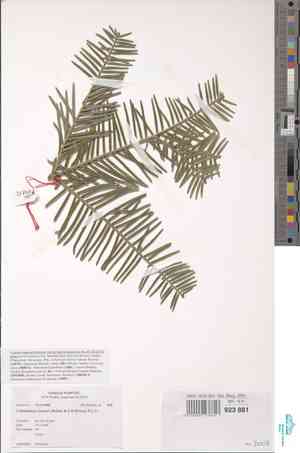
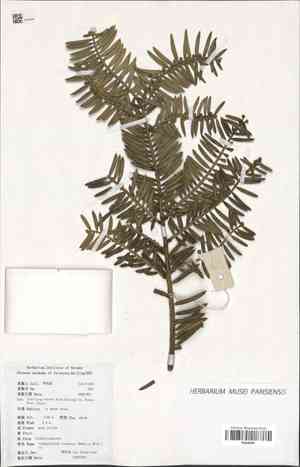
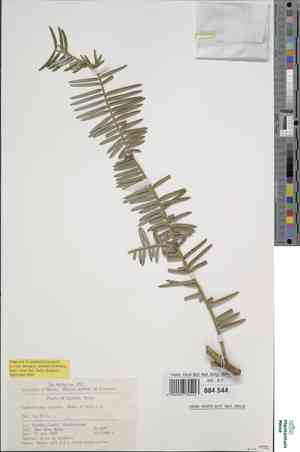
Chinese plum yew(Cephalotaxus sinensis)

Chinese plum yew (Cephalotaxus sinensis)

Also known as: Chinese Plum Yew

The Chinese plum yew (Cephalotaxus sinensis) is an evergreen conifer native to eastern Asia. Known for its appealing, year-round needle-like foliage and compact growth, it is a popular choice for home gardens and landscaping. Additionally, it has been traditionally cultivated for its timber and as a source of firewood.

Key Characteristics:
- Evergreen with needle-like leaves.
- Compact growth suitable for domestic gardens.

Uses:
- Ornamental purposes in landscaping.
- Cultivation for timber and firewood.

Population Trends:
The species is experiencing a decline in many parts of its native range due to factors such as habitat destruction and overharvesting. Conservation measures are essential to prevent further population decreases.

Attributes of Chinese plum yew

Lifespan
Perennial
Plant Height
2 to 20 meters
Spread
5 to 10 meters
Leaf Color
Dark green
Flower Size
N/A
Flower Color
N/A

ForwardPlant - Identify plants with a snap

Identify and diagnose plants, get toxicity alerts, and explore safety guides for all types of fungi.

Try for Free

Images of Chinese plum yew

Chinese plum yew(Cephalotaxus sinensis)

Quickly Identify Chinese plum yew

1
Cephalotaxus sinensis can be identified by its dark green, needle-like leaves that are arranged in two ranks along the stem. The leaves are linear and flat, typically 5-8 cm long. The plant produces small, fleshy seeds that are initially green and turn brown as they mature.

Scientific Classification of Chinese plum yew

Phylum
Vascular plants
Class
Conifers
Order
Pines and allies
Family
Plum yew
Genus
Plum yew
Species
Chinese plum yew

Planting and Growing of Chinese plum yew

Care Difficulty
Moderate
Watering Schedule
Every 3 days
Sunlight Requirements
Partial sun
Sunshine Duration
4-8 hours
Ideal Temperature
60-75℉
Soil Type
Potting Mix, Peat Mix
Soil pH
6.5-7.5
Fertilizer Type
Balanced
Pruning Season
Spring, Summer
Pruning Area
Branches, Leaves
Pruning Frequency
2 times a year
Repotting Season
Spring
Pot Type
Plastic, Ceramic

water icon How to Water Chinese plum yew?

Cephalotaxus sinensis, known as the Chinese Plum Yew, should be watered until the soil is evenly moist but not waterlogged. An ideal watering amount is around 500 ml, ensuring that the water reaches the root zone without leaving the plant standing in water.
What are the symptoms of an underwatered Chinese plum yew?
What should I do if my Chinese plum yew is not getting enough water?
What are the symptoms of an overwatered Chinese plum yew?
How to save an overwatered Chinese plum yew?

sunlight icon What Are the Sunlight Requirements for Chinese plum yew?

Sunlight Requirements: Partial sun
Duration of light: 4 to 6 hours
Ideal light for Cephalotaxus sinensis involves partial sun conditions. This environment fosters healthy growth and vibrant foliage as it closely replicates the dappled sunlight found in its natural woodland habitat.
What is the ideal lighting condition for Cephalotaxus sinensis?
How can I achieve ideal lighting conditions for my plant?
What benefits will my plant gain with ideal lighting?

temperature icon What Is the Ideal Temperature Range for Chinese plum yew?

Ideal Temperature: 60 ~ 75℉
The ideal temperature range for Cephalotaxus sinensis is between 60°F and 75°F, which ensures optimal growth and health. These conditions mimic its natural environment and help in maintaining the plant's metabolic processes. Temperatures within this range allow the plant to effectively photosynthesize, uptake nutrients, and manage water. Deviation from this range can stress the plant, leading to stunted growth or other health issues.

soil icon What Soil is Best for Chinese plum yew?

Soil type: Loam, Sandy loam, Acidic soil
Soil PH: 6.5 ~ 7.5
Cephalotaxus sinensis thrives in soil with excellent drainage. This is crucial as it prevents water from pooling around the roots, reducing the risk of root rot. Good drainage allows for healthy root growth and ensures the plant receives adequate oxygen. While well-draining soil is important, Cephalotaxus sinensis also requires soil that retains some moisture. This balance ensures that the plant remains hydrated during dry spells, promoting consistent growth and vibrant foliage. The plant benefits greatly from soil that is rich in organic matter. Nutrient-rich soil provides the essential minerals and organic compounds needed for robust growth, improved photosynthesis, and resistance to pests and diseases.

fertilize icon How to Fertilize Chinese plum yew?

Fertilizer type: Balanced
Cephalotaxus sinensis generally requires a moderate amount of fertilizer. For liquid fertilizers, use a balanced 10-10-10 NPK formulation, diluted at half strength, and apply approximately 100 ml per plant. For slow-release fertilizers, opt for a formulation with similar nutrient ratios and apply about 50 grams per plant per annum.

prune icon How to Prune Chinese plum yew?

Pruning Time: Spring, Summer, Autumn
For Cephalotaxus sinensis, begin by removing dead or diseased branches to prevent the spread of pathogens. Use sharp, clean pruning shears to make a clean cut just above the branch collar. Avoid cutting too close to the main stem, as this can lead to damage and affect the plant's growth. To maintain an aesthetically pleasing shape, trim back overgrown branches to the desired shape. Focus on keeping the natural form of the plant, typically a more oval or rounded shape, by cutting select branches that extend beyond the canopy. This will encourage fuller growth and maintain the structural integrity of the plant. Pruning in early spring and late summer can encourage new growth. Cut back the tips of new growth slightly to promote bushier development. Avoid heavy pruning at this time, focusing on smaller cuts to guide the plant without stressing it. More About Pruning Techniques

propagate icon How to Propagate Chinese plum yew plant?

Propagate Time: Spring, Early summer
1
Soak the seeds for 24 hours in water to soften the outer coat and promote germination. This helps in breaking seed dormancy, ensuring faster and more uniform growth.
2
Select healthy, disease-free stems and cut sections approximately 5-10 cm in length. Ensure to make a clean cut just below a node, as this encourages better root formation.
3
Insert the cut end of the cutting into a pot filled with well-draining soil mixture. Firm the soil around the base to provide support and water lightly to settle the soil.
More About Propagating Techniques

repot icon How to Repot Chinese plum yew plant?

Repotting frequency: Every 2-3 years
1
Cephalotaxus sinensis should be repotted when it outgrows its current pot or its roots start appearing at the drainage holes. The best time for repotting is during the growing season in spring or early summer when the plant can recover quickly.
2
Choose a pot that is one size larger than the current one and has good drainage. A pot that is too large can lead to excessive moisture retention, which might cause root rot. A properly sized pot encourages healthy root development and prevents overwatering.
3
Opt for a well-drained, acidic soil mix. Using a soil mix with appropriate drainage ensures that excess water can escape, preventing root rot. Acidic soil also mimics this plant's natural habitat, supporting optimal nutrient absorption and plant growth.

ForwardPlant - Identify plants with a snap

Find the best spots for them to optimize their health, simply using your phone.

Try for Free