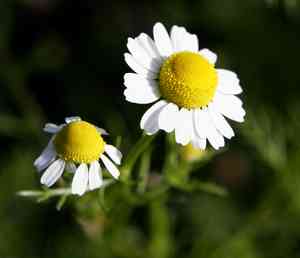
Larkdaisy (Centratherum punctatum)
Also known as: Brazilian Button Flower, Brazilian Bachelor's Button
Larkdaisy (*Centratherum punctatum*) is a perennial that produces lavender flowers from mid-summer to early fall. After the blooms fade, seed heads can form and lead to self-seeding if not managed. To prevent unwanted spread, regularly deadhead the flowers before they develop seeds. Note that in some areas, this plant is regarded as a weed.
In This Article
Attributes of Larkdaisy
Lifespan
Perennial, Annual
Plant Type
Herb
Plant Height
15 cm to 30 cm
Spread
90 cm to 1.2 m
Leaf Color
Green
Flower Size
3 cm
Flower Color
Purple
Images of Larkdaisy
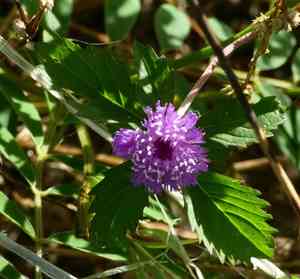
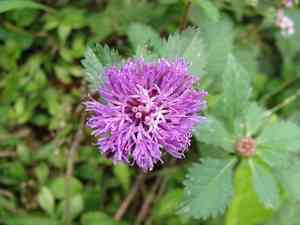
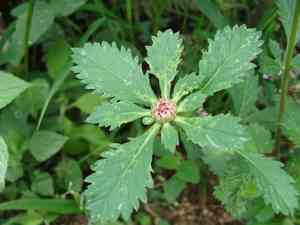
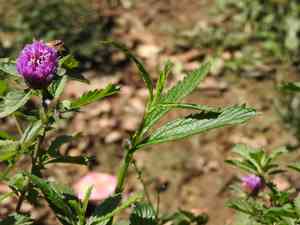
Quickly Identify Larkdaisy
1
Coarsely-toothed, dark green leaves emit pineapple scent when crushed.
2
Distinctive lavender, button-like flowers with diameter of 1.5 inches (3.8 cm).
3
Compound light purple disk florets with longer outer florets in layered arrangement.
4
Light green elliptic leaves with toothed margin and prominent vein pattern.
5
Round, pubescent stem with hairy texture and moderate thickness of 0.1-0.2 inches (2.5-5 mm).
Scientific Classification of Larkdaisy
Phylum
Vascular plants
Class
Dicotyledons
Order
Asters bellflowers fanflowers and allies
Family
Daisy
Genus
Brazilian button
Species
Larkdaisy
Planting and Growing of Larkdaisy
Care Difficulty
Easy
Watering Schedule
Every 4 days
Sunlight Requirements
Full sun
Sunshine Duration
4-8 hours
Ideal Temperature
65-75℉
Soil Type
Potting Mix, Peat Mix
Soil pH
6-7.5
Fertilizer Type
Balanced
Pruning Season
Spring, Summer
Pruning Area
Branches, Leaves
Pruning Frequency
Once a year
Repotting Season
Spring
Pot Type
Plastic, Ceramic
 How to Water Larkdaisy?
When watering Centratherum punctatum, ensure you provide about 250 ml of water per session. This amount is sufficient to moisten the soil adequately without causing waterlogging. Water must reach the root zone but should not saturate the soil completely. It's best to let the top layer of soil dry out slightly between waterings to avoid root rot.
What are the symptoms of an underwatered Larkdaisy?
›
What should I do if my Larkdaisy is not getting enough water?
›
What are the symptoms of an overwatered Larkdaisy?
›
How to save an overwatered Larkdaisy?
›
 What Are the Sunlight Requirements for Larkdaisy?
Centratherum punctatum ideally benefits from full sun to partial sun, which enhances its vibrant colors and promotes rich flowering, optimizing its decorative potential.
More About Sunlight Requirements Techniques→
What is the ideal light type for Centratherum punctatum?
›
How can one ensure the ideal lighting condition is met?
›
What are the benefits of providing ideal light conditions?
›
 What Is the Ideal Temperature Range for Larkdaisy?
Centratherum punctatum thrives best in environments where the temperature is consistently between 65°F to 75°F. This range provides optimal conditions for growth and flowering, ensuring that the plant's metabolic processes function smoothly. At these temperatures, the plant can efficiently carry out photosynthesis, leading to healthy foliage and vibrant blooms.
 What Soil is Best for Larkdaisy?
Centratherum punctatum thrives best in well-draining soil that prevents waterlogging, essential for its root health. This condition ensures the roots receive adequate oxygen, promoting vigorous plant growth and reducing risks of root rot. A soil rich in organic matter supports Centratherum punctatum's nutrient needs. Enriching soil with compost or organic fertilizers boosts its lush foliage and extended blooming periods, creating a vibrant garden scene. While drainage is crucial, the soil must also retain some moisture to prevent the plant from drying out between watering. This balance aids in maintaining consistent growth and flower production.
 How to Fertilize Larkdaisy?
For Centratherum punctatum, a balanced 10-10-10 liquid fertilizer is commonly used. Mix 1 teaspoon of the fertilizer with 1 gallon of water, applying it every watering session during the growing season. This ensures the plant receives an adequate supply of nutrients without overloading.
 How to Prune Larkdaisy?
Start by removing any dead or damaged stems using a sharp pair of pruning shears. Focus on cutting just above the leaf nodes to encourage new growth. Trim back any overly long stems to maintain a compact, bushy form. Pruning during active growth phases in spring and summer ensures the plant remains vigorous and healthy. Remember to sterilize your tools before and after use to prevent the spread of disease. To keep Centratherum punctatum blooming throughout the growing season, remove spent flowers regularly. Use your fingers or scissors to pinch or snip off the faded blooms just above the next set of leaves. This practice prevents seed formation, redirecting energy towards producing more vibrant blossoms and prolonging the flowering period.
More About Pruning Techniques→
 How to Propagate Larkdaisy plant?
1
Prepare a well-draining potting mix by combining peat moss with perlite or sand. This mix provides aeration while retaining the right amount of moisture for seed germination and cutting growth.
2
Scatter the seeds evenly across the soil surface and cover them with a light layer of soil. Mist the soil lightly to ensure it is damp but not soaked, promoting seed germination.
3
Select healthy stems and cut a segment about 4-6 inches long. Remove the lower leaves and immerse the cut end in rooting hormone to enhance root development before planting in a moist potting mix.
 How to Repot Larkdaisy plant?
1
Repot Centratherum punctatum when you notice signs like roots protruding from drainage holes, soil drying out too quickly, or stunted growth. These indicators suggest that the plant has outgrown its current pot and requires more space for healthy development.
2
Select a pot that is one size larger than the current one, with proper drainage holes at the bottom. The right size ensures adequate root space, enhancing nutrient absorption and promoting healthier growth. A pot with good drainage prevents waterlogging, reducing the risk of root rot.
3
Opt for a well-draining potting mix made of peat, perlite, and a little sand. This combination provides aeration and retains adequate moisture without becoming waterlogged, ensuring that your plant's roots receive proper airflow and nutrients necessary for thriving growth.
Learn More About Larkdaisy Diseases
Anthracnose
Bacterial Leaf Spot
Bacterial Wilt
Black Spot
Chemical Injury
Crown Gall
Cyst Nematode
Damping-off
Downy Mildew
Drought Stress
Fusarium Wilt
Gray Mold
Leaf Curl
Leaf Spot
Mosaic
Nutrient Deficiency
Nutrient Toxicity
Powdery Mildew
Root Rot
Root-knot Nematode
Rusts
Sooty Mold
Spider Mites
Temperature Stress
Thrips Damage
White Mold



