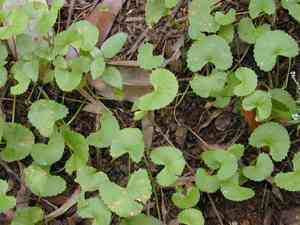
Centella (Centella) (Centella)
Also known as: Gotu Kola, Indian Pennywort, Asiatic Pennywort
The plant you're referring to is likely a species of *Lachenalia*. These perennial flowering plants are native to the Fynbos region of South Africa. They feature rosette-forming leaves around a creeping stem, with small flowers arranged in an "umbrella" shape. These plants have a slightly succulent nature and exhibit a creeping growth pattern.
In This Article
Attributes of Centella (Centella)
Lifespan
Perennial
Plant Height
Up to 30 cm
Spread
Variable, often spreading with runners
Leaf Color
Green
Flower Size
Small, less than 3 mm
Flower Color
White to pale pink
Images of Centella (Centella)


Quickly Identify Centella (Centella)
1
Centella asiatica can be identified by its small, fan-shaped green leaves that are often crenate or lobed with a smooth texture. The plant has a creeping growth habit and prefers moist, swampy areas.
Scientific Classification of Centella (Centella)
Phylum
Tracheophyta
Class
Magnoliopsida
Order
Apiales
Family
Apiaceae
Genus
Centella
Planting and Growing of Centella (Centella)
Care Difficulty
Easy
Watering Schedule
Every 3 days
Sunlight Requirements
Partial sun
Sunshine Duration
4-6 hours
Ideal Temperature
68-77℉
Soil Type
Potting Mix, Peat Mix
Soil pH
6.5-7.5
Fertilizer Type
Balanced
Pruning Season
Spring, Summer
Pruning Area
Branches, Leaves
Pruning Frequency
2 times a year
Repotting Season
Spring
Pot Type
Plastic, Terracotta
 How to Water Centella (Centella)?
When watering Centella asiatica, aim to soak the soil thoroughly until it's visibly moist but not waterlogged. The amount usually hits around 200 ml to achieve this. Ensure water penetrates to the root zone, which encourages healthy development.
What are the symptoms of an underwatered Centella (Centella)?
›
What should I do if my Centella (Centella) is not getting enough water?
›
What are the symptoms of an overwatered Centella (Centella)?
›
How to save an overwatered Centella (Centella)?
›
 What Are the Sunlight Requirements for Centella (Centella)?
Centella thrives in environments providing partial sun and full shade, benefiting from dappled light typical under trees. This range supports healthy growth and maintains vibrant foliage, ensuring robust plant development.
What is the best lighting condition for Centella?
›
How can you ensure Centella gets the right amount of sunlight?
›
What are the benefits of providing ideal lighting for Centella?
›
 What Is the Ideal Temperature Range for Centella (Centella)?
Centella thrives best in a temperature range of 68 to 77 degrees Fahrenheit. These conditions provide the optimal environment for plant physiological processes, promoting healthy growth and development. In this range, Centella's photosynthesis and respiration are well-balanced, allowing the plant to produce energy efficiently while maintaining its overall health.
 What Soil is Best for Centella (Centella)?
Centella needs nutrient-rich soil as it supports lush growth and healthy foliage. A soil packed with organic matter ensures a steady supply of essential nutrients, promoting robust development and resilience against pests. The soil should retain moisture without becoming waterlogged. Proper moisture levels enable the [Centella](https://www.wikidata.org/wiki/Q206770) to absorb necessary nutrients while avoiding root rot, ensuring continuous and healthy growth. While Centella loves moisture, it still needs good drainage to prevent water accumulation around its roots. Well-drained soil helps avoid root diseases and keeps the plant strong and vibrant.
 How to Fertilize Centella (Centella)?
When fertilizing Centella, use a balanced, water-soluble fertilizer at half the recommended strength. This careful approach prevents nutrient overload. For slow-release pellets, apply them sparingly, roughly 5 grams per square meter to ensure a steady nutrient release over time.
 How to Prune Centella (Centella)?
Begin your pruning process by sterilizing your cutting tools to prevent disease spread. Look for the longest stems and trim them back to just above a node to promote bushier growth. Remove any dead or yellowing leaves to direct energy towards healthier parts. Make your cuts cleanly and at an angle to facilitate faster healing. To maintain shape, it's wise to periodically step back and assess your Centella's overall form. Ensure no single stem overdominates the plant's structure by trimming it back. Regularly check beneath the foliage for hidden stems that may be overgrowing. Pruning these will allow light to reach lower leaves, supporting more even growth and a more aesthetically pleasing shape.
 How to Propagate Centella (Centella) plant?
1
To propagate Centella by seeds, fill seed trays with a sterile seed-starting mix. Sow the seeds on the surface and lightly cover them with mix. Maintain consistent moisture and place the trays in a warm, bright location to facilitate germination, which typically occurs within two weeks.
2
For cutting propagation, choose a healthy parent plant and cut a 10-15 cm section just below a node. Remove lower leaves to reduce moisture loss. Dip the cut end into rooting hormone before planting it in a well-draining medium. Keep the cuttings in a humid environment for better rooting.
3
To divide Centella, gently dig up the plant ensuring you preserve as much root as possible. Use a sharp knife to divide the root ball into two or more sections. Replant each section immediately, watering thoroughly to help them establish in their new location.
 How to Repot Centella (Centella) plant?
1
Observe your Centella for signs like crowded roots peeking out from the pot's bottom or a slowdown in growth during the active growing seasons. If your plant seems thirsty more often or its leaves are wilting, it might be time to adopt a new home for your centella.
2
Select a pot slightly larger than its current home, with multiple drainage holes and made of a breathable material like terracotta. This minimizes the risk of waterlogging by allowing excess moisture to escape, supporting healthier root development.
3
Opt for a well-draining potting mix, with ingredients like peat, perlite, or sand, to prevent water retention. This type of soil mimics Centella's natural environment, promoting aeration and avoiding root rot.

