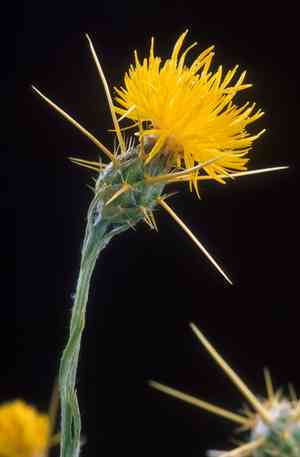
Yellow star-thistle (Centaurea solstitialis)
Also known as: Yellow cockspur, Barnaby's thistle, Geeldissel, Yellow centaury
Centaurea solstitialis, commonly known as Yellow Starthistle, is a flowering plant native to the Mediterranean Basin. It typically blooms in the spring. Another name for this plant is St. Barnaby's thistle.
In This Article
Attributes of Yellow star-thistle
Lifespan
Annual, Biennial
Plant Type
Herb
Plant Height
20 cm to 81 cm
Spread
Not typically canopy-forming
Leaf Color
Green Gray Silver
Flower Size
1.3 cm to 1.9 cm
Flower Color
Yellow Gold
Images of Yellow star-thistle
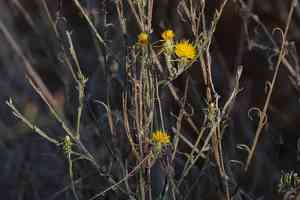
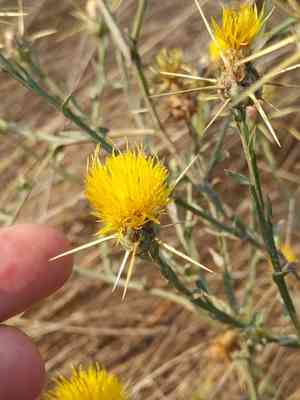
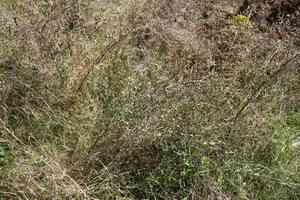
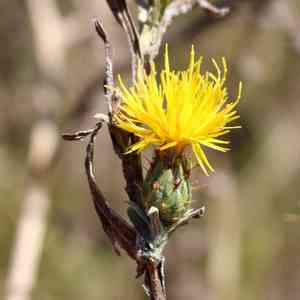
Quickly Identify Yellow star-thistle
1
Bright yellow flower heads surrounded by light green bracts with cobweb-like hairs.
2
Straw-colored spines measuring 1-2 inches (2.5-5 cm) in a star pattern.
3
Distinctive stout, needle-like spines radiating in a star-like formation around bright yellow flowers.
4
Fruit is a quarter-inch (6 mm) achene with tuft of short, stiff, light brown bristles at tip.
5
Leaves alternate, toothless, and covered in woolly hairs, forming a rosette with wavy edges.
Scientific Classification of Yellow star-thistle
Phylum
Vascular plants
Class
Dicotyledons
Order
Asterales
Family
Daisy
Genus
Centaury
Species
Yellow star-thistle
Planting and Growing of Yellow star-thistle
Care Difficulty
Moderate
Watering Schedule
Every 2 days
Sunlight Requirements
Full sun
Sunshine Duration
4-8 hours
Ideal Temperature
60-75℉
Soil Type
Potting Mix, Peat Mix
Soil pH
6.5-7.5
Fertilizer Type
Balanced
Pruning Season
Spring, Summer
Pruning Area
Branches, Leaves
Pruning Frequency
2 times a year
Repotting Season
Spring
Pot Type
Plastic, Ceramic
 How to Water Yellow star-thistle?
For Centaurea solstitialis, water deeply but infrequently. Ensure that the soil is soaked, but not waterlogged, to mimic natural arid conditions and allow the soil to dry out between waterings.
What are the symptoms of an underwatered Yellow star-thistle?
›
What should I do if my Yellow star-thistle is not getting enough water?
›
What are the symptoms of an overwatered Yellow star-thistle?
›
How to save an overwatered Yellow star-thistle?
›
 What Are the Sunlight Requirements for Yellow star-thistle?
Centaurea solstitialis should be in an environment that provides full sun exposure for 6 to 8 hours daily. This ideal light range supports its robust growth and thriving blooming cycles, enhancing the plant's resistance to diseases and ensuring an aesthetically pleasing appearance.
What is the optimal sunlight for Centaurea solstitialis?
›
How can I ensure Centaurea solstitialis gets adequate sunlight?
›
What benefits does optimal sunlight provide for Centaurea solstitialis?
›
 What Is the Ideal Temperature Range for Yellow star-thistle?
Centaurea solstitialis thrives best in moderate climates with temperatures ranging from 60°F to 75°F. This range allows for optimal metabolic activities and photosynthesis, supporting vigorous growth and development.
 What Soil is Best for Yellow star-thistle?
Centaurea solstitialis thrives in well-draining soil as it prevents root rot, ensuring the plant remains healthy and vigorous. Adequate drainage mimics its native environments, reducing waterlogging stress. This plant actually prefers soils that are low in nutrients. In nutrient-rich soils, the plant may become too lush, reducing its resilience and natural hardiness. Centaurea solstitialis requires moderate soil moisture, similar to its Mediterranean origins. This balances its need for water while preventing over-saturation which can lead to fungal problems.
 How to Fertilize Yellow star-thistle?
For Centaurea solstitialis, ensure to apply a balanced fertilizer at a rate of approximately 20 grams per plant. This will provide adequate nutrients without overwhelming the plant's root system. It's essential to measure accurately to avoid over-fertilization.
 How to Prune Yellow star-thistle?
The best time to prune is early in the season before the plant starts to flower and again in late summer. This helps control size and seed production. Always use sharp, clean pruning shears to make crisp cuts. This minimizes damage to the plant and reduces the risk of disease introduction. Concentrate on removing spent flowers and seed heads. By doing so, you prevent seed dispersal, which is crucial for keeping this invasive plant in check.
 How to Propagate Yellow star-thistle plant?
1
Begin by selecting a well-draining potting mix or a seed-starting medium. Fill your seed starter trays with this mixture, ensuring it’s moist but not waterlogged. Create small indentations in each cell, where seeds will be placed.
2
Place one seed in each cell or indentation in the starter trays. Cover gently with a thin layer of soil to prevent the seeds from being displaced. Lightly mist the surface with water to maintain moisture levels, as this is crucial for germination.
3
Locate the seed trays in a warm, sunny area or under grow lights, maintaining a consistent temperature around 70°F (21°C). Ensure the soil remains consistently moist but not overly saturated while waiting for germination to occur.
 How to Repot Yellow star-thistle plant?
1
Centaurea solstitialis should be repotted when you notice it becoming root-bound, with roots protruding at the pot's surface or drainage holes. Spring and autumn periods are ideal as the plant isn't in full active growth, reducing transplant shock.
2
Select a pot that is one size larger with good drainage holes. Material-wise, clay pots are excellent as they allow the soil to dry out between watering, preventing root rot in this drought-tolerant plant. Ensure the pot complements your plant's eventual size for stability and growth.
3
Opt for well-draining sandy loam enriched with organic matter. Such soil mimics their natural habitat, ensuring good drainage and aeration. It helps in preventing waterlogged roots while providing the needed nutrients for healthy growth and flowering.
Toxicity
Ingestion
WARNING
The judgment on toxicity and danger is for reference only. We DO NOT GUARANTEE any accuracy of such judgment. Therefore, you SHALL NOT rely on such judgment. It is IMPORTANT TO SEEK PROFESSIONAL ADVICE in advance when necessary.
Learn More About Yellow star-thistle Diseases
Anthracnose
Bacterial Leaf Spot
Bacterial Soft Rot
Bacterial Wilt
Chemical Injury
Crown Gall
Cyst Nematode
Damping-off
Downy Mildew
Drought Stress
Fusarium Wilt
Gray Mold
Leaf Curl
Leaf Spot
Mosaic
Nutrient Deficiency
Nutrient Toxicity
Powdery Mildew
Root Rot
Root-knot Nematode
Rusts
Sooty Mold
Spider Mites
Temperature Stress
Thrips Damage
White Mold


