Common hackberry (Celtis occidentalis)
Also known as: Beaverwood, Nettletree
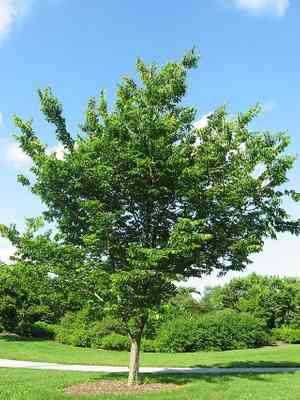
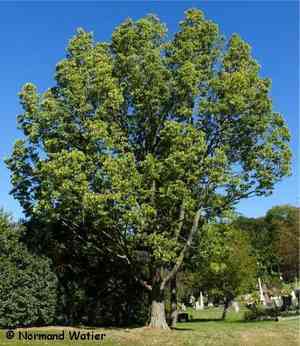
The common hackberry (Celtis occidentalis) is a medium-sized deciduous tree native to North America. While it may initially resemble elms and other hackberry trees, its bark is a key differentiator. The bark features a distinctive corky, warty texture with irregular, knobby patterns, making it easy to identify.
In This Article
Attributes of Common hackberry
Lifespan
Perennial
Plant Type
Tree
Plant Height
9 m to 40 m
Spread
12 m to 15 m
Leaf Color
Green Yellow
Flower Size
6 mm
Flower Color
Green
Images of Common hackberry
Quickly Identify Common hackberry
1
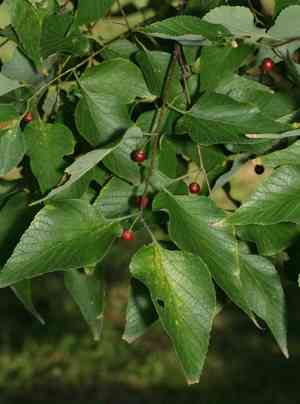
Distinct deep purple drupes in globular form, each containing a single brown seed.
2
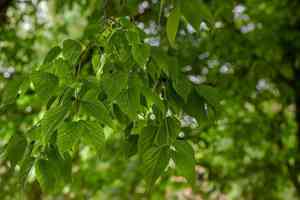
Oval to lance-shaped glossy green leaves, unmistakable with toothed edges and pointed tips.
3
Smooth stems with small white lenticels, transitioning from green to dark reddish-gray.
4
Grey bark with corky warts and ridges, contrasting smooth upper limbs akin to a beech tree.
5
Greenish-yellowish monoecious flowers with male clusters and female solitary blooms in spring.
Scientific Classification of Common hackberry
Phylum
Vascular plants
Class
Dicotyledons
Order
Rosales
Family
Hemp
Genus
Hackberries
Species
Common hackberry
Planting and Growing of Common hackberry
Care Difficulty
Easy
Watering Schedule
Every 2 days
Sunlight Requirements
Full sun
Sunshine Duration
6-10 hours
Ideal Temperature
59-77℉
Soil Type
Potting Mix, Peat Mix
Soil pH
6.5-7.5
Fertilizer Type
Balanced
Pruning Season
Spring, Summer
Pruning Area
Branches, Leaves
Pruning Frequency
2 times a year
Repotting Season
Spring
Pot Type
Plastic, Ceramic
 How to Water Common hackberry?
Celtis occidentalis requires approximately 500 ml of water per session. The key is to ensure the soil remains uniformly moist but not waterlogged. To determine if the amounts are correct, check that the first few inches of soil are dry before the next watering.
More About Watering Techniques→
What are the symptoms of an underwatered Common hackberry?
›
What should I do if my Common hackberry is not getting enough water?
›
What are the symptoms of an overwatered Common hackberry?
›
How to save an overwatered Common hackberry?
›
 What Are the Sunlight Requirements for Common hackberry?
Celtis occidentalis ideally enjoys full to partial sun, thriving with 6 to 10 hours of light. Under optimal light conditions, the plant's cellular functions maximize, enhancing growth, structural integrity, and resistance to pests.
More About Sunlight Requirements Techniques→
What is the ideal lighting setting for Celtis occidentalis?
›
What solutions can ensure Celtis occidentalis gets the ideal lighting?
›
What are the benefits for Celtis occidentalis of receiving ideal light?
›
 What Is the Ideal Temperature Range for Common hackberry?
Celtis occidentalis thrives best in a temperature range between 59°F and 77°F. This range allows it to carry out photosynthesis efficiently and maintain healthy growth. It is crucial to sustain this environment to foster robust foliage and optimal plant health.
 What Soil is Best for Common hackberry?
Celtis occidentalis thrives best in nutrient-rich soil. This ensures strong growth and resilience against pests by providing essential minerals and nutrients needed for its development. The soil must have excellent drainage to prevent waterlogging. Proper drainage reduces the risk of root rot, helping the tree maintain robust root health. While it prefers well-drained soil, maintaining some moisture is beneficial. This balance prevents drought stress, allowing the plant to flourish even in dry spells.
More About Soil→
 How to Fertilize Common hackberry?
The optimal fertilization amount for Celtis occidentalis should be carefully monitored to avoid over or undernourishment. For liquid fertilization, aim for approximately 1/2 gallon per inch of trunk diameter. When using a slow-release fertilizer, apply 1/2 pound per 100 square feet. Adjust the amounts based on the specific growth stage and environmental factors.
More About Fertilizing Techniques→
 How to Prune Common hackberry?
Begin by identifying any dead, diseased, or damaged branches, which should be removed first. Cut them back to healthy wood or to the main branch to encourage proper healing and minimize disease spread. Selectively thin out crowded areas of the canopy to improve airflow and sunlight penetration, which is crucial for the tree's overall health and can help prevent fungal diseases. For branches over 1 inch in diameter, use the three-cut method to prevent bark tearing. This involves making an undercut, followed by a top cut further out, and finally removing the stub.
More About Pruning Techniques→
 How to Propagate Common hackberry plant?
1
Gather seeds from mature Celtis occidentalis fruit in autumn. Clean and dry the seeds before storage to prevent mold and ensure viability for spring sowing.
2
Prepare a well-draining soil mix with equal parts of peat moss and perlite. This mixture provides the right aeration and moisture retention for seed germination and cutting roots.
3
Sow the seeds on the soil surface and lightly cover them with a thin layer of soil. For cuttings, insert them into the soil mix ensuring a couple of nodes are below the surface.
 How to Repot Common hackberry plant?
1
For Celtis occidentalis, the ideal time to repot is when you observe that the roots are poking through the drainage holes or circling around the base. Early signs also include slowed growth or discolored leaves, signaling the need for more space or nutrients.
2
Select a pot that is only 1 to 2 inches larger in diameter than the current one. This helps prevent the soil from becoming waterlogged, which can cause root rot. Prefer pots with drainage holes for optimal root health and growth.
3
Opt for a well-draining potting mix, ideally one that replicates sandy loam. Such soil ensures adequate aeration while retaining the necessary moisture, which aids in the robust growth and vigor of your plant.



