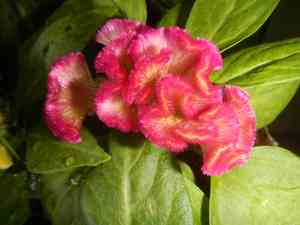
Cock's comb (Celosia cristata)
Also known as: Woolflower, Twisted red
Celosia, also known as cockscomb, is a flowering plant originating from India. Its name comes from its unique blossom that looks like a rooster's head. This plant is prone to various fungal infections, especially in damp conditions.
In This Article
Attributes of Cock's comb
Lifespan
Annual
Plant Type
Herb
Plant Height
27 cm to 49 cm
Spread
23 cm to 30 cm
Leaf Color
Green Lavender Purple Burgundy Red
Flower Size
15 cm
Flower Color
Yellow Pink Orange Red Purple Lavender
Images of Cock's comb

Quickly Identify Cock's comb
1
Identify Celosia cristata by its unique, crested flower heads that can be red, orange, pink, yellow, or purple. The leaves are simple, lance-shaped, and arranged alternately on the stem.
Scientific Classification of Cock's comb
Phylum
Vascular plants
Class
Dicotyledons
Order
Pinks, cacti, and allies
Family
Amaranth
Genus
Cockscombs
Species
Cock's comb
Planting and Growing of Cock's comb
Care Difficulty
Easy
Watering Schedule
Every 8 days
Sunlight Requirements
Full sun
Sunshine Duration
6-10 hours
Ideal Temperature
70-85℉
Soil Type
Potting Mix, Peat Mix
Soil pH
6.5-7.5
Fertilizer Type
Balanced
Pruning Season
Spring, Summer
Pruning Area
Branches, Leaves
Pruning Frequency
2 times a year
Repotting Season
Spring
Pot Type
Plastic, Ceramic
 How to Water Cock's comb?
Celosia cristata thrives with consistent moisture, but it does not like waterlogged soil. Watering should aim to make the soil feel damp but not soggy to touch, resembling the moisture level of a wrung-out sponge. At each watering, aim for 300 ml to keep its vibrant crests well-nourished.
More About Watering Techniques→
What are the symptoms of an underwatered Cock's comb?
›
What should I do if my Cock's comb is not getting enough water?
›
What are the symptoms of an overwatered Cock's comb?
›
How to save an overwatered Cock's comb?
›
 What Are the Sunlight Requirements for Cock's comb?
Celosia cristata thrives in full to partial sunlight, ideally receiving 6-8 hours per day. Adequate lighting maximizes photosynthetic efficiency, encouraging vibrant blooms and lush foliage while supporting a strong, resilient structure.
More About Sunlight Requirements Techniques→
What is the best setting for Celosia cristata?
›
How can you monitor and adjust lighting for optimal growth?
›
What are the benefits of optimal lighting for Celosia cristata?
›
 What Is the Ideal Temperature Range for Cock's comb?
The ideal temperature range for Celosia cristata is between 70°F and 85°F. This range provides the optimal warmth that the plant requires for healthy growth and flowering. Maintaining these temperatures helps ensure that the plant's metabolic processes function efficiently, promoting lush growth and vibrant blossoms.
 What Soil is Best for Cock's comb?
Celosia cristata thrives in well-draining soil, preventing waterlogging that could lead to root rot. This ensures the roots have adequate air circulation and access to nutrients, crucial for vibrant growth and vivid flower colors. The plant benefits from soils with moderate fertility, providing essential nutrients without overwhelming the roots. This soil condition supports robust growth and a plentiful display of blooms, ensuring the plant reaches its full ornamental potential. Incorporating organic matter like compost into the soil improves its nutrient profile and structure. This amendment boosts soil fertility, encourages beneficial microorganisms, and provides the nutrients needed for lush foliage and abundant flowers.
More About Soil→
 How to Fertilize Cock's comb?
Celosia cristata enjoys a balanced supply of nutrients, so it's crucial to provide the correct amount of fertilizer. For liquid fertilizers, typically dilute the solution to half the strength recommended on the label. When using a balanced 10-10-10 liquid fertilizer, apply approximately 1 tablespoon per gallon of water. For slow-release granules, a gentle sprinkle around the base of the plant should suffice, ensuring not to overwhelm the roots with too much nutrient concentration.
More About Fertilizing Techniques→
 How to Prune Cock's comb?
Begin by examining your Celosia cristata for any dead or wilted blooms. Use sharp shears to snip these off just above the first set of healthy leaves. Trim any excessively long stems to maintain a bushier shape. Be gentle to avoid damaging the healthy parts of the plant. It’s crucial not to remove more than one-third of the plant during a single pruning session. Over-pruning can stress the Celosia cristata, leading to slower growth and potential susceptibility to pests and diseases.
More About Pruning Techniques→
 How to Propagate Cock's comb plant?
1
Before planting, ensure seeds are dry and free of any disease. Soaking them in water overnight can aid in faster germination but is not mandatory.
2
Carefully sow the seeds onto the propagation mix in the seed tray. Lightly cover them with a thin layer of soil to protect them and ensure contact with the moist medium.
3
Keep the soil consistently moist but not waterlogged. Excessive watering can lead to rot, while insufficient moisture can inhibit germination.
 How to Repot Cock's comb plant?
1
Celosia cristata should be repotted when you notice that its roots start peeking out of the drainage holes, indicating a pot-bound condition. Additionally, if the plant's growth slows down or leaves start to yellow, these are signs it's time to give your plant more space.
2
Select a pot that is one to two inches larger in diameter than the current one. A good pot should have plenty of drainage holes to prevent water logging. Using the right pot size promotes healthy root growth and prevents the soil from retaining too much moisture, which could lead to root rot.
3
Opt for a well-draining, loamy soil mix that allows excess water to escape easily. This soil type ensures that the roots have proper aeration and prevents water from pooling at the bottom, which could lead to root rot and other fungal issues.
Learn More About Cock's comb Diseases
Anthracnose
Bacterial Leaf Spot
Bacterial Soft Rot
Bacterial Wilt
Damping-off
Downy Mildew
Drought Stress
Fusarium Wilt
Gray Mold
Leaf Spot
Mosaic
Nutrient Deficiency
Nutrient Toxicity
Powdery Mildew
Root Rot
Root-knot Nematode
Rusts
Sooty Mold
Spider Mites
Temperature Stress
Thrips Damage
White Mold



