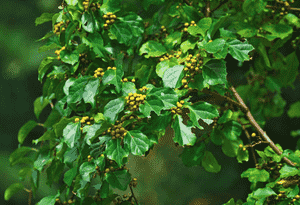
Oriental bittersweet(Celastrus orbiculatus)

Oriental bittersweet (Celastrus orbiculatus)

Also known as: Staff vine, Round-leaved bittersweet

Kudzu (Pueraria montana var. lobata) is a highly aggressive vine that has been classified as an invasive species in numerous regions. This rapid-growing plant climbs over trees and structures, often wrapping tightly around them. Kudzu can completely engulf and strangle mature trees, leading to their eventual demise.

Attributes of Oriental bittersweet

Lifespan
Perennial
Plant Type
Vine
Plant Height
12 m
Spread
1.5 m to 3 m
Leaf Color
Green Yellow
Flower Size
2 mm to 2.5 mm
Flower Color
Green Yellow

PlantJoy - Identify plants with a snap

Identify and diagnose plants, get toxicity alerts, and explore safety guides for all types of fungi.

Try for Free

Images of Oriental bittersweet

Oriental bittersweet(Celastrus orbiculatus)

Quickly Identify Oriental bittersweet

1
Distinctive red capsules with yellow casings add vibrant color.
2
Simple, alternate leaves with glossy surfaces and rounded toothed margins.
3
Twining stem pattern, often twisting conspicuously, envelops structures.
4
Clusters of small dioecious flowers with 5 green petals, lacking scent.
5
Fruit capsules mature from green to yellow, revealing scarlet fleshy interior.

Scientific Classification of Oriental bittersweet

Phylum
Vascular plants
Class
Dicotyledons
Order
Spindle tree order
Family
Bittersweet
Genus
Staff vines
Species
Oriental bittersweet

Planting and Growing of Oriental bittersweet

Care Difficulty
Easy
Watering Schedule
Every 2 days
Sunlight Requirements
Full sun
Sunshine Duration
6-10 hours
Ideal Temperature
59-77℉
Soil Type
Potting Mix, Peat Mix
Soil pH
6-8
Fertilizer Type
Balanced
Pruning Season
Spring, Summer
Pruning Area
Branches, Leaves
Pruning Frequency
2 times a year
Repotting Season
Spring
Pot Type
Plastic, Ceramic

water icon How to Water Oriental bittersweet?

Celastrus orbiculatus, commonly known as Oriental bittersweet, requires a balanced watering strategy. Aim to keep the soil moderately moist without waterlogging. Typically, 250 milliliters per session is a good amount, allowing the soil to absorb moisture thoroughly without becoming overly saturated.
What are the symptoms of an underwatered Oriental bittersweet?
What should I do if my Oriental bittersweet is not getting enough water?
What are the symptoms of an overwatered Oriental bittersweet?
How to save an overwatered Oriental bittersweet?

sunlight icon What Are the Sunlight Requirements for Oriental bittersweet?

Sunlight Requirements: Full sun, Partial sun
Duration of light: 4-8 hours sunlight
Partial sun or full sun is ideal for this plant, supporting its need for regular sunlight. Such conditions enable optimal photosynthesis, encouraging strong growth and vibrant foliage.
Optimal Sunlight Duration
Sunlight Placement Solutions
Benefits of Ideal Lighting

temperature icon What Is the Ideal Temperature Range for Oriental bittersweet?

Ideal Temperature: 59 ~ 77℉
Celastrus orbiculatus thrives best in temperatures ranging between 59°F and 77°F. Within this temperature range, the plant can effectively grow and maintain a healthy foliage. This range simulates the plant's natural environment during mild seasons, supporting vigorous photosynthesis and nutrient uptake.

soil icon What Soil is Best for Oriental bittersweet?

Soil type: Loam, Sandy loam, Clay soil
Soil PH: 6 ~ 8
Celastrus orbiculatus thrives in well-draining soil as it prevents overwatering and root rot, promoting healthy root systems for vigorous growth and reduced risk of fungal diseases. The plant benefits from nutrient-rich soil, which provides essential minerals and nutrients necessary for strong foliage and berry production, supporting its vigorous climbing nature. Ensuring adequate soil moisture retention is crucial for Celastrus orbiculatus, as it ensures a consistent water supply, critical for lush growth, especially during dry spells.

fertilize icon How to Fertilize Oriental bittersweet?

Fertilizer type: Balanced
For Celastrus orbiculatus, the fertilization process requires careful balance. Use a balanced liquid fertilizer diluted to half the recommended strength to avoid excessive nutrient concentration. Apply around one to two gallons for fully grown plants or a proportional amount relative to the plant's size and container. Slow-release granules should be distributed at a rate recommended by the product, usually a tablespoon per square foot around the plant base.

prune icon How to Prune Oriental bittersweet?

Pruning Time: Spring, Summer, Autumn, Winter
Begin by understanding the growth pattern of Celastrus orbiculatus. This vine can grow aggressively, so identify main stems and any unwanted or excessive branches. Always use clean and sharp pruning shears to avoid transmitting disease. Sterilize your tools before and after pruning to keep the plant healthy. Start pruning by removing any dead, damaged, or diseased branches. This will improve the plant's overall health and encourage new growth. Trim back vigorously growing vines to control size. Focus on unwanted growth and direct the plant where you want it to go by cutting above a healthy bud. To prevent mildew and disease, ensure your pruning opens up the plant structure, allowing better air and light penetration through the vine.

propagate icon How to Propagate Oriental bittersweet plant?

Propagate Time: Spring, Early summer
1
Collect seeds from ripe fruit in the autumn and clean them thoroughly to remove any pulp or residue before storing them in a cool, dry place for stratification over winter.
2
Take cuttings in early summer, using clean pruning shears. Cut below a node and remove the lower leaves to prepare them for planting in a soil mix.
3
In spring, select a low branch, gently bend it to the ground, and cover part of it with soil. Secure in place and wait several months for roots to develop.

repot icon How to Repot Oriental bittersweet plant?

Repotting frequency: Every 2-3 years
1
Celastrus orbiculatus needs repotting when its roots start circling around the pot bottom or protrude from drainage holes, indicating root-bound conditions. Additionally, if growth slows or water drains too quickly, it's time for a new home.
2
Select a pot that is 1-2 inches larger in diameter than the current one. Ensure it has drainage holes to prevent waterlogging, which can lead to root rot. Opting for porous materials like terracotta aids in better aeration and moisture regulation.
3
A well-draining loamy soil with added organic matter is ideal for Celastrus orbiculatus. This soil mix ensures proper root aeration while retaining just enough moisture for healthy growth. Avoid overly compacted soils that hinder root expansion.

PlantJoy - Identify plants with a snap

Find the best spots for them to optimize their health, simply using your phone.

Try for Free

Toxicity of Oriental bittersweet

Is Oriental bittersweet toxic to cat?

Oriental bittersweet is a hazardous plant species that represents a considerable threat to cats. If cats inadvertently ingest any portion of oriental bittersweet, they face the risk of toxicity because all sections of the plant are poisonous. Affected cats might show signs of discomfort or illness. Therefore, pet owners must remain vigilant and ensure their cats do not have access to oriental bittersweet. In the event that a cat is believed to have consumed this plant, it is crucial to seek immediate veterinary assistance. Quick intervention is vital for the health and well-being of the animal.

Is Oriental bittersweet toxic to dog?

Oriental bittersweet is a harmful plant that presents a considerable danger to dogs if they ingest it. Dogs may inadvertently consume various parts of this plant, resulting in poisoning. The whole plant, encompassing its leaves, stems, flowers, and berries, is deemed toxic and should be kept away from pets. Signs of poisoning in dogs can include vomiting, diarrhea, abdominal distress, weakness, and potentially more serious responses depending on the quantity consumed. If you believe your dog has ingested oriental bittersweet, it is crucial to seek urgent veterinary assistance to guarantee the best possible outcome for your furry companion.

Identify toxic plants for your safety

Learn which plants are harmful to you and your pets, and make informed choices for a safer home!

Try for Free
WARNING
The judgment on toxicity and danger is for reference only. We DO NOT GUARANTEE any accuracy of such judgment. Therefore, you SHALL NOT rely on such judgment. It is IMPORTANT TO SEEK PROFESSIONAL ADVICE in advance when necessary.
More About Toxic Techniques

