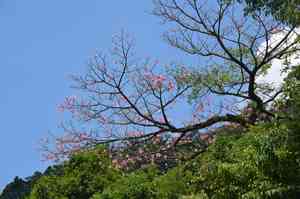
Floss silk tree (Ceiba speciosa)
Also known as: Brazil kapok, Toborochi
The Silk Floss Tree (Ceiba speciosa), native to South America, can grow over 25 meters tall. Its trunk is adorned with thick, sharp thorns that deter most animals. However, its flowers are particularly attractive to hummingbirds.
In This Article
Attributes of Floss silk tree
Lifespan
Perennial
Plant Type
Tree
Plant Height
25 m
Spread
11 m to 14 m
Leaf Color
Green
Flower Size
10 cm to 15 cm
Flower Color
Pink White
Images of Floss silk tree
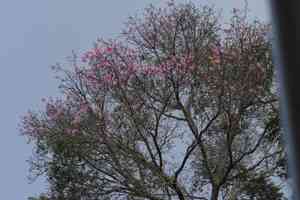
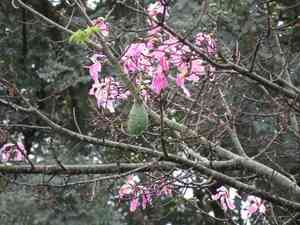
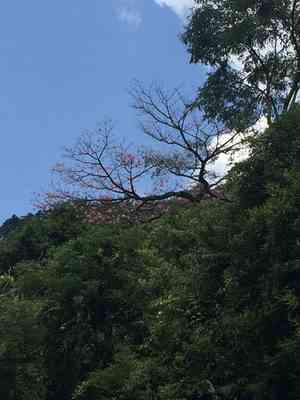
Quickly Identify Floss silk tree
1
Prominent conical prickles on bark for texture.
2
Large, vibrant pale-pink to rose-colored flowers.
3
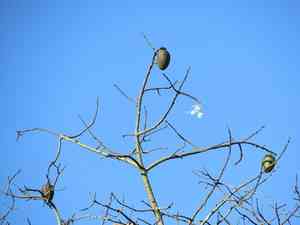
Distinctive dehiscent pod with white cotton-like interior.
4
Palmately compound leaves with serrate margins.
5
Stout triangular spines on trunk for texture.
Scientific Classification of Floss silk tree
Phylum
Vascular plants
Class
Dicotyledons
Order
Malvales
Family
Mallow
Genus
Ceiba
Species
Floss silk tree
Planting and Growing of Floss silk tree
Care Difficulty
Easy
Watering Schedule
Every 2 days
Sunlight Requirements
Full sun
Sunshine Duration
6-10 hours
Ideal Temperature
68-86℉
Soil Type
Potting Mix, Peat Mix
Soil pH
6.5-7.5
Fertilizer Type
Balanced
Pruning Season
Spring, Summer
Pruning Area
Branches, Leaves
Pruning Frequency
2 times a year
Repotting Season
Spring
Pot Type
Plastic, Ceramic
 How to Water Floss silk tree?
When watering Ceiba speciosa, aim to provide approximately 500 milliliters of water each time. This amount ensures the soil is uniformly moist but not saturated. The key is to let the soil dry out slightly between watering to prevent root rot, mimicking the natural rainfall patterns of its native environment.
More About Watering Techniques→
What are the symptoms of an underwatered Floss silk tree?
›
What should I do if my Floss silk tree is not getting enough water?
›
What are the symptoms of an overwatered Floss silk tree?
›
How to save an overwatered Floss silk tree?
›
 What Are the Sunlight Requirements for Floss silk tree?
Ceiba speciosa flourishes best with full sunlight, adapting well to partial sunlight too. Ideal lighting encourages prolific blooms and vigorous growth, ensuring the plant's ornamental appeal and ecological benefits are maximized.
More About Sunlight Requirements Techniques→
What kind of sunlight does it need?
›
How to achieve ideal lighting?
›
Benefits of ideal lighting for Ceiba speciosa
›
 What Is the Ideal Temperature Range for Floss silk tree?
The ideal temperature range for Ceiba speciosa is between 68 to 86 degrees Fahrenheit. This range supports the optimal physiological processes, including photosynthesis and respiration, which are crucial for the health and growth of the plant. Maintaining this temperature range helps ensure strong wood growth and vibrant blooms.
 What Soil is Best for Floss silk tree?
Ceiba speciosa thrives in well-drained soils that prevent waterlogging, reducing the risk of root rot. This ensures proper root aeration and nutrient uptake, promoting robust growth and a healthy canopy. This tree benefits from soil enriched with organic matter, which provides essential nutrients for its growth. Nutrient-rich substrates support lush foliage and vibrant flowering, enhancing the tree's aesthetic appeal. While Ceiba speciosa appreciates well-drained conditions, it also requires soil that retains moisture to sustain it during dry spells. This balance helps maintain steady growth rates and resists drought stress.
More About Soil→
 How to Fertilize Floss silk tree?
For Ceiba speciosa, use a balanced liquid fertilizer diluted to half the recommended strength for regular applications. When using granular fertilizers, apply approximately 2 pounds per inch of trunk diameter once a year, ensuring even distribution around the root zone.
More About Fertilizing Techniques→
 How to Prune Floss silk tree?
Before making any cuts, take time to study the tree's structure. Look for any dead, damaged, or crossed branches. Identifying these at the start helps in planning the procedure, ensuring the tree retains a balanced, healthy form post-pruning. Use sharp pruning shears to make clean cuts at a 45-degree angle just above leaf nodes or branch collars. Clean cuts heal more efficiently, reducing the risk of infections. Avoid tearing the bark, which can expose the tree to diseases and pests. Prune to open up the canopy, allowing light and air to penetrate the inner branches. This not only improves the tree’s health by reducing the risk of fungal diseases but also promotes robust flowering. Be cautious to maintain an aesthetically pleasing shape while ensuring airflow.
More About Pruning Techniques→
 How to Propagate Floss silk tree plant?
1
Start by collecting mature seeds from the Ceiba speciosa pods. Clean them to remove any pulp, which helps prevent rot during the germination process.
2
Prepare a light, well-draining potting mix such as a mix of sand and peat. This type of soil helps maintain the moisture required for seed germination while preventing waterlogging.
3
Select healthy, semi-mature stem cuttings from the Ceiba speciosa. Cut just below a node and remove excess leaves to reduce water loss during rooting.
 How to Repot Floss silk tree plant?
1
Ceiba speciosa should be repotted when you observe that its growth has slowed down, or roots are visible through drainage holes, indicating it is root-bound. Spring and summer are the best periods as warmer temperatures and longer daylight hours promote active growth, ensuring the plant adjusts easily to its new environment.
2
Select a pot that is one size larger than the current one to provide enough space for future root growth. Ensure the pot has adequate drainage holes to prevent waterlogging, which can lead to root rot. A terracotta pot is ideal as it allows better air circulation around the roots, promoting healthy growth.
3
Opt for a well-draining loamy soil mix enriched with organic matter. This type of soil retains necessary moisture without becoming waterlogged, and the organic matter provides essential nutrients that support healthy plant growth. The well-draining nature prevents root decay and encourages a robust root system.



