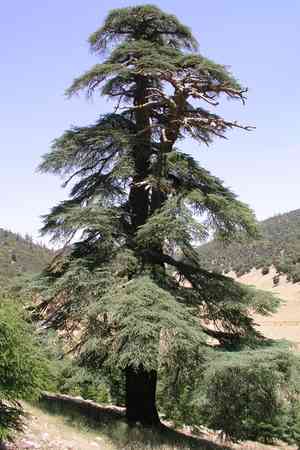
Atlas cedar (Cedrus atlantica)
Also known as: Atlas Cedar, Blue Atlas Cedar
The Atlas cedar (Cedrus atlantica) is an endangered evergreen tree native to the mountainous regions of Morocco and Algeria. Reaching heights of over 35 meters, it is characterized by its drooping branches. This tree has faced significant overexploitation for timber both locally and abroad. Additionally, it serves as a crucial habitat for the endangered Barbary macaque.
In This Article
Attributes of Atlas cedar
Lifespan
Perennial
Plant Type
Tree
Plant Height
30 m to 40 m
Spread
90 cm to 3.5 m
Leaf Color
Green Blue Silver
Flower Size
N/A (Gymnosperm)
Flower Color
Green Yellow
Images of Atlas cedar
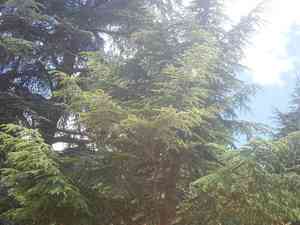
Quickly Identify Atlas cedar
1
Needles have a triangular to quadrangular cross-section, unique in genus.
2
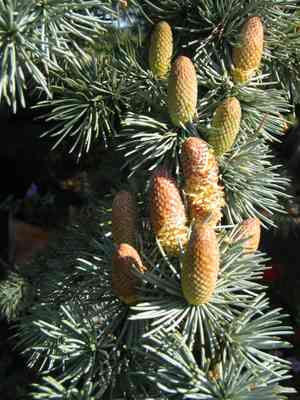
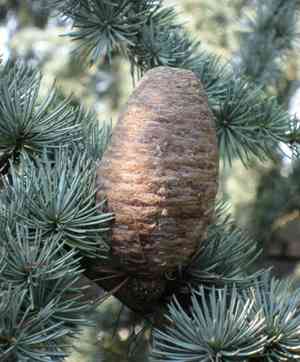
Female cones are barrel-shaped, rest on branches, and lack petals.
3
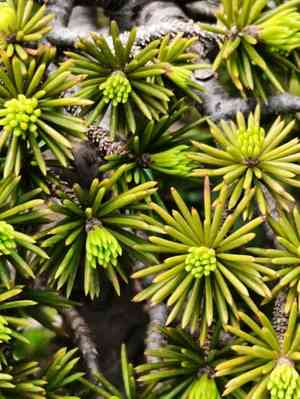
Leaves are bluish-green to silvery-blue, in tufted clusters.
4
Stems are brown to gray, with stiff, horizontal branching.
5
Trunk matures into boxed bark pattern with deep, rectangular fissures.
Scientific Classification of Atlas cedar
Phylum
Vascular plants
Class
Conifers
Order
Pines and allies
Family
Pine
Genus
Cedars
Species
Atlas cedar
Planting and Growing of Atlas cedar
Care Difficulty
Easy
Watering Schedule
Every 2 days
Sunlight Requirements
Full sun
Sunshine Duration
6-10 hours
Ideal Temperature
60-75℉
Soil Type
Potting Mix, Peat Mix
Soil pH
6.5-7.5
Fertilizer Type
Balanced
Pruning Season
Spring, Summer
Pruning Area
Branches, Leaves
Pruning Frequency
2 times a year
Repotting Season
Spring
Pot Type
Plastic, Ceramic
 How to Water Atlas cedar?
When it comes to watering Cedrus atlantica, aim for about 500 ml of water per session. The key principle is to allow the top layer of soil to dry out slightly between waterings, but not to let it become bone dry. It's essential to ensure that the water penetrates deep into the root zone, promoting deep and strong root growth.
More About Watering Techniques→
What are the symptoms of an underwatered Atlas cedar?
›
What should I do if my Atlas cedar is not getting enough water?
›
What are the symptoms of an overwatered Atlas cedar?
›
How to save an overwatered Atlas cedar?
›
 What Are the Sunlight Requirements for Atlas cedar?
Cedrus atlantica, being adapted to full sun to partial sun, benefits greatly from such exposure. Ideal light encourages vigorous growth and enhances the ornamental qualities of its blue-green needles.
More About Sunlight Requirements Techniques→
What is the ideal lighting for Cedrus atlantica?
›
How can I ensure ideal light conditions for Cedrus atlantica?
›
What benefits does Cedrus atlantica gain from ideal light?
›
 What Is the Ideal Temperature Range for Atlas cedar?
Cedrus atlantica thrives best in moderate climates where temperatures range between 60°F and 75°F. This range supports optimal growth by preventing temperature-induced stress, ensuring sufficient photosynthesis, and maximizing nutrient uptake efficiency.
 What Soil is Best for Atlas cedar?
Cedrus atlantica thrives in well-drained soil, which prevents root rot and ensures proper nutrient uptake. This type of soil aids in keeping the roots healthy by preventing waterlogging, which can lead to root diseases. To support its growth, Cedrus atlantica benefits from nutrient-rich soil, which provides essential minerals for photosynthesis and development. Rich soil boosts the tree’s vitality and enhances its resilience against pests and diseases. This plant prefers soil with moderate moisture levels, avoiding both drought stress and oversaturation. Maintaining optimal moisture supports consistent growth and prevents wilting or other moisture-related stress.
More About Soil→
 How to Fertilize Atlas cedar?
Cedrus atlantica, or the Atlas Cedar, prefers a balanced and careful approach when it comes to fertilization. During its growing season, apply a balanced, slow-release fertilizer at a rate of about one tablespoon per square foot, ensuring even distribution. Liquid fertilizers should be more diluted, typically mixed at half the recommended strength for shrubs and applied evenly across the root zone to avoid leaf scorch.
 How to Prune Atlas cedar?
Start by inspecting the tree carefully to identify any dead, diseased, or damaged branches. Using clean, sharp pruning shears, carefully remove these branches back to their point of origin. To maintain the tree's natural shape, make cuts just above a healthy bud or lateral branch, ensuring the cut angles away from the bud. Always step back frequently to assess the tree's overall shape and balance as you prune. While shaping Cedrus atlantica, make sure to follow its natural conical form. Avoid over-pruning, as excessive removal of branches can lead to stress and poor growth. Focus on thinning out overcrowded branches to allow light and air to penetrate the interior of the tree, which helps prevent fungal diseases.
More About Pruning Techniques→
 How to Propagate Atlas cedar plant?
1
Begin by collecting seeds from mature cones of Cedrus atlantica. Stratify the seeds by placing them in a moist substrate at a temperature of 4°C for about one to two months to break dormancy and enhance germination rate.
2
Select healthy, semi-hardwood cuttings from the tree. Cuttings should be about 15-20 cm long. Remove any lower leaves, leaving only a few on the top, to reduce water loss and prioritize root growth.
3
Select compatible rootstock and scion material. The cleft grafting technique is effective for Cedrus atlantica. Cut the rootstock to form a clean split and insert the scion. Secure with grafting tape to ensure stability and facilitate healing.
 How to Repot Atlas cedar plant?
1
Cedrus atlantica should be repotted when it exhibits signs such as roots circling the pot or protruding through drainage holes. Repotting is best done in spring or autumn to avoid stress during extreme temperatures.
2
Choose a pot that's 2-4 inches larger in diameter than the current one. Ensure it has ample drainage to prevent waterlogging. Selecting the correct pot size ensures proper root expansion and reduces the risk of overwatering.
3
Opt for a well-draining soil mix that's slightly acidic to mimic the natural habitat of Cedrus atlantica. This soil type provides essential nutrients while preventing root rot by allowing excess water to escape.



