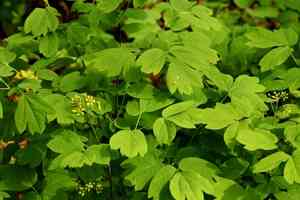
Blue cohosh(Caulophyllum thalictroides)

Blue cohosh (Caulophyllum thalictroides)

Also known as: Papoose root

Blue cohosh (Caulophyllum thalictroides) is a perennial plant that flourishes in shady, forested areas with moist, well-drained soil. It produces clusters of greenish-yellow flowers that eventually develop into blue berries, which are toxic and should not be consumed. The plant's foliage starts as a delicate green in the spring and transitions to a golden-green hue as the season progresses.

Attributes of Blue cohosh

Lifespan
Perennial
Plant Type
Herb
Plant Height
30 cm to 61 cm
Spread
30 cm to 60 cm
Leaf Color
Green
Flower Size
8 mm to 1.3 cm
Flower Color
Green Yellow Brown

PlantJoy - Identify plants with a snap

Identify and diagnose plants, get toxicity alerts, and explore safety guides for all types of fungi.

Try for Free

Images of Blue cohosh

Blue cohosh(Caulophyllum thalictroides)

Quickly Identify Blue cohosh

1
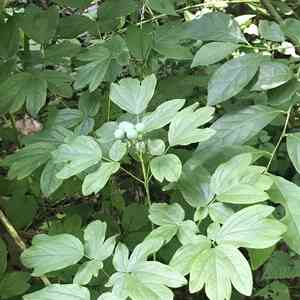
Finely-dissected pinnate leaves, blue maturing to bluish-green, mid-stem placement.
2
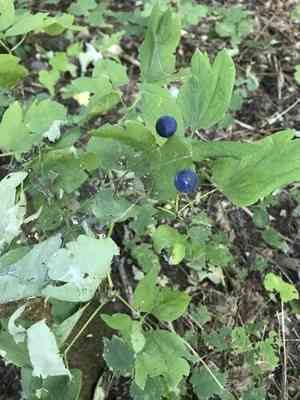
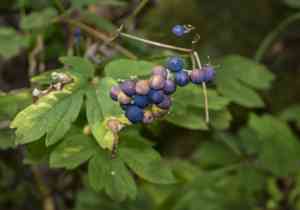
Eye-catching grape-like blue berries, 1/3 inch (8 mm) diameter, ornamental in autumn.
3
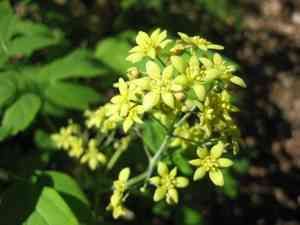
Delicate flowers, 1/3 inch (0.8 cm) across, 6 petaloid sepals, 6 stamens.
4
Berries 1/3 inch (8.5 mm) in diameter, green to bright blue, toxic to humans.
5
Unbranched, terete stem, glabrous, light green to pale purple, waxy glaucous surface.

Scientific Classification of Blue cohosh

Phylum
Vascular plants
Class
Dicotyledons
Order
Ranunculales
Family
Barberry
Genus
Blue Cohosh
Species
Blue cohosh

Planting and Growing of Blue cohosh

Care Difficulty
Moderate
Watering Schedule
Every 2 days
Sunlight Requirements
Partial sun
Sunshine Duration
6-8 hours
Ideal Temperature
60-75℉
Soil Type
Potting Mix, Peat Mix
Soil pH
4.5-7
Fertilizer Type
Balanced
Pruning Season
Spring, Summer
Pruning Area
Branches, Leaves
Pruning Frequency
Once a year
Repotting Season
Spring
Pot Type
Plastic, Ceramic

water icon How to Water Blue cohosh?

For Caulophyllum thalictroides, water about 250 milliliters at a time, making sure the soil is moist but not waterlogged. The goal is to maintain evenly moist soil without causing water to pool at the base or on the surface. Allow the top inch of soil to dry out slightly between waterings to avoid water stagnation.
What are the symptoms of an underwatered Blue cohosh?
What should I do if my Blue cohosh is not getting enough water?
What are the symptoms of an overwatered Blue cohosh?
How to save an overwatered Blue cohosh?

sunlight icon What Are the Sunlight Requirements for Blue cohosh?

Sunlight Requirements: Partial sun, Full shade
Duration of light: 2-4 hours a day
Partial sun or full shade is ideal, mimicking its woodland environment. This range provides enough light for photosynthesis while preventing leaf burn, promoting stable growth and health.
What is the ideal light setting for Caulophyllum thalictroides?
How to achieve the ideal lighting for the plant?
What are the benefits of ideal lighting conditions?
More About Sunlight Requirements Techniques

temperature icon What Is the Ideal Temperature Range for Blue cohosh?

Ideal Temperature: 60 ~ 75℉
The ideal temperature range for growing Caulophyllum thalictroides is between 60°F and 75°F. These temperatures mimic the conditions found in the plant’s native woodland habitats, where moderate warmth and shade prevail. Maintaining these temperatures ensures optimal growth and health, preventing stress that could inhibit development.

soil icon What Soil is Best for Blue cohosh?

Soil type: Loam, Sandy loam, Acidic soil
Soil PH: 4.5 ~ 7
Caulophyllum thalictroides thrives in soil that retains moisture well. This characteristic helps provide consistent hydration, essential for its root system to absorb necessary nutrients without stress, which promotes lush growth and flowering. A nutrient-rich composition is vital, as it supports the plant's growth and health. Access to abundant nutrients results in robust foliage and overall vigor, creating the perfect conditions for the blue cohosh to thrive. While moisture is important, well-drained soil is critical to prevent waterlogging which can lead to root decay. This balance ensures healthy root growth, reducing the risk of fungal diseases and enhancing the plant's resilience.

fertilize icon How to Fertilize Blue cohosh?

Fertilizer type: Balanced
Caulophyllum thalictroides, also known as Blue Cohosh, prefers moderate fertilization. Use a balanced, water-soluble fertilizer diluted to half the recommended strength. For slow-release granular fertilizers, use an amount that correlates with the size and age of the plant, typically around 2 ounces per plant annually.

prune icon How to Prune Blue cohosh?

Pruning Time: Spring, Summer
Start by removing any dead, damaged, or diseased foliage to encourage airflow and prevent disease. Trim back the stems to maintain the desired shape while ensuring you do not remove more than one-third of the plant’s structure. Caulophyllum thalictroides can be shaped by selectively cutting back overgrown areas, promoting a more compact and aesthetically pleasing formation. This also aids in preventing legginess and promotes fuller growth. More About Pruning Techniques

propagate icon How to Propagate Blue cohosh plant?

Propagate Time: Early spring, Late spring, Early autumn
1
Use a well-draining seed starting mix to fill the tray. Ensure the soil is moist but not soggy, which provides an ideal environment for seed germination.
2
Sow the seeds on the surface of the soil and cover lightly with a thin layer of soil. Keep the tray in a warm, well-lit area, ensuring the soil remains consistently moist.
3
Gently dig up the mature plant using a garden fork, and separate the root clumps by hand. Replant the divisions immediately at the same depth in a pre-prepared bed.
More About Propagating Techniques

repot icon How to Repot Blue cohosh plant?

Repotting frequency: Every 2-3 years
1
Caulophyllum thalictroides gives off clear signals when it needs repotting. Look for roots poking out from the drainage holes and stunted growth. Spring is ideal as the plant begins its active growth phase.
2
Select a pot slightly larger than the current one, preferably with good drainage materials. This new room will allow roots to spread properly and help in promoting healthy foliage growth.
3
Opt for a rich, well-draining organic mix to ensure your plant thrives in its new home. Such soil mimics its natural habitat, allowing both moisture retention and proper drainage.

PlantJoy - Identify plants with a snap

Find the best spots for them to optimize their health, simply using your phone.

Try for Free

Toxicity of Blue cohosh

Is Blue cohosh toxic to humans?

Blue cohosh exhibits mild toxicity when ingested, and handling the plant may lead to dermatitis. The toxic properties result from alkaloids and saponins present in its roots, berries, and seeds. Consumption of blue cohosh leads to low to moderate levels of illness, which can vary based on the quantity ingested. Due to their youth, lack of caution, and inherent curiosity, children are particularly vulnerable to poisoning, often mistaking the seeds for blueberries. Symptoms associated with blue cohosh poisoning may include vomiting, diarrhea, stomach cramps, chest pain, elevated blood pressure, and increased blood sugar levels. Contact with the plant can cause skin irritation.

Is Blue cohosh toxic to cat?

Blue cohosh is known to have a moderate level of toxicity for felines. If any part of this plant is ingested, it can result in poisoning in cats. Once affected, cats might show signs of physical distress or illness. It is vital that any cat suspected of having ingested blue cohosh be taken without delay to a veterinary clinic for a professional evaluation and care. Failing to seek immediate medical assistance could put the cat's health in significant jeopardy.

Is Blue cohosh toxic to dog?

Blue cohosh is a plant that poses moderate toxicity risk to dogs. All parts of the plant are toxic, meaning that if a dog consumes any part of it, they may exhibit symptoms such as gastrointestinal distress, neurological issues, or other signs of discomfort. Given the serious health hazards linked to this plant, dog owners must be cautious to keep their pets away from blue cohosh. Should a dog ingest any part of this plant, it is crucial to obtain prompt veterinary assistance to secure the best possible prognosis for the pet.

Identify toxic plants for your safety

Learn which plants are harmful to you and your pets, and make informed choices for a safer home!

Try for Free
WARNING
The judgment on toxicity and danger is for reference only. We DO NOT GUARANTEE any accuracy of such judgment. Therefore, you SHALL NOT rely on such judgment. It is IMPORTANT TO SEEK PROFESSIONAL ADVICE in advance when necessary.
More About Toxic Techniques