Bur parsley (Caucalis) (Caucalis)
Also known as: Burr Parsley
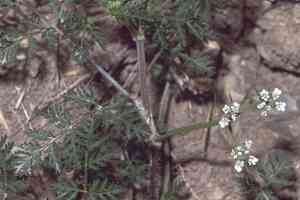
Bur parsley, a plant within the carrot family, is native to Europe, North Africa, and extends to the Middle East, reaching as far as Iran. This annual plant can grow up to 41 cm tall and features trailing stems. Its leaves are finely divided into numerous small leaflets. The plant produces small clusters of 2 to 5 flowers, displaying white or pink petals. Its fruit is an oblong capsule covered in many hooked spines.
In This Article
Attributes of Bur parsley (Caucalis)
Lifespan
Biennial
Plant Height
20-60 cm
Spread
N/A
Leaf Color
Green
Flower Size
2-5 mm
Flower Color
White
Images of Bur parsley (Caucalis)
Quickly Identify Bur parsley (Caucalis)
1
Caucalis can be identified by its finely divided, feathery leaves and its small, white umbels of flowers. The fruit is typically small and covered with bristles or hooks.
Scientific Classification of Bur parsley (Caucalis)
Phylum
Tracheophyta
Class
Magnoliopsida
Order
Apiales
Family
Apiaceae
Genus
Caucalis
Planting and Growing of Bur parsley (Caucalis)
Care Difficulty
Moderate
Watering Schedule
Every 2 days
Sunlight Requirements
Partial sun
Sunshine Duration
4-8 hours
Ideal Temperature
68-77℉
Soil Type
Potting Mix, Peat Mix
Soil pH
6.5-7.5
Fertilizer Type
Balanced
Pruning Season
Spring, Summer
Pruning Area
Branches, Leaves
Pruning Frequency
Once a year
Repotting Season
Spring
Pot Type
Plastic, Terracotta
 How to Water Bur parsley (Caucalis)?
Caucalis plants thrive with moderate watering. Aim for approximately 250 ml each time. The soil should be moist but not waterlogged; this ensures the roots receive enough oxygen and the plant remains healthy.
What are the symptoms of an underwatered Bur parsley (Caucalis)?
›
What should I do if my Bur parsley (Caucalis) is not getting enough water?
›
What are the symptoms of an overwatered Bur parsley (Caucalis)?
›
How to save an overwatered Bur parsley (Caucalis)?
›
 What Are the Sunlight Requirements for Bur parsley (Caucalis)?
Caucalis benefits from partial sun, providing a perfect balance that avoids scorching while stimulating growth, ensuring lush foliage and robust structure.
What is the best light for Caucalis?
›
How can I provide optimal light indoors?
›
What benefits arise from optimal light for Caucalis?
›
 What Is the Ideal Temperature Range for Bur parsley (Caucalis)?
The ideal temperature range for Caucalis, commonly known as wild carrot, is between 68°F and 77°F. This range provides optimal conditions for photosynthesis, nutrient absorption, and overall physiological processes. Maintaining this temperature ensures robust and healthy growth, as extreme temperatures can lead to stress and hinder development.
 What Soil is Best for Bur parsley (Caucalis)?
Caucalis thrives in soils with excellent drainage capacity. Well-drained soils prevent waterlogging, which can lead to root rot and other fungal diseases. Ensuring that the soil drains well promotes healthier root systems and vigorous growth. The plant prefers soils that are rich in nutrients, particularly with a higher calcium content. Such soils support the plant's growth by providing the necessary nutrients for foliage and flower development, enhancing overall plant vigor. While Caucalis needs well-drained soil, it also benefits from soils that can retain enough moisture. This balance helps maintain adequate hydration between watering, preventing stress from drought conditions.
 How to Fertilize Bur parsley (Caucalis)?
When fertilizing Caucalis, make sure to use a diluted liquid fertilizer. Use a dosage that is half the recommended strength on the packaging. This conservative approach ensures the plant receives essential nutrients without overwhelming its system.
 How to Prune Bur parsley (Caucalis)?
Start by locating any dead, diseased, or damaged stems. These should be removed first to prevent the spread of disease and allow healthy new growth. Trim the plant to maintain a pleasing shape and ensure good airflow through the plant's center. This can prevent fungal diseases and promote even growth throughout the plant. It is beneficial to leave some of the old growth for the plant to draw nutrients from during recovery. This practice not only supports quick regrowth but also maintains a natural balance in the plant's structure.
 How to Propagate Bur parsley (Caucalis) plant?
1
Select healthy and viable seeds with uniform size and appearance. Ensure they are free from discoloration or damage, as these factors can affect germination and subsequent seedling growth.
2
Fill the seed tray with a balanced potting mix, making sure it is evenly spread. Moisten the soil thoroughly to create a suitable environment for the seeds to sprout efficiently.
3
Evenly distribute the seeds over the prepared soil surface, then lightly cover them with a thin layer of soil. Ensure seeds are spaced appropriately to avoid overcrowding, which can hinder seedling development.
 How to Repot Bur parsley (Caucalis) plant?
1
Recognize the need for repotting when Caucalis shows signs of constrained roots, slow growth, or when the soil quality degrades. Choose to repot in spring or early summer to give the plant the best chance to thrive and adapt to new conditions.
2
Selecting the right pot is crucial. It should be one size larger than the current pot to allow room for growth, with ample drainage holes to prevent root rot. A good pot material choice helps keep the root system aerated, creating optimal conditions for Caucalis.
3
Opt for a well-draining potting mix, rich in organic matter. The soil should be loose, allowing roots to expand and breathe, which promotes healthier growth. Such soil ensures that excess water drains away, reducing the risk of fungal diseases.
Learn More About Bur parsley (Caucalis) Diseases
Anthracnose
Bacterial Leaf Spot
Bacterial Soft Rot
Bacterial Wilt
Black Spot
Chemical Injury
Crown Gall
Cyst Nematode
Damping-off
Downy Mildew
Drought Stress
Fusarium Wilt
Gray Mold
Leaf Spot
Mosaic
Nutrient Deficiency
Nutrient Toxicity
Powdery Mildew
Root Rot
Root-knot Nematode
Rusts
Sooty Mold
Spider Mites
Temperature Stress
Thrips Damage
White Mold

