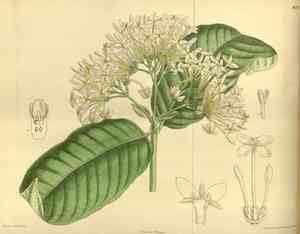
Thorny bone-apple (Catunaregam spinosa)
Also known as: Mountain pomegranate
The thorny bone-apple is predominantly found in southern Asia, with occasional occurrences in Africa. This plant is characterized by its thorn-covered branches and fragrant fruits. The fruit and bark are primarily utilized in the dye-making industry.
In This Article
Attributes of Thorny bone-apple
Lifespan
Perennial
Plant Type
Tree, Shrub
Plant Height
10 m
Spread
2 to 5 meters
Leaf Color
Dark green
Flower Size
2 cm to 2.5 cm
Flower Color
White Yellow
Images of Thorny bone-apple
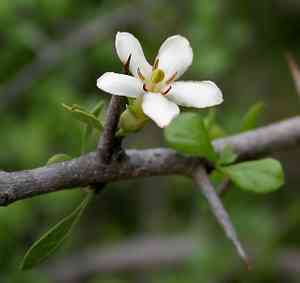
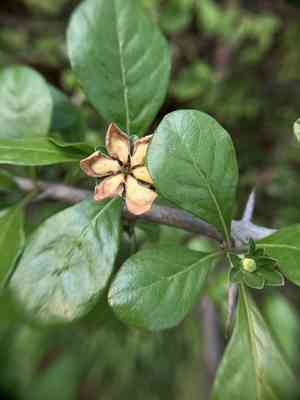
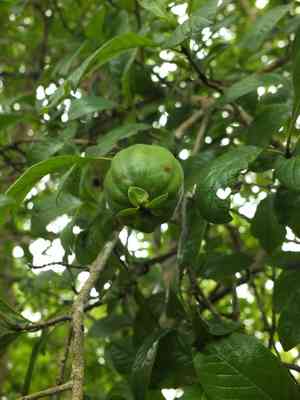
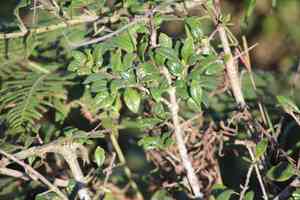
Quickly Identify Thorny bone-apple
1
Catunaregam spinosa can be identified by its spiny branches, leathery opposite leaves, white fragrant flowers, and globose yellow or orange fruit.
Scientific Classification of Thorny bone-apple
Phylum
Vascular plants
Class
Dicotyledons
Order
Gentians, dogbanes, madders, and allies
Family
Madder
Genus
Catunaregam
Species
Thorny bone-apple
Planting and Growing of Thorny bone-apple
Care Difficulty
Easy
Watering Schedule
Every 2 days
Sunlight Requirements
Partial sun
Sunshine Duration
4-6 hours
Ideal Temperature
68-86℉
Soil Type
Potting Mix, Peat Mix
Soil pH
6.5-7.5
Fertilizer Type
Balanced
Pruning Season
Spring, Summer
Pruning Area
Branches, Leaves
Pruning Frequency
Once a year
Repotting Season
Spring
Pot Type
Terracotta, Plastic
 How to Water Thorny bone-apple?
When watering Catunaregam spinosa, you should aim for about 200 ml per session. The goal is to moisten the soil thoroughly, but without leaving it waterlogged. Make sure that the water penetrates deeply into the soil to support the root system.
What are the symptoms of an underwatered Thorny bone-apple?
›
What should I do if my Thorny bone-apple is not getting enough water?
›
What are the symptoms of an overwatered Thorny bone-apple?
›
How to save an overwatered Thorny bone-apple?
›
 What Are the Sunlight Requirements for Thorny bone-apple?
Catunaregam spinosa benefits from partial sun, which offers a balance of light and shade, promoting healthy foliage, vibrant blooms, and efficient photosynthesis without the risk of leaf burn.
What conditions does Catunaregam spinosa prefer?
›
How to achieve ideal lighting?
›
Benefits of proper lighting conditions?
›
 What Is the Ideal Temperature Range for Thorny bone-apple?
The ideal temperature range for growing Catunaregam spinosa is between 68°F to 86°F. This range allows the plant to photosynthesize efficiently, ensuring optimal growth and development. Maintaining temperatures within this range helps in preventing stress and promoting healthy flowering and fruiting processes.
 What Soil is Best for Thorny bone-apple?
Catunaregam spinosa thrives best in well-draining soils. Good drainage prevents waterlogging, ensuring the roots don't suffocate and promoting overall plant health. This helps prevent root rot and enhances nutrient uptake. The plant does well in moderately fertile soils. Such soils provide sufficient nutrients without the risk of over-fertilization, which can lead to nutrient imbalances. This balance supports steady growth and vibrant foliage. While good drainage is crucial, the soil should also retain enough moisture to support sustained hydration. This is particularly important in dryer climates where the plant would otherwise struggle to maintain moisture balance.
 How to Fertilize Thorny bone-apple?
For Catunaregam spinosa, use a balanced fertilizer with N-P-K ratio like 10-10-10. Apply liquid fertilizer at a rate of half teaspoon per gallon of water, ensuring even distribution over the root zone.
 How to Prune Thorny bone-apple?
Catunaregam spinosa should be pruned in spring or summer when it actively grows. Start by cutting back any long, ungainly shoots to maintain shape. Always make cuts just above a bud facing the direction where you want new growth to appear. Clean cuts with sharp tools minimize damage and reduce the risk of introducing disease.
More About Pruning Techniques→
 How to Propagate Thorny bone-apple plant?
1
Start by selecting healthy seeds or cuttings from a vigorous and disease-free mother plant. This is crucial for ensuring strong and resilient offspring. Ensure that seeds are of good quality and cuttings are taken from mature, healthy branches.
2
Prepare a sterile, well-draining planting medium. For seed propagation, mix equal parts of potting soil, sand, and compost. For cuttings, a mix of perlite and peat moss can be suitable to promote root development.
3
Sow seeds evenly on the prepared soil and cover them lightly with a layer of soil. For cuttings, make a hole in the soil with a pencil, insert the cutting, and firm the soil around it. Ensure they are positioned in a warm area with indirect sunlight.
 How to Repot Thorny bone-apple plant?
1
Catunaregam spinosa shows signs it needs repotting when its roots begin to grow out of the drainage holes or appear circling inside the pot's rim. Another sign is when water sits on the surface and takes too long to drain. Make sure to choose a warm period during spring or summer for optimal root growth and recovery.
2
Selecting the right pot for Catunaregam spinosa is crucial for its health. Opt for a pot with at least one or two inches larger in diameter than the current one. Ensure it has adequate drainage holes to prevent waterlogging. Using a breathable material like terracotta can help regulate moisture levels, allowing the roots to breathe better and reducing the risk of rot.
3
For Catunaregam spinosa, the ideal soil mix is well-draining yet moisture-retentive. A loamy soil enriched with organic matter provides the required nutrients while allowing excess water to drain away. The right soil will encourage robust growth, offer structural support, and help your plant thrive in its new home.
Learn More About Thorny bone-apple Diseases
Anthracnose
Bacterial Leaf Spot
Bacterial Soft Rot
Bacterial Wilt
Black Spot
Chemical Injury
Crown Gall
Damping-off
Downy Mildew
Drought Stress
Fusarium Wilt
Gray Mold
Leaf Curl
Leaf Spot
Mosaic
Nutrient Deficiency
Nutrient Toxicity
Powdery Mildew
Root Rot
Root-knot Nematode
Rusts
Sooty Mold
Spider Mites
Temperature Stress
Thrips Damage
White Mold



