Madagascar periwinkle(Catharanthus roseus)

Madagascar periwinkle (Catharanthus roseus)

Also known as: Bright eyes, Old maid

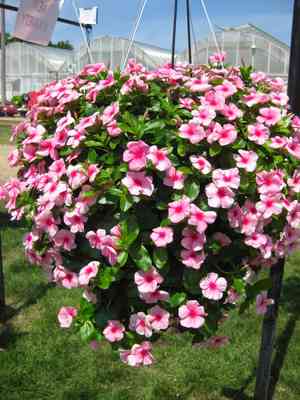
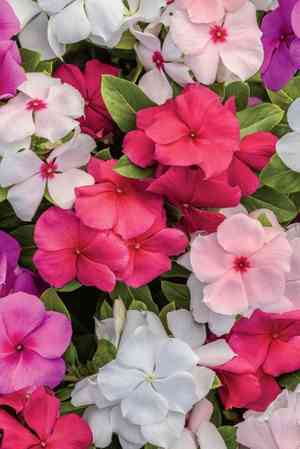
The Madagascar periwinkle (Catharanthus roseus) is a perennial plant that has been extensively cultivated over time. Breeders have focused on creating a variety of cultivars to introduce new flower colors and improve the plant's cold tolerance. Their efforts have also aimed at enhancing its resilience against diseases and pests, and increasing its versatility in different growing conditions.

Attributes of Madagascar periwinkle

Lifespan
Perennial, Annual
Plant Type
Herb
Plant Height
10 cm to 1 m
Spread
10 cm to 1 m
Leaf Color
Green
Flower Size
2 cm to 5 cm
Flower Color
White Pink Purple Red Lavender Mauve

PlantJoy - Identify plants with a snap

Identify and diagnose plants, get toxicity alerts, and explore safety guides for all types of fungi.

Try for Free

Images of Madagascar periwinkle

Madagascar periwinkle(Catharanthus roseus)

Quickly Identify Madagascar periwinkle

1
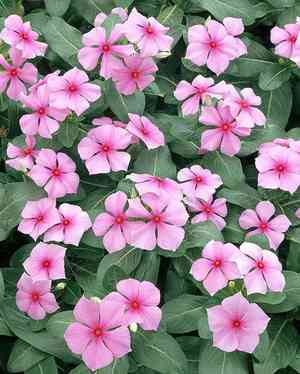
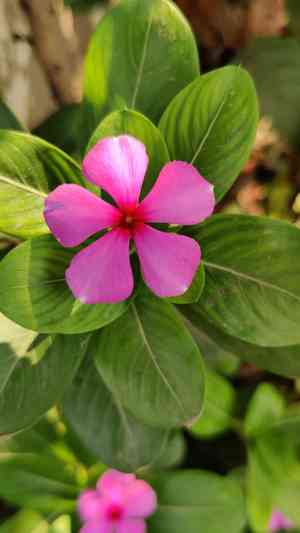
Salverform flowers with distinctive glandular dots in upper corolla tube.
2
Oppositely arranged, glossy dark green leaves with smooth margins and pale midrib.
3
Erect to decumbent stem with upward-tipping tips and milky-white sap when bruised.
4
Solitary tubular flowers in various colors, with subulate lobed calyx and eyespots.
5
Uniquely elongated, explosive fruit in pairs within persistent calyx.

Scientific Classification of Madagascar periwinkle

Phylum
Vascular plants
Class
Dicotyledons
Order
Gentians, dogbanes, madders, and allies
Family
Dogbane
Genus
Periwinkles
Species
Madagascar periwinkle

Planting and Growing of Madagascar periwinkle

Care Difficulty
Easy
Watering Schedule
Every 4 days
Sunlight Requirements
Full sun
Sunshine Duration
4-8 hours
Ideal Temperature
68-86℉
Soil Type
Potting Mix, Peat Mix
Soil pH
6.5-7.5
Fertilizer Type
Balanced
Pruning Season
Spring, Summer
Pruning Area
Branches, Leaves
Pruning Frequency
2 times a year
Repotting Season
Spring
Pot Type
Plastic, Ceramic

water icon How to Water Madagascar periwinkle?

Catharanthus roseus requires moderate watering. The ideal principle is to keep the soil consistently moist but not soggy. Watering until the soil feels adequately moist to touch is essential while ensuring that excess water drains out from the bottom of the pot.
What are the symptoms of an underwatered Madagascar periwinkle?
What should I do if my Madagascar periwinkle is not getting enough water?
What are the symptoms of an overwatered Madagascar periwinkle?
How to save an overwatered Madagascar periwinkle?
More About Watering Techniques

sunlight icon What Are the Sunlight Requirements for Madagascar periwinkle?

Sunlight Requirements: Full sun, Partial sun
Duration of light: 6 to 8 hours daily
Catharanthus roseus thrives best in full sun to partial sun. Ideal lighting promotes vibrant blooming and strong foliage growth, ensuring the plant remains healthy and visually appealing.
What is the best location for ideal lighting?
How can I ensure the plant gets enough sunlight during cloudy days?
What are the benefits of providing the ideal amount of light to Catharanthus roseus?
More About Sunlight Requirements Techniques

temperature icon What Is the Ideal Temperature Range for Madagascar periwinkle?

Ideal Temperature: 68 ~ 86℉
Catharanthus roseus thrives best in a warm environment with temperatures ranging from 68°F to 86°F. This temperature range provides optimal conditions for photosynthesis, aiding in the plant's growth and blooming. During these temperatures, the plant can effectively absorb nutrients, leading to vibrant blooms and healthy foliage. It's important to maintain a stable temperature within this range to ensure the plant's overall health and development.

soil icon What Soil is Best for Madagascar periwinkle?

Soil type: Sandy loam, Loam
Soil PH: 6.5 ~ 7.5
Catharanthus roseus requires well-drained soil to prevent root rot. Good drainage ensures that water does not accumulate around the plant's roots, allowing them to absorb nutrients effectively and maintain overall physiological health. This plant thrives in soil rich in organic matter. A nutrient-rich substrate provides essential nutrients that promote vigorous growth, vibrant flowering, and resilience against diseases. Soil with moderate water retention keeps the roots adequately hydrated during dry periods. It helps maintain a consistent moisture level, reducing the stress on the plant and supporting steady growth. More About Soil

fertilize icon How to Fertilize Madagascar periwinkle?

Fertilizer type: Balanced
Catharanthus roseus appreciates a modest amount of fertilizer. When using liquid fertilizers, dilute the solution to half of the recommended strength. For solid fertilizers, aim for approximately 5 grams per square foot of soil. It’s crucial not to over-fertilize, which can lead to nutrient burn. More About Fertilizing Techniques

prune icon How to Prune Madagascar periwinkle?

Pruning Time: Spring, Summer, Autumn
Begin by examining your Catharanthus roseus to identify any dead or diseased stems; these should be your first targets for removal. Also, look for stems that cross or rub against others. Using sharp, sterilized scissors or pruning shears, trim back any overgrown or just leggy stems to encourage fuller growth. Aim to cut just above a node where you see new buds emerging. After you're done pruning, water the plant lightly to help it recover and monitor for a few days. New growth should begin to appear, renewing the plant's vigor and bloom potential. More About Pruning Techniques

propagate icon How to Propagate Madagascar periwinkle plant?

Propagate Time: Spring, Early summer
1
Fill the seed tray with a mixture of seed-starting soil and moisten it lightly. Ensuring even moisture throughout encourages uniform seed germination and reduces the risk of mold.
2
Sprinkle the seeds thinly over the moist soil surface, then cover them with a thin layer of fine soil. Lightly mist the surface to ensure seeds are in contact with the soil.
3
Choose healthy, non-flowering stems and make a clean cut just below a node. Remove the lower leaves and place the cutting in water or rooting hormone, then into a potting mix to encourage root formation.
More About Propagating Techniques

repot icon How to Repot Madagascar periwinkle plant?

Repotting frequency: Every 1-2 years
1
Repotting Catharanthus roseus is ideal when you notice roots emerging from the drainage holes or if the plant's growth appears stunted. Spring and summer, when the plant is in its active growth phase, are the best times, as the plant can quickly recover and establish itself in the new pot.
2
Selecting a pot that's 1-2 inches larger in diameter than the current one is crucial for Catharanthus roseus. The pot should have drainage holes to ensure excess water can escape, preventing root rot. A slightly larger pot gives the roots space to grow without the risk of overwatering.
3
For Catharanthus roseus, a well-draining potting mix is ideal. This ensures that water doesn't sit around the roots, which can cause rot. A mix containing peat, perlite, and a bit of sand will provide aeration and moisture retention, beneficial for healthy growth.
More About Repotting Techniques

PlantJoy - Identify plants with a snap

Find the best spots for them to optimize their health, simply using your phone.

Try for Free

Toxicity of Madagascar periwinkle

Is Madagascar periwinkle toxic to humans?

Each component of the Madagascar periwinkle exhibits moderate to severe toxicity upon ingestion, encompassing its leaves, flowers, seeds, stems, fruits, and roots. Exposure to Madagascar periwinkle can lead to fatal outcomes, with potential symptoms including nausea, diarrhea, hypotension, seizures, tremors, depression, and coma. Children are particularly at risk for poisoning due to the accidental ingestion of this flower, which is frequently cultivated as an annual in garden settings.

Is Madagascar periwinkle toxic to cat?

The highly poisonous Madagascar periwinkle (Catharanthus roseus) possesses a terrible flavor that typically deters cats from eating more than one bite. Nevertheless, this plant contains potent alkaloids that can trigger pain or potentially lead to a coma if a cat ingests a significant amount. It is strongly advised to seek veterinary assistance if a cat is observed consuming this plant.

Is Madagascar periwinkle toxic to dog?

The Madagascar periwinkle poses a moderate to high risk of toxicity when ingested by dogs. Every part of this plant contains harmful substances that can lead to symptoms such as vomiting, diarrhea, and lethargy. In instances of significant consumption, a dog may experience seizures; therefore, it is advisable to reach out to your veterinarian if you believe your dog has eaten any portion of this plant.

Identify toxic plants for your safety

Learn which plants are harmful to you and your pets, and make informed choices for a safer home!

Try for Free
WARNING
The judgment on toxicity and danger is for reference only. We DO NOT GUARANTEE any accuracy of such judgment. Therefore, you SHALL NOT rely on such judgment. It is IMPORTANT TO SEEK PROFESSIONAL ADVICE in advance when necessary.
More About Toxic Techniques