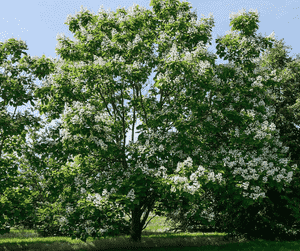
Northern catalpa (Catalpa speciosa)
Also known as: Northern Catalpa, Western Catalpa
Northern catalpa (Catalpa speciosa), native to the Midwest U.S., is often used as an ornamental tree due to its attractive appearance. It flourishes in well-drained, moist soils but can adapt to various soil types, including clay, loam, and sandy soils. For optimal growth, this tree should receive full sun to partial shade, ideally getting at least six hours of direct sunlight daily.
In This Article
Attributes of Northern catalpa
Lifespan
Perennial
Plant Type
Tree
Plant Height
15 m to 30 m
Spread
12 m
Leaf Color
Green
Flower Size
3 cm to 6 cm
Flower Color
White Purple Yellow
Images of Northern catalpa
Quickly Identify Northern catalpa
1
Large ovate leaves up to 12 inches (30 cm) long.
2
Distinctive white flowers with yellow stamens and purple markings.
3
Elongated bean-like seed pods add ornamental appeal.
4
Fruit reaching lengths of up to 22 inches (56 cm), resembling cigars.
5
Robust trunk with pale grey to reddish-brown bark and scaly ridges.
Scientific Classification of Northern catalpa
Phylum
Vascular plants
Class
Dicotyledons
Order
Lamiales
Family
Bignonia
Genus
Catalpas
Species
Northern catalpa
Planting and Growing of Northern catalpa
Care Difficulty
Easy
Watering Schedule
Every 3 days
Sunlight Requirements
Full sun
Sunshine Duration
6-10 hours
Ideal Temperature
60-85℉
Soil Type
Potting Mix, Peat Mix
Soil pH
6.5-7.5
Fertilizer Type
Balanced
Pruning Season
Spring, Summer
Pruning Area
Branches, Leaves
Pruning Frequency
2 times a year
Repotting Season
Spring
Pot Type
Plastic, Ceramic
 How to Water Northern catalpa?
When watering Catalpa speciosa, it's important to ensure that the soil is thoroughly moist but not waterlogged. The ideal amount of water is approximately 2000 milliliters per session. This allows the water to penetrate deep into the soil, reaching the roots effectively. Ensuring the roots are well-hydrated promotes healthy growth and enhances resilience to stressors.
More About Watering Techniques→
What are the symptoms of an underwatered Northern catalpa?
›
What should I do if my Northern catalpa is not getting enough water?
›
What are the symptoms of an overwatered Northern catalpa?
›
How to save an overwatered Northern catalpa?
›
 What Are the Sunlight Requirements for Northern catalpa?
Catalpa speciosa flourishes in areas with full sun to partial sun exposure. Regular sunlight results in healthy leaf production and a strong growth rate, benefitting the plant's overall health and resilience.
More About Sunlight Requirements Techniques→
How much sun does Catalpa speciosa need?
›
What to do if Catalpa speciosa is not getting enough sun?
›
What are the benefits of ideal lighting conditions for Catalpa speciosa?
›
 What Is the Ideal Temperature Range for Northern catalpa?
The ideal temperature range for Catalpa speciosa is between 60°F and 85°F. This range ensures optimal growth and health, providing the plant with the necessary warmth while maintaining its biological processes at an efficient level. Staying within this range will allow the plant to thrive and develop strong, healthy foliage and blooms.
 What Soil is Best for Northern catalpa?
Catalpa speciosa thrives in well-draining soil that prevents water from stagnating around its roots, reducing the risk of root rot. Good drainage helps the roots access oxygen and prevents the buildup of harmful pathogens. Rich soil full of organic matter supports the catalpa's rapid growth and large leaf development. Nutrient-dense soil provides essential minerals and elements that aid in overall plant health, resulting in vibrant foliage. Balanced moisture retention is important for catalpa trees. While they require moist conditions, overly wet soil can be detrimental. Soil that retains the right amount of moisture supports consistent growth without drowning the roots.
More About Soil→
 How to Fertilize Northern catalpa?
Catalpa speciosa requires a balanced approach to fertilization. Apply about 1 pound of 10-10-10 granular fertilizer per inch of trunk diameter annually. Liquid fertilizers should be applied at a rate that provides all necessary nutrients without overfeeding, typically using a diluted solution (1/4 strength compared to container instructions).
More About Fertilizing Techniques→
 How to Prune Northern catalpa?
Begin by examining your Catalpa speciosa for any dead or diseased wood. These branches will often look different from healthy ones – look for discoloration, lack of leaves, or an unhealthy appearance. Removing these first helps prevent disease spread. After removing dead wood, focus on shaping the canopy. Catalpa speciosa trees can grow large, so remove any crossing branches that rub against each other. This not only provides an attractive shape but also allows light and air to penetrate the canopy. Always make cuts at a slight angle just above a bud or side branch. Avoid leaving stubs, as they can become entry points for pests and disease. Clean cuts heal more efficiently and help maintain the health of the tree.
More About Pruning Techniques→
 How to Propagate Northern catalpa plant?
1
Collect mature seeds from the Catalpa speciosa pods, typically found in late autumn or early winter. Ensure seeds are dry and free from disease before storing them in a cool, dry place until spring planting.
2
Take cuttings from healthy Catalpa branches during early spring. Cut at a 45-degree angle to increase the surface area for root development. Cuttings should be around 6-8 inches long with several nodes.
3
Plant seeds in well-drained soil or compost mix in seed trays. Cover lightly with soil and keep them moist. Place the trays in a warm, bright area to facilitate germination.
 How to Repot Northern catalpa plant?
1
Catalpa speciosa signals it's time to repot when you notice roots growing through the drainage holes or if its growth has noticeably slowed. Early spring or mid-autumn are ideal times to carry out this operation, as these are periods of dormancy or slow growth, minimizing stress on the plant.
2
Select a pot that is 2-3 inches wider than the current one to allow room for root growth. Ensure it has sufficient drainage holes to prevent waterlogging. The extra space reduces the frequency of future repotting and promotes healthier root development.
3
Opt for a loamy, well-draining soil mix to mimic Catalpa's natural environment. This type of soil composition allows for excellent air flow and proper moisture retention, fostering a robust support system for the plant's roots, thereby enhancing its overall health.
Learn More About Northern catalpa Diseases
Anthracnose
Bacterial Leaf Spot
Crown Gall
Damping-off
Downy Mildew
Drought Stress
Fusarium Wilt
Gray Mold
Leaf Curl
Leaf Spot
Mosaic
Nutrient Deficiency
Nutrient Toxicity
Powdery Mildew
Root Rot
Root-knot Nematode
Rusts
Sooty Mold
Spider Mites
Temperature Stress
Thrips Damage
White Mold
Chemical Injury



