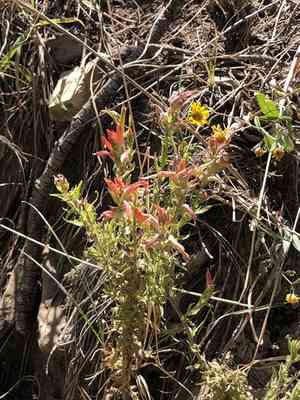
Huachuca mountain indian paintbrush (Castilleja patriotica)
Also known as: Patriot Paintbrush
The Huachuca Mountain Indian paintbrush displays striking red flowers that catch the eye, resembling flames. Its slender, lance-shaped leaves embrace the stem, showcasing an adaptation to rocky, well-drained soils. This plant's vivid blooms attract pollinators, contributing to an ecosystem where vibrant colors signify strength and survival.
In This Article
Attributes of Huachuca mountain indian paintbrush
Lifespan
Perennial
Plant Type
Herb
Plant Height
20-60 cm
Spread
15-40 cm
Leaf Color
Green
Flower Size
2-4 cm
Flower Color
Red
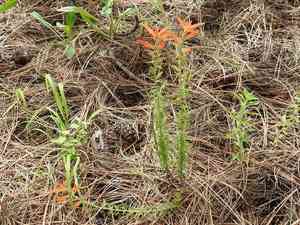
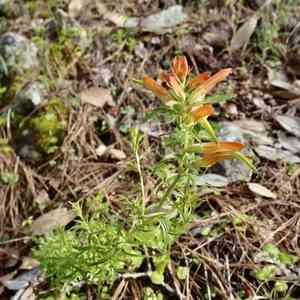
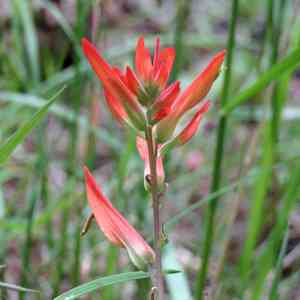
Images of Huachuca mountain indian paintbrush
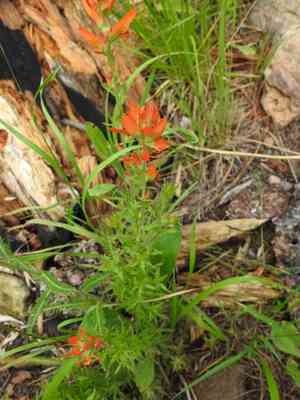
Quickly Identify Huachuca mountain indian paintbrush
1
Look for bright red flowers and narrow, pointy leaves. The plant often grows in clusters and has a bushy appearance. It\'s usually found in rocky, high-altitude areas.
Scientific Classification of Huachuca mountain indian paintbrush
Phylum
Vascular plants
Class
Dicotyledons
Order
Lamiales
Family
Broomrape
Genus
Indian paintbrush
Species
Huachuca mountain indian paintbrush
Planting and Growing of Huachuca mountain indian paintbrush
Care Difficulty
Hard
Watering Schedule
Every 2 days
Sunlight Requirements
Full sun
Sunshine Duration
4-8 hours
Ideal Temperature
65-75℉
Soil Type
Potting Mix, Peat Mix
Soil pH
6.5-7.5
Fertilizer Type
Balanced
Pruning Season
Spring, Summer
Pruning Area
Branches, Leaves
Pruning Frequency
2 times a year
Repotting Season
Spring
Pot Type
Plastic, Ceramic
 How to Water Huachuca mountain indian paintbrush?
When watering Castilleja patriotica, aim to thoroughly moisten the soil without making it soggy. Pour about 250 ml of water gradually, ensuring it seeps deeper into the soil around the roots. The goal is to maintain dampness close to the plant’s natural habitat, mimicking gentle rainfall.
What are the symptoms of an underwatered Huachuca mountain indian paintbrush?
›
What should I do if my Huachuca mountain indian paintbrush is not getting enough water?
›
What are the symptoms of an overwatered Huachuca mountain indian paintbrush?
›
How to save an overwatered Huachuca mountain indian paintbrush?
›
 What Are the Sunlight Requirements for Huachuca mountain indian paintbrush?
Castilleja patriotica prefers full sun to partial sun, thriving under 6 to 8 hours of light. Ideal lighting boosts blooming, enhances plant vigor, and fosters a robust growth structure for the plant.
What kind of light does Castilleja patriotica need?
›
How can you ensure ideal light conditions?
›
What is the benefit of ideal lighting for this plant?
›
 What Is the Ideal Temperature Range for Huachuca mountain indian paintbrush?
The ideal temperature range for Castilleja patriotica is between 65°F and 75°F. This range ensures optimal metabolic processes, growth, and flowering. Maintaining these temperatures consistently helps the plant to thrive by facilitating photosynthesis and preventing stress due to environmental extremes. Growth is optimal when temperatures are mild and stable.
 What Soil is Best for Huachuca mountain indian paintbrush?
Castilleja patriotica thrives best in well-drained soil, which prevents waterlogging that can lead to root rot. This requirement ensures that the roots receive adequate oxygen and that the plant maintains strong and healthy growth. A nutrient-rich soil is essential for the vibrant growth of Castilleja patriotica, as it provides the essential minerals and nutrients needed for its unique colorful blooms. Rich soil enhances the plant's growth and overall vitality. Moderate moisture retention helps maintain consistent humidity around the roots without excessively soaking them. This balance is crucial for Castilleja patriotica as it supports steady growth without causing dehydration or water stress.
 How to Fertilize Huachuca mountain indian paintbrush?
Castilleja patriotica is a delicate plant that thrives with moderate fertilization. Use about half the recommended dose for general flowering plants to prevent any root damage. This plant is not very demanding in terms of fertilization, so less is often more.
 How to Prune Huachuca mountain indian paintbrush?
Begin by removing any dead, damaged, or diseased stems at the base. This helps redirect the plant's energy towards healthier growth and prevents potential pest infestations or diseases from spreading. Trim back the ends of branches to encourage fuller growth and bushier structure. Make cuts just above a leaf node to stimulate new stem and leaf development. Periodically trim the plant to maintain its desired shape and size. Look for any stems that appear too long or out of place, and cut back to a lateral branch.
More About Pruning Techniques→
 How to Propagate Huachuca mountain indian paintbrush plant?
1
Collect mature seeds from healthy plants in late summer. Ensure seeds are dry and viable by storing them in a cool, dry place until ready for sowing.
2
Select non-flowering stems from healthy plants and cut 4 to 6 inches below a node. Remove the lower leaves and dip into rooting hormone before planting.
3
For seeds, sow them in prepared seed trays with well-draining soil. For cuttings, insert them into a potting mix, keeping the soil moist but not waterlogged.
 How to Repot Huachuca mountain indian paintbrush plant?
1
Castilleja patriotica should be repotted when you notice its roots poking through the drainage holes or if the soil has compacted and drains poorly. These signals indicate that the plant is ready for a larger space and fresher soil, typically observed in spring or early summer.
2
Opt for a pot that is one size larger than the current pot, ideally with a diameter about 2 inches greater. Ensure it has good drainage holes to prevent root rot, as Castilleja patriotica thrives in environments where excess water can easily escape.
3
A sandy, well-draining soil mix is crucial for Castilleja patriotica. This plant prefers a gritty substrate to replicate its natural habitat, promoting adequate airflow around the roots, which helps in preventing fungal infections and root rot.
Learn More About Huachuca mountain indian paintbrush Diseases
Anthracnose
Bacterial Leaf Spot
Bacterial Wilt
Crown Gall
Cyst Nematode
Damping-off
Downy Mildew
Drought Stress
Fusarium Wilt
Gray Mold
Leaf Curl
Leaf Spot
Mosaic
Nutrient Deficiency
Nutrient Toxicity
Powdery Mildew
Root Rot
Root-knot Nematode
Rusts
Sooty Mold
Spider Mites
Temperature Stress
Thrips Damage
White Mold



