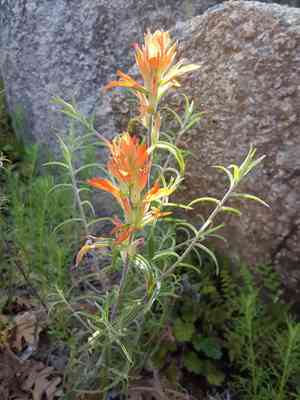
Organ mountain indian paintbrush (Castilleja organorum)
Also known as: Rio Grande Paintbrush
Organ Mountain Indian Paintbrush (Castilleja organorum) features vivid red to orange bracts that cleverly conceal its actual flowers, making them highly attractive to pollinators like hummingbirds. These bright colors mirror the striking sunsets of its dry, mountainous habitats. The plant's slender, lance-shaped leaves and upright growth form help it maximize light exposure and thrive with minimal competition in its arid environment.
In This Article
Attributes of Organ mountain indian paintbrush
Lifespan
Perennial
Plant Type
Herb
Plant Height
30-60 cm
Spread
30-45 cm
Leaf Color
Green
Flower Size
1-2 cm
Flower Color
Typically hidden, but bracts are red, orange, or yellow
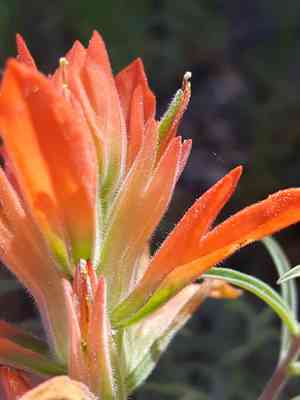
Images of Organ mountain indian paintbrush
Quickly Identify Organ mountain indian paintbrush
1
To identify Castilleja organorum, look for its characteristic brightly colored bracts which can be red, orange, or yellow. The flowers are often inconspicuous, hidden within these bracts. The plant typically grows in habitats such as grasslands and open woodlands.
Scientific Classification of Organ mountain indian paintbrush
Phylum
Vascular plants
Class
Dicotyledons
Order
Lamiales
Family
Broomrape
Genus
Indian paintbrush
Species
Organ mountain indian paintbrush
Planting and Growing of Organ mountain indian paintbrush
Care Difficulty
Moderate
Watering Schedule
Every 3 days
Sunlight Requirements
Partial sun
Sunshine Duration
6-10 hours
Ideal Temperature
60-75℉
Soil Type
Potting Mix, Peat Mix
Soil pH
6.5-7.5
Fertilizer Type
Balanced
Pruning Season
Spring, Summer
Pruning Area
Branches, Leaves
Pruning Frequency
2 times a year
Repotting Season
Spring
Pot Type
Plastic, Ceramic
 How to Water Organ mountain indian paintbrush?
For Castilleja organorum, ensure the soil is moist but not soggy. Watering with 200 ml each time is typically sufficient, allowing water to reach down to the root zone without oversaturating the soil.
What are the symptoms of an underwatered Organ mountain indian paintbrush?
›
What should I do if my Organ mountain indian paintbrush is not getting enough water?
›
What are the symptoms of an overwatered Organ mountain indian paintbrush?
›
How to save an overwatered Organ mountain indian paintbrush?
›
 What Are the Sunlight Requirements for Organ mountain indian paintbrush?
Partial sun ensures the plant maintains optimal health and flowering. It balances light for photosynthesis without risking damage from harsh rays.
How much sun does Castilleja organorum need?
›
What is the solution for achieving ideal light?
›
What are the benefits of achieving ideal lighting?
›
 What Is the Ideal Temperature Range for Organ mountain indian paintbrush?
The ideal temperature range for Castilleja organorum is between 60°F and 75°F. Maintaining temperatures within this range ensures optimal growth and flowering. At these temperatures, metabolic processes occur efficiently and the plant can absorb nutrients effectively. It is advisable to monitor the temperature to provide a stable environment, especially during critical growth phases.
 What Soil is Best for Organ mountain indian paintbrush?
Castilleja organorum thrives in well-draining soil to prevent root rot. This is particularly beneficial in avoiding water accumulation, which can suffocate roots and inhibit nutrient uptake. This plant benefits from loamy soil enriched with organic matter, which provides the essential nutrients needed for vibrant growth and flowering. While well-draining, the soil should retain sufficient moisture to support consistent hydration, mimicking the plant's natural habitat needs without causing water stress.
 How to Fertilize Organ mountain indian paintbrush?
For Castilleja organorum, using a balanced fertilizer at half the recommended strength is essential. This plant prefers lighter feeding to avoid nutrient burn, thus using ¼ teaspoon per gallon of water is optimal.
 How to Prune Organ mountain indian paintbrush?
To prune Castilleja organorum, start by identifying dead or damaged stems. Use clean, sharp pruning shears to cut these stems close to the plant's base. This process encourages new growth and improves airflow through the plant, reducing the risk of disease. Remember to snip spent flowers regularly to promote continuous blooming.
More About Pruning Techniques→
 How to Propagate Organ mountain indian paintbrush plant?
1
Select healthy parent plants to take cuttings or gather seeds from. Ensure the cuttings include at least two nodes for optimal growth potential, and seeds should be fully mature.
2
Use a well-draining soil mix enriched with organic matter. The soil should be moistened but not wet, providing an ideal start for root development.
3
Place seeds on the surface of the soil, cover lightly, and water them. Insert cuttings into the soil about halfway down their length and place the trays in a warm, well-lit location out of direct sunlight.
 How to Repot Organ mountain indian paintbrush plant?
1
With Castilleja organorum, the optimal time to repot is during the early spring or autumn when the plant is preparing to grow. Indicators it's time to repot include roots emerging from the drainage holes, slowed growth, or reduced flowering.
2
Select a pot that is slightly larger than the current one, providing just enough space for root growth. Ensure the pot has adequate drainage holes. A slightly larger pot helps with moisture management and prevents waterlogging.
3
Opt for a well-draining potting mix that replicates the natural habitat of Castilleja organorum. This ensures the roots breathe properly and helps prevent root rot by allowing excess water to escape efficiently.
Learn More About Organ mountain indian paintbrush Diseases
Anthracnose
Bacterial Leaf Spot
Bacterial Soft Rot
Bacterial Wilt
Black Spot
Chemical Injury
Crown Gall
Cyst Nematode
Damping-off
Downy Mildew
Drought Stress
Fusarium Wilt
Gray Mold
Leaf Curl
Leaf Spot
Mosaic
Nutrient Deficiency
Nutrient Toxicity
Powdery Mildew
Root Rot
Root-knot Nematode
Rusts
Sooty Mold
Spider Mites
Temperature Stress
Thrips Damage
White Mold



