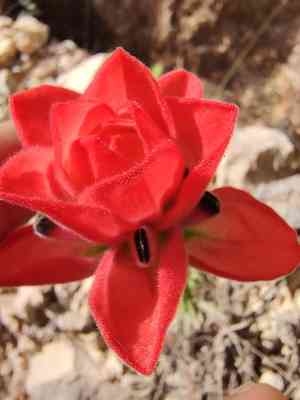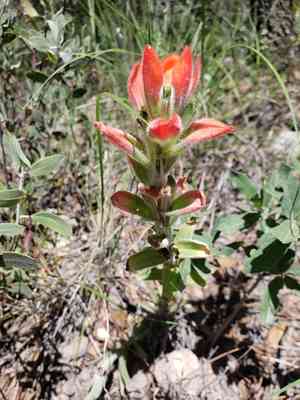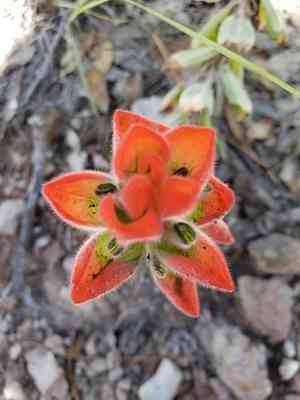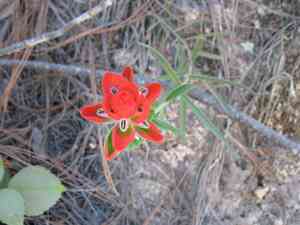
Trans-pecos indian paintbrush(Castilleja nervata)

Trans-pecos indian paintbrush (Castilleja nervata)

Also known as: Nevada Paintbrush

The Trans-Pecos Indian paintbrush (Castilleja lanata) is a striking herbaceous perennial known for its vibrant bracts, which can range in color from red to yellow and often overshadow its smaller, less conspicuous flowers. This plant flourishes in arid, rocky regions, particularly within desert scrub and grasslands of the Trans-Pecos area in Texas and northern Mexico. Preferring well-drained soils and full sunlight, it integrates seamlessly into its environment. As a hemiparasite, it attaches to the roots of neighboring plants to obtain nutrients, supporting its growth. Its vivid flowers attract and sustain pollinators like bees and hummingbirds, enhancing local biodiversity and contributing to ecosystem stability.

Attributes of Trans-pecos indian paintbrush

Lifespan
Perennial
Plant Type
Herb
Plant Height
30-90 cm
Spread
N/A
Leaf Color
Green
Flower Size
2-3 cm
Flower Color
Red, Orange

ForwardPlant - Identify plants with a snap

Identify and diagnose plants, get toxicity alerts, and explore safety guides for all types of fungi.

Try for Free

Images of Trans-pecos indian paintbrush
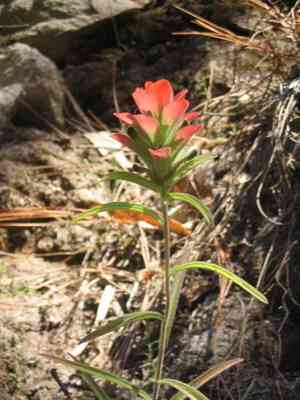
Trans-pecos indian paintbrush(Castilleja nervata)

Quickly Identify Trans-pecos indian paintbrush

1
Identification features include brightly colored bracts that can range from red to orange, and its unique hemiparasitic nature, meaning it derives some of its nutrients from other plants.

Scientific Classification of Trans-pecos indian paintbrush

Phylum
Vascular plants
Class
Dicotyledons
Order
Lamiales
Family
Broomrape
Genus
Indian paintbrush
Species
Trans-pecos indian paintbrush

Planting and Growing of Trans-pecos indian paintbrush

Care Difficulty
Moderate
Watering Schedule
Every 2 days
Sunlight Requirements
Full sun
Sunshine Duration
6-10 hours
Ideal Temperature
60-75℉
Soil Type
Potting Mix, Peat Mix
Soil pH
6.5-7.5
Fertilizer Type
Balanced
Pruning Season
Spring, Summer
Pruning Area
Branches, Leaves
Pruning Frequency
2 times a year
Repotting Season
Spring
Pot Type
Plastic, Ceramic

water icon How to Water Trans-pecos indian paintbrush?

The Castilleja nervata, commonly known as 'Indian Paintbrush,' prefers a moderate watering regime. Water approximately 250 ml each session, ensuring the soil is evenly moist but never waterlogged. This delicate plant thrives best when the top inch of the soil is allowed to dry out between waterings, promoting healthy root aeration and preventing root rot.
What are the symptoms of an underwatered Trans-pecos indian paintbrush?
What should I do if my Trans-pecos indian paintbrush is not getting enough water?
What are the symptoms of an overwatered Trans-pecos indian paintbrush?
How to save an overwatered Trans-pecos indian paintbrush?

sunlight icon What Are the Sunlight Requirements for Trans-pecos indian paintbrush?

Sunlight Requirements: Full sun, Partial sun
Duration of light: 4-6 hours daily
Castilleja nervata prefers a mix of full sun to partial sun, benefitting from this range with improved flowering and plant vigor. Ideal light ensures healthy growth and rich colors, essential for its ornamental appeal.
What is the best light condition?
How can I ensure ideal light exposure?
What are the benefits of adequate sunlight?

temperature icon What Is the Ideal Temperature Range for Trans-pecos indian paintbrush?

Ideal Temperature: 60 ~ 75℉
The ideal temperature range for cultivating Castilleja nervata is between 60°F and 75°F. Maintaining temperatures within this range ensures proper metabolic activities, leading to healthy growth and vibrant blooms. This range mimics the plant's native habitat conditions, allowing it to thrive optimally without stress.

soil icon What Soil is Best for Trans-pecos indian paintbrush?

Soil type: Loam, Sandy loam
Soil PH: 6.5 ~ 7.5
Castilleja nervata thrives in nutrient-rich soil that supports its growth by ensuring the plant receives an adequate supply of essential nutrients such as nitrogen, phosphorus, and potassium, promoting vibrant foliage and healthy blooms. This plant requires well-draining soil to avoid root rot and other moisture-related diseases. Proper drainage ensures the plant's roots receive adequate oxygen, fostering a robust root system and overall health. A soil that can retain a moderate amount of moisture without becoming waterlogged is ideal for Castilleja nervata, as it maintains a consistent supply of moisture necessary for photosynthesis and nutrient uptake.

fertilize icon How to Fertilize Trans-pecos indian paintbrush?

Fertilizer type: Balanced
Castilleja nervata plants have a moderate feeding requirement. When fertilizing, use a diluted solution that is half the recommended strength on the bottle for liquid fertilizers. This helps prevent root burn and ensures that delicate plants receive essential nutrients without being overwhelmed.

prune icon How to Prune Trans-pecos indian paintbrush?

Pruning Time: Spring, Summer
Prune Castilleja nervata by removing dead or unhealthy stems and any flower spikes that have finished blooming. This encourages new growth and prolongs the flowering period, enhancing overall health and appearance. Although pruning can occur in spring and summer, it’s crucial to time your pruning to avoid periods of extreme heat when the plant might be stressed. Early morning or late afternoon are the best times to prune. More About Pruning Techniques

propagate icon How to Propagate Trans-pecos indian paintbrush plant?

Propagate Time: Spring, Early summer
1
Ensure the soil is well-draining and rich in organic matter. A mixture of peat and perlite would work well. Proper soil preparation is crucial to support root development and prevent waterlogging.
2
Sow seeds thinly in trays of pre-watered seed compost. Lightly cover them with a layer of compost or vermiculite, which aids in retaining moisture while still allowing light to penetrate for seed germination.
3
Use sterilized pruning shears to cut healthy stems from the parent plant. Ideally, take cuttings early in the morning when the plant is fully turgid. This ensures that the cutting has enough moisture to reduce stress during rooting.
More About Propagating Techniques

repot icon How to Repot Trans-pecos indian paintbrush plant?

Repotting frequency: Once every 2 years
1
Castilleja nervata should be repotted when you notice the roots circling tightly within the pot or when the growth significantly slows down. These are indicators that it may be outgrowing its current space or the soil is exhausted. Spring and early summer are the ideal seasons to repot since the plant is in its active growth phase, allowing it to recover and grow into the new soil efficiently.
2
Select a pot that is one to two inches larger in diameter than the current one. Ensure there are sufficient drainage holes to prevent waterlogging. A slightly larger pot allows for root expansion without overwhelming the plant, providing an optimal balance between space and stability. This prevents stagnant water issues, which can lead to root rot.
3
Opt for a well-draining, sandy soil mix that mimics its natural habitat. This type of soil helps prevent water retention, reducing the risk of root rot while supporting the plant's nutrient needs. A blend with equal parts of potting soil, sand, and perlite often works well, ensuring both aeration and nutrient retention.

ForwardPlant - Identify plants with a snap

Find the best spots for them to optimize their health, simply using your phone.

Try for Free