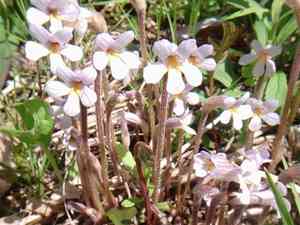
Monterey indian paintbrush (Castilleja latifolia)
Also known as: Monterey Indian Paintbrush
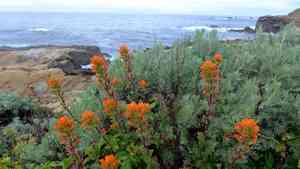
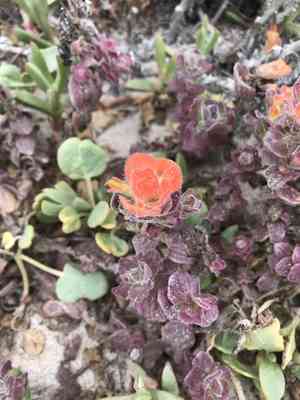
The plant in question is Castilleja latifolia, a species native to the California coastline. It typically reaches a height of around 60 cm and has bristly, hairy foliage that can appear green, gray-green, or even purple-tinted. The plant's inflorescence consists of greenish bracts that are accented with vibrant hues of red, orange, or yellow.
In This Article
Attributes of Monterey indian paintbrush
Lifespan
Perennial
Plant Type
Herb
Plant Height
30-60 cm
Spread
0.3-0.5 meters
Leaf Color
Green
Flower Size
2-3 cm
Flower Color
Red to orange
Images of Monterey indian paintbrush
Quickly Identify Monterey indian paintbrush
1
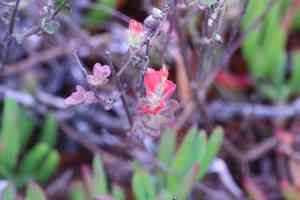
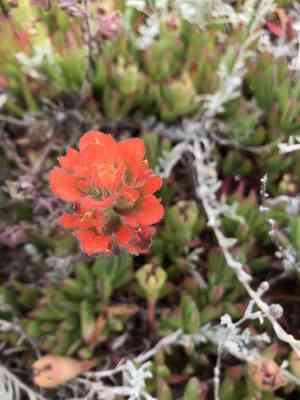
It can be identified by its bright red to orange bracts that surround its small, inconspicuous flowers. The leaves are typically broad and lance-shaped.
Scientific Classification of Monterey indian paintbrush
Phylum
Vascular plants
Class
Dicotyledons
Order
Lamiales
Family
Broomrape
Genus
Indian paintbrush
Species
Monterey indian paintbrush
Planting and Growing of Monterey indian paintbrush
Care Difficulty
Moderate
Watering Schedule
Every 3 days
Sunlight Requirements
Full sun
Sunshine Duration
6-12 hours
Ideal Temperature
60-75℉
Soil Type
Potting Mix, Peat Mix
Soil pH
6.5-7.5
Fertilizer Type
Balanced
Pruning Season
Spring, Summer
Pruning Area
Branches, Leaves
Pruning Frequency
2 times a year
Repotting Season
Spring
Pot Type
Plastic, Terracotta
 How to Water Monterey indian paintbrush?
For Castilleja latifolia, watering involves providing about 250 ml per session. Ensure the soil is moist but not waterlogged. Use the finger test to check that the top 2 inches of soil are moist before each watering session.
What are the symptoms of an underwatered Monterey indian paintbrush?
›
What should I do if my Monterey indian paintbrush is not getting enough water?
›
What are the symptoms of an overwatered Monterey indian paintbrush?
›
How to save an overwatered Monterey indian paintbrush?
›
 What Are the Sunlight Requirements for Monterey indian paintbrush?
Castilleja latifolia thrives best under partial to full sun, benefiting from at least six hours of sunlight daily. This exposure fosters strong stem development and enhances the rich colorations of its floral bracts, making it an eye-catching addition to any garden.
Ideal Light Levels
›
Light Adjustment Techniques
›
Benefits of Ideal Lighting
›
 What Is the Ideal Temperature Range for Monterey indian paintbrush?
The ideal temperature range for growing Castilleja latifolia is between 60°F and 75°F. Maintaining this range ensures optimal growth and health of the plant, as temperatures within this range support its physiological processes effectively.
 What Soil is Best for Monterey indian paintbrush?
Castilleja latifolia thrives best in well-draining soil. This ensures that the roots do not sit in water, reducing the risk of root rot and promoting healthy growth. Well-draining soil allows excess water to escape, preventing waterlogging. A nutrient-rich soil composition is essential for the optimal growth of Castilleja latifolia. This ensures the plant receives all necessary minerals and nutrients to support its vibrant blooms and robust foliage, contributing to overall plant health. While the plant prefers well-draining soil, maintaining a moderate level of moisture is crucial. This balance allows for sufficient hydration without the risk of root diseases, contributing to a thriving plant lifecycle.
 How to Fertilize Monterey indian paintbrush?
For Castilleja latifolia, applying a balanced liquid fertilizer diluted to half the recommended strength is advisable. Use approximately 1 tablespoon in a gallon of water for young plants, and increase slightly as the plant matures. This ensures nutrient delivery without risking root burn.
 How to Prune Monterey indian paintbrush?
Castilleja latifolia, known for its vibrant bracts and unique flowers, shouldn’t be pruned while in bloom. Pruning during this time can disrupt its reproductive cycle and inhibit seed production. Be vigilant for pests that commonly affect Castilleja species, such as aphids or spider mites, which could weaken the plant. Implement necessary pest control measures after pruning to protect the plant.
More About Pruning Techniques→
 How to Propagate Monterey indian paintbrush plant?
1
Ensure you are using fresh, viable seeds from a reputable source. Old or improperly stored seeds may not germinate well, affecting the propagation process.
2
Sprinkle the seeds evenly across the seed tray filled with a seed-starting mix. Lightly cover them with soil, as they require some light for germination.
3
Keep the soil consistently moist without overwatering. Use a spray bottle for gentle watering to prevent seed disturbance and ensure even moisture distribution.
 How to Repot Monterey indian paintbrush plant?
1
Repotting Castilleja latifolia when you notice root-bound symptoms like roots growing out of drainage holes, or when the plant has slowed its growth significantly, is ideal. This ensures the roots have more space to expand and access nutrients efficiently.
2
Select a pot that is 1-2 inches larger in diameter than the current one to allow for root growth. Make sure it has good drainage holes to prevent waterlogging, which is crucial to the health of Castilleja latifolia as it prevents root rot.
3
Opt for a well-draining sandy mix to mimic the plant's natural habitat, ensuring good aeration and preventing excess moisture retention. This environment aids in healthy root development and promotes lush growth.



