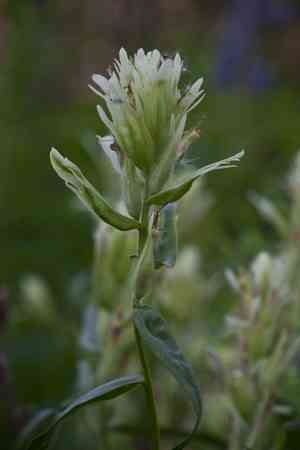
Port clarence indian paintbrush (Castilleja caudata)
Also known as: None
An example of a parasitic plant found near Port Clarence in the Bering Sea is commonly known as the "Port Clarence Indian Paintbrush." This plant features tapered leaves and non-hairy lower stems, with fine bristly hairs on the upper parts. As a parasitic species, it relies on attaching to the roots of host plants to draw nutrients.
In This Article
Attributes of Port clarence indian paintbrush
Lifespan
Perennial
Plant Type
Herb
Plant Height
30 cm to 91 cm
Spread
Not applicable
Leaf Color
Green
Flower Size
1-2 cm
Flower Color
Red, orange, yellow, pink
Images of Port clarence indian paintbrush
Quickly Identify Port clarence indian paintbrush
1
Identify Castilleja caudata by its bright, bracted flowers that come in shades of red, orange, yellow, or pink. The plant often has slender, hairy stems and lance-shaped leaves.
Scientific Classification of Port clarence indian paintbrush
Phylum
Vascular plants
Class
Dicotyledons
Order
Lamiales
Family
Broomrape
Genus
Indian paintbrush
Species
Port clarence indian paintbrush
Planting and Growing of Port clarence indian paintbrush
Care Difficulty
Moderate
Watering Schedule
Every 2 days
Sunlight Requirements
Full sun
Sunshine Duration
4-8 hours
Ideal Temperature
65-75℉
Soil Type
Potting Mix, Peat Mix
Soil pH
6.5-7.5
Fertilizer Type
Balanced
Pruning Season
Spring, Summer
Pruning Area
Branches, Leaves
Pruning Frequency
2 times a year
Repotting Season
Spring
Pot Type
Plastic, Ceramic
 How to Water Port clarence indian paintbrush?
Castilleja caudata requires careful watering to mimic its natural environment. Ensure the soil is moist but not saturated; aim for approximately 150 ml every watering session. This volume allows the roots to absorb water efficiently without risking root rot.
What are the symptoms of an underwatered Port clarence indian paintbrush?
›
What should I do if my Port clarence indian paintbrush is not getting enough water?
›
What are the symptoms of an overwatered Port clarence indian paintbrush?
›
How to save an overwatered Port clarence indian paintbrush?
›
 What Are the Sunlight Requirements for Port clarence indian paintbrush?
Castilleja caudata performs best under full sun conditions, with six to eight hours of daily sunlight. This range promotes healthy growth and encourages prolific flowering, essential for its survival and attracting pollinators.
What is the best location for Castilleja caudata?
›
How can I ensure Castilleja caudata gets the right amount of light?
›
What are the benefits of providing Castilleja caudata with ideal lighting?
›
 What Is the Ideal Temperature Range for Port clarence indian paintbrush?
The ideal temperature range for Castilleja caudata is between 65°F and 75°F. These conditions provide the optimal warmth that supports healthy growth and development of this plant species. It ensures the best possible environment for photosynthesis and other physiological processes.
 What Soil is Best for Port clarence indian paintbrush?
Castilleja caudata thrives best in well-drained soil to prevent root rot, which can occur if the soil is too waterlogged. This condition ensures that the roots gain enough oxygen, supporting the overall health and robustness of the plant. This plant prefers moderately fertile soil, which means it doesn't require overly rich nutrients. This characteristic reduces the need for frequent fertilization, allowing for easier maintenance while still enabling vibrant growth. Though the soil should be well-drained, it is essential for it to retain some moisture to nurture the plant, particularly during peak growth seasons. Balancing moisture helps in sustaining lush foliage and longer-lasting blooms.
 How to Fertilize Port clarence indian paintbrush?
For Castilleja caudata, applying fertilizer requires moderation. Use a balanced 10-10-10 liquid fertilizer at half strength. For slow-release granules, apply them according to the manufacturer's instructions and ensure the plant is not overburdened with nutrients.
 How to Prune Port clarence indian paintbrush?
Begin by removing any dead or diseased stems. This reduces the spread of disease and allows more resources to be used by healthy areas of the plant. Trim the plant to maintain its natural shape or to create a bushier appearance. Pruning can control size and prevent legginess by encouraging lateral growth. If the plant is overly dense, selectively remove some blossoms to improve air circulation. This helps in reducing the risk of fungal issues and improves overall plant health.
More About Pruning Techniques→
 How to Propagate Port clarence indian paintbrush plant?
1
To propagate Castilleja caudata from seed, start by filling a seed tray with a light, well-draining seed-starting mix. Sow the seeds on the surface without covering them, as light aids germination.
2
For cutting propagation, select healthy stems and make clean cuts below a leaf node. Remove some of the lower leaves and dip the cut end in rooting hormone before planting.
3
The plant can also be propagated through division. Carefully dig up the plant, divide the root ball into sections, and replant them immediately in a similar growing medium.
 How to Repot Port clarence indian paintbrush plant?
1
Repot Castilleja caudata when roots start circling the pot or when growth appears stunted. The best time to check is in early spring or autumn. These periods allow the plant to recover quickly in mild temperatures after being repotted.
2
Select a pot that is only slightly larger than the old one, with sufficient drainage holes. This helps in preventing waterlogging, which can lead to root rot. A pot that is too large can cause the soil to remain damp for too long.
3
Opt for a well-draining loamy mix. This combination provides the necessary drainage while retaining enough moisture for the plant. A good mix will help avoid water logging and ensure the roots have adequate aeration.
Learn More About Port clarence indian paintbrush Diseases
Anthracnose
Bacterial Leaf Spot
Bacterial Wilt
Chemical Injury
Crown Gall
Cyst Nematode
Damping-off
Downy Mildew
Drought Stress
Fusarium Wilt
Gray Mold
Leaf Curl
Leaf Spot
Mosaic
Nutrient Deficiency
Nutrient Toxicity
Powdery Mildew
Root Rot
Root-knot Nematode
Rusts
Sooty Mold
Spider Mites
Temperature Stress
Thrips Damage
White Mold



