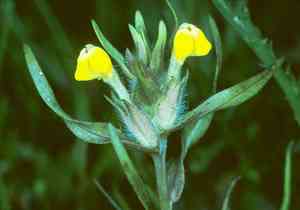
Succulent owl's-clover (Castilleja campestris)
Also known as: Owlshead Paintbrush, Valley Tassels
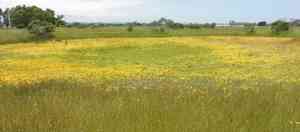
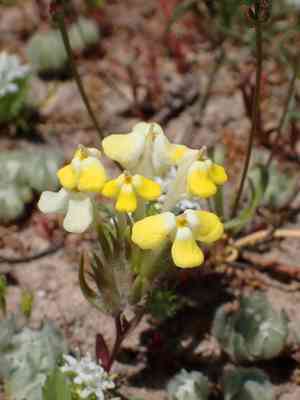
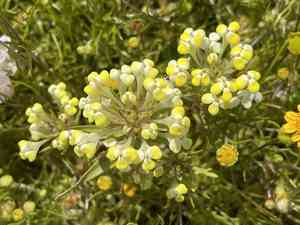
Succulent owl's-clover stands out with its striking tubular flowers, which usually range from yellow to vivid orange. These blossoms thrive in grassland environments, often making a noticeable appearance in open areas. What appears to be the flowers are actually modified leaves known as bracts, surrounding the true flowers and possibly aiding in pollinator attraction. The plant's slender form is accentuated by its green, lance-shaped leaves, allowing it to flourish among the dense flora of lowland regions.
In This Article
Attributes of Succulent owl's-clover
Lifespan
Perennial
Plant Type
Herb
Plant Height
10 cm to 15 cm
Spread
N/A
Leaf Color
Green, often with reddish tips
Flower Size
Around 1-2 cm
Flower Color
Bright yellow or orange
Images of Succulent owl's-clover
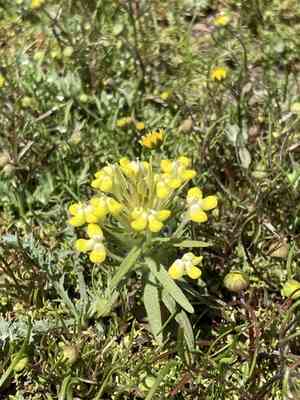
Quickly Identify Succulent owl's-clover
1
To identify Castilleja campestris, look for its bright yellow or orange bracts that surround small, less conspicuous flowers. The plant usually has a hairy, green stem and narrow leaves, which sometimes have a reddish hue at the tips.
Scientific Classification of Succulent owl's-clover
Phylum
Vascular plants
Class
Dicotyledons
Order
Lamiales
Family
Broomrape
Genus
Indian paintbrush
Species
Succulent owl's-clover
Planting and Growing of Succulent owl's-clover
Care Difficulty
Moderate
Watering Schedule
Every 2 days
Sunlight Requirements
Full sun
Sunshine Duration
4-6 hours
Ideal Temperature
60-75℉
Soil Type
Potting Mix, Peat Mix
Soil pH
6.5-7.5
Fertilizer Type
Balanced
Pruning Season
Spring, Summer
Pruning Area
Branches, Leaves
Pruning Frequency
2 times a year
Repotting Season
Spring
Pot Type
Plastic, Terracotta
 How to Water Succulent owl's-clover?
For Castilleja campestris, it's important to keep the soil slightly moist without waterlogging it. Water about 250ml each time, ensuring the water penetrates down to the root level but doesn't pool at the surface.
What are the symptoms of an underwatered Succulent owl's-clover?
›
What should I do if my Succulent owl's-clover is not getting enough water?
›
What are the symptoms of an overwatered Succulent owl's-clover?
›
How to save an overwatered Succulent owl's-clover?
›
 What Are the Sunlight Requirements for Succulent owl's-clover?
Castilleja campestris thrives in full sun to partial sun environments, emulating its natural open meadow settings. Ideal light conditions promote proper flowering, increase vibrancy of foliage, and support robust plant growth and resilience.
How much sunlight does Castilleja campestris need?
›
What are the benefits of ideal lighting for this plant?
›
How do you ensure Castilleja campestris gets the right lighting conditions?
›
 What Is the Ideal Temperature Range for Succulent owl's-clover?
The ideal temperature range for Castilleja campestris is generally between 60 and 75 degrees Fahrenheit. This range allows for optimal growth and flowering, as it provides the right balance of warmth and energy for photosynthesis and other metabolic processes necessary for the plant's development.
 What Soil is Best for Succulent owl's-clover?
Castilleja campestris thrives in soil that retains moderate moisture, ensuring the roots receive a consistent water supply. This characteristic helps prevent dehydration, especially in sunny environments, supporting robust plant growth. The plant benefits from soils rich in nutrients, which promote its vibrant flowering. Nutrient-dense soil supports the plant's physiological processes, leading to healthier and more resilient foliage and blooms. Soil with good drainage prevents root rot and other water-related diseases. It ensures that excess water flows away from the root zone, keeping the roots healthy and promoting overall plant vigor.
 How to Fertilize Succulent owl's-clover?
Castilleja campestris doesn't require heavy fertilization. A balanced approach is best, using about half the recommended dosage on the fertilizer package. Due to its semi-parasitic nature, over-fertilizing can cause harm, so moderation is key.
 How to Prune Succulent owl's-clover?
Castilleja campestris, commonly known as the field owl's clover, has a unique hemiparasitic growth pattern. Before pruning, familiarize yourself with which parts are essential for its sustenance, as unnecessary cutting might affect its natural growth. Use clean, sharp scissors or pruning shears to trim Castilleja campestris. Sterilize the tools before pruning to prevent the spread of diseases. Dull or dirty tools can cause jagged cuts that may harm the plant. Begin by removing any dead or diseased leaves and stems. This prevents the spread of diseases and allows the plant to redirect its energy towards healthier foliage. Trim the plant to maintain its natural shape, focusing on areas that look overly dense or are inhibiting sunlight from reaching lower parts. This not only enhances its appearance but also boosts air circulation and light penetration.
More About Pruning Techniques→
 How to Propagate Succulent owl's-clover plant?
1
Choose healthy and mature plants for collecting seeds or cuttings. It's important to avoid plants showing signs of disease or pest damage, as these can negatively affect the success of propagation. Ensure the parent plant has ample leaves and robust stems.
2
Fill seedling trays with a suitable soil mix that drains well yet retains necessary moisture. Sow the seeds about 2-3 times their diameter deep and maintain gentle, consistent moisture without waterlogging. Cover lightly and place in a location with indirect sunlight and stable temperatures.
3
Select non-flowering shoots approximately 10-15cm long. Make a clean cut just below a leaf node using pruning shears. Remove several leaves from the lower section of the cutting to focus the plant's energy on root development rather than sustenance of leaves.
 How to Repot Succulent owl's-clover plant?
1
Castilleja campestris should be repotted when you notice its roots poking out from the drainage holes or curling up at the soil surface. Additionally, if the plant's growth becomes stunted or the soil seems to dry out quickly after watering, it's a clear signal that repotting is due. Spring is the optimal time as the plant is recovering from winter dormancy and will happily adjust to its new pot.
2
Selecting the right pot for Castilleja campestris is crucial. Choose a pot that is only slightly larger than its current one, with ample drainage holes to prevent waterlogged soil. This ensures that the plant's roots have room to grow while avoiding excess soil around them, which can lead to rot. The right pot enhances root health and plant growth.
3
Opt for a well-draining soil mix for Castilleja campestris. A typical mix might include perlite, sand, and a bit of compost. Such soil will provide the perfect balance of moisture retention and drainage. Well-draining soil prevents root rot and allows the plant to access necessary nutrients efficiently, supporting its vibrant growth.
Toxicity
N/A
WARNING
The judgment on toxicity and danger is for reference only. We DO NOT GUARANTEE any accuracy of such judgment. Therefore, you SHALL NOT rely on such judgment. It is IMPORTANT TO SEEK PROFESSIONAL ADVICE in advance when necessary.
Learn More About Succulent owl's-clover Diseases
Anthracnose
Bacterial Leaf Spot
Bacterial Wilt
Chemical Injury
Cyst Nematode
Damping-off
Downy Mildew
Drought Stress
Fusarium Wilt
Gray Mold
Leaf Curl
Leaf Spot
Mosaic
Nutrient Deficiency
Nutrient Toxicity
Powdery Mildew
Root Rot
Root-knot Nematode
Rusts
Sooty Mold
Spider Mites
Temperature Stress
Thrips Damage
White Mold


