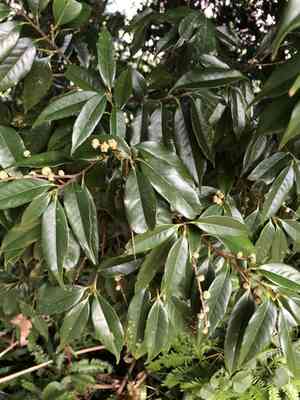
Long-leaf evergreen chinkapin (Castanopsis carlesii)
Also known as: None
The Chinese chestnut (Castanea mollissima) is a large, broad-leaved evergreen tree native to Asia. Widely used in commercial timber production, it is grown both in the wild and on plantations. Its catkins emit a strong, hawthorn-like scent that effectively attracts midges for pollination.
In This Article
Attributes of Long-leaf evergreen chinkapin
Lifespan
Perennial
Plant Type
Tree
Plant Height
20 m
Spread
10-15 meters
Leaf Color
Dark green
Flower Size
Small, less than 1 cm
Flower Color
Yellowish-white
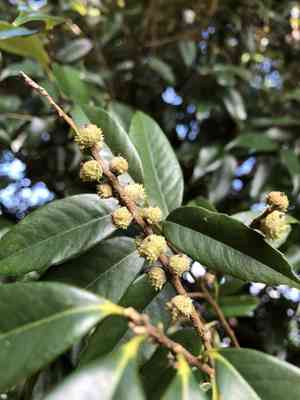
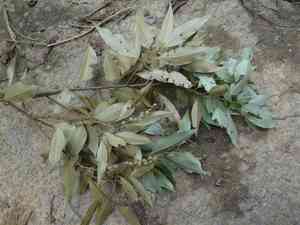
Images of Long-leaf evergreen chinkapin
Quickly Identify Long-leaf evergreen chinkapin
1
The tree has simple, alternate leaves with a leathery texture. The leaves are oblong to lanceolate and have serrated margins. The bark is rough and grayish-brown.
Scientific Classification of Long-leaf evergreen chinkapin
Phylum
Vascular plants
Class
Dicotyledons
Order
Beeches, walnuts, and allied trees
Family
Beech
Genus
Chinquapins
Species
Long-leaf evergreen chinkapin
Planting and Growing of Long-leaf evergreen chinkapin
Care Difficulty
Easy
Watering Schedule
Every 2 days
Sunlight Requirements
Partial sun
Sunshine Duration
6-10 hours
Ideal Temperature
65-75℉
Soil Type
Potting Mix, Peat Mix
Soil pH
5.5-6.5
Fertilizer Type
Balanced
Pruning Season
Spring, Summer
Pruning Area
Branches, Leaves
Pruning Frequency
2 times a year
Repotting Season
Spring
Pot Type
Plastic, Ceramic
 How to Water Long-leaf evergreen chinkapin?
For Castanopsis carlesii, it's essential to water deeply but infrequently. This means providing approximately 500 ml each time, ensuring the water penetrates deeply to reach the root zone. Saturating the soil allows the roots to absorb necessary moisture without staying soggy.
What are the symptoms of an underwatered Long-leaf evergreen chinkapin?
›
What should I do if my Long-leaf evergreen chinkapin is not getting enough water?
›
What are the symptoms of an overwatered Long-leaf evergreen chinkapin?
›
How to save an overwatered Long-leaf evergreen chinkapin?
›
 What Are the Sunlight Requirements for Long-leaf evergreen chinkapin?
Partial sun provides the needed balance. This light condition allows the plant to thrive by mitigating stress from excessive heat while ensuring photosynthesis is optimal.
More About Sunlight Requirements Techniques→
What is the ideal light exposure for Castanopsis carlesii?
›
How can I achieve the best lighting conditions for my plant?
›
What benefits does ideal lighting provide?
›
 What Is the Ideal Temperature Range for Long-leaf evergreen chinkapin?
The ideal temperature range for Castanopsis carlesii is between 65°F and 75°F. This range provides optimum conditions for photosynthesis and growth. Within this temperature range, the plant can carry out essential physiological processes without stress, leading to healthier foliage and improved resistance to diseases and pests.
 What Soil is Best for Long-leaf evergreen chinkapin?
The soil must be well-drained to prevent root rot, ensuring the healthy growth of Castanopsis carlesii. This helps in maintaining the oxygen balance around the roots, crucial for plant vitality. Soil should be rich in organic matter to supply essential nutrients. This boosts the growth and enhances the resilience of Castanopsis carlesii against diseases. Moisture retention at a moderate level ensures that the plant has enough water without the risk of overwatering. This is essential in maintaining the turgidity and overall health of Castanopsis carlesii.
 How to Fertilize Long-leaf evergreen chinkapin?
When fertilizing Castanopsis carlesii, it is crucial to apply a balanced fertilizer. For liquid fertilizers, mix with water at half the recommended strength to avoid root burn. Solid fertilizers should be applied in moderation, around 50 grams per square meter, ensuring the nutrients are evenly distributed in the soil.
 How to Prune Long-leaf evergreen chinkapin?
Begin by assessing the tree for any dead or diseased branches, as these are the first to be removed. Look for branches crossing each other and identify those that interrupt the plant’s shape. Focus on ensuring good air circulation and light penetration through the canopy. Always prune branches at a 45-degree angle to encourage water runoff and prevent rot. When cutting, make sure to stay just above a node or leaf joint, this encourages new growth in desirable directions. After initial cuts, step back and reassess the balance and symmetry of the tree. A well-pruned Castanopsis carlesii should have a balanced distribution of branches to support healthy growth throughout the year.
More About Pruning Techniques→
 How to Propagate Long-leaf evergreen chinkapin plant?
1
Before sowing, soak the seeds in water overnight to soften their hard outer layer. This process aids in faster and more uniform germination by allowing easier penetration of moisture.
2
Plant the seeds in a well-draining seed starting mix, covering them lightly with soil. Ensure that the soil media is kept moist but not waterlogged to encourage seed sprouting.
3
Select healthy, semi-hardwood stems for cuttings. Remove leaves from the lower half of the cutting and dip the cut end in rooting hormone to promote root growth.
 How to Repot Long-leaf evergreen chinkapin plant?
1
Watch for signs like roots growing out of the drainage holes, slowed growth, or soil that drains too quickly, indicating it’s time for a new home.
2
Select a pot 2 inches larger in diameter with drainage holes. This allows ample room for roots to grow and ensures excess water can escape, preventing root rot.
3
Opt for an acidic, well-draining soil mix, rich in organic matter. This promotes optimal nutrient absorption and prevents waterlogged conditions, crucial for healthy growth.
Learn More About Long-leaf evergreen chinkapin Diseases
Anthracnose
Bacterial Leaf Spot
Bacterial Wilt
Crown Gall
Cyst Nematode
Damping-off
Downy Mildew
Drought Stress
Fusarium Wilt
Gray Mold
Leaf Spot
Mosaic
Nutrient Deficiency
Nutrient Toxicity
Powdery Mildew
Root Rot
Root-knot Nematode
Rusts
Sooty Mold
Spider Mites
Temperature Stress
Thrips Damage
White Mold
Chemical Injury



