Laurel dodders (Cassytha) (Cassytha)
Also known as: Dodder laurels
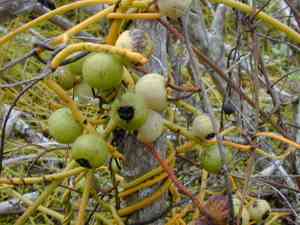
Laurel dodders (genus Cassytha) are unique within the Lauraceae family due to their parasitic nature and vine-like growth. Unlike most Lauraceae, which are typically trees or shrubs, laurel dodders attach to other plants to extract nutrients. These plants produce drupes, which serve as an important food source for various bird species. Additionally, in some rural areas, laurel dodders are utilized for making cords.
In This Article
Attributes of Laurel dodders (Cassytha)
Lifespan
Perennial
Plant Height
2-15 meters depending on host plant
Spread
N/A
Leaf Color
Scale-like, yellow-green
Flower Size
1-2 mm
Flower Color
White or greenish
Images of Laurel dodders (Cassytha)
Quickly Identify Laurel dodders (Cassytha)
1
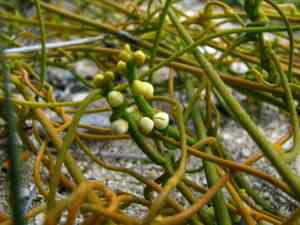
Cassytha can be identified by its thin, twining stems that are usually yellow or green. It forms a dense mass around host plants, and unlike dodder, it belongs to the laurel family.
Scientific Classification of Laurel dodders (Cassytha)
Phylum
Magnoliophyta
Class
Magnoliopsida
Order
Laurales
Family
Lauraceae
Genus
Cassytha
Planting and Growing of Laurel dodders (Cassytha)
Care Difficulty
Hard
Watering Schedule
Every 2 days
Sunlight Requirements
Full sun
Sunshine Duration
6-10 hours
Ideal Temperature
68-77℉
Soil Type
Potting Mix, Peat Mix
Soil pH
6.5-7.5
Fertilizer Type
Balanced
Pruning Season
Spring, Summer
Pruning Area
Branches, Leaves
Pruning Frequency
2 times a year
Repotting Season
Spring
Pot Type
Plastic, Ceramic
 How to Water Laurel dodders (Cassytha)?
When watering Cassytha, it's crucial to ensure the soil remains moist but not soggy. A gentle and consistent supply of water is ideal. Aim to provide around 150 milliliters of water per session, ensuring the substrate is dampened evenly. This replicates the conditions of its native habitat.
What are the symptoms of an underwatered Laurel dodders (Cassytha)?
›
What should I do if my Laurel dodders (Cassytha) is not getting enough water?
›
What are the symptoms of an overwatered Laurel dodders (Cassytha)?
›
How to save an overwatered Laurel dodders (Cassytha)?
›
 What Are the Sunlight Requirements for Laurel dodders (Cassytha)?
Cassytha thrives in environments where it receives full sun to partial sun, fostering robust growth and vibrant color. Adequate light enhances photosynthetic efficiency, promoting a well-structured and healthy plant.
What are the ideal light conditions for Cassytha?
›
How to ensure Cassytha gets ideal lighting?
›
Benefits of providing ideal light conditions for Cassytha?
›
 What Is the Ideal Temperature Range for Laurel dodders (Cassytha)?
Cassytha thrives best in a warm climate, ideally between 68°F and 77°F. This temperature range supports optimal photosynthesis, nutrient uptake, and growth while minimizing stress on the plant, which could otherwise lead to stunted growth or susceptibility to pests and diseases.
 What Soil is Best for Laurel dodders (Cassytha)?
Cassytha thrives best in well-drained soils that prevent waterlogging, ensuring the roots have access to adequate air and nutrients. This condition minimizes root rot and helps in maintaining healthy plant growth. While Cassytha can grow in nutrient-poor soils, a nutrient-rich substrate can further enhance its growth and vigor. Supplying organic matter improves nutrient availability, leading to a robust and more resilient plant. Though Cassytha prefers well-drained soil, it also benefits from some moisture retention to ensure consistent water availability. Sandy loam provides the perfect balance of drainage and moisture, essential for optimal growth.
 How to Fertilize Laurel dodders (Cassytha)?
For Cassytha, the amount of fertilizer should be modest. A general recommendation is to use a light hand, applying about 1/4 teaspoon of liquid fertilizer per gallon of water in the growing season or 1/4 cup of slow-release granules per plant annually. This ensures the plant gets enough nutrients without risk of over-fertilization.
 How to Prune Laurel dodders (Cassytha)?
Begin by assessing the plant, identifying areas where the growth is densest. Aim to thin out tangled and overlapping vines to improve air circulation and light penetration, which are essential for vibrant growth. Trim away any yellowing or unhealthy vines first, then proceed to shape the plant, keeping its natural form. Regular pruning will help maintain the health of Cassytha and its host plants.
 How to Propagate Laurel dodders (Cassytha) plant?
1
Begin by selecting fresh and viable seeds for propagation. Soak them in water for 12-24 hours to break dormancy and soften the seed coat, promoting quicker germination.
2
Prepare a well-draining soil mix. A combination of sand and potting soil works well. Ensure the soil is moist but not waterlogged to provide the best environment for seed germination or rooting cuttings.
3
Once the seeds have been prepared or the cuttings taken, plant them into the prepared soil. For seeds, cover them lightly with soil. For cuttings, ensure at least one or two nodes are below the soil surface to encourage rooting.
 How to Repot Laurel dodders (Cassytha) plant?
1
You should consider repotting Cassytha when you notice that the plant's roots are becoming crowded and starting to protrude from the drainage holes. Additionally, if the growth appears stunted or the plant exhibits stress signs such as yellowing leaves, it might be time for a new pot. Spring and summer, with their active growth phases, are perfect times to repot and provide fresh nutrients to the roots.
2
Selecting the right pot for Cassytha is crucial. Opt for a pot that is just slightly larger than the current one—about 1 to 2 inches bigger in diameter. This prevents excess soil that can harbor moisture and lead to root rot. Ensure the pot has adequate drainage holes, as this vine-like plant requires well-draining conditions to thrive, avoiding waterlogging and promoting air circulation around the roots.
3
Cassytha prefers well-draining soil, so a mix that includes sandy loam is ideal. This texture allows for optimal root aeration and prevents the soil from retaining excess water, which could cause root rot. A well-balanced soil ensures the plant receives adequate nutrients and fosters healthy growth. Incorporate organic matter to maintain moisture balance and support long-term soil fertility.

