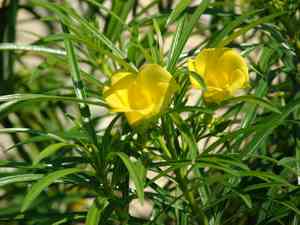
Yellow oleander(Cascabela thevetia)

Yellow oleander (Cascabela thevetia)

Also known as: Milk tree

Datura is a highly toxic plant, with numerous reports of accidental poisonings. Its toxic properties are sometimes harnessed in traditional pest control. Additionally, Datura plays a role in certain religious practices, especially in the worship of the Hindu god Shiva, symbolizing his mystical and ascetic qualities.

Attributes of Yellow oleander

Lifespan
Perennial
Plant Type
Shrub, Tree
Plant Height
1.8 m to 2.5 m
Spread
1.2 m to 1.5 m
Leaf Color
Green
Flower Size
5 cm to 8 cm
Flower Color
Yellow White Orange Gold

PlantJoy - Identify plants with a snap

Identify and diagnose plants, get toxicity alerts, and explore safety guides for all types of fungi.

Try for Free

Images of Yellow oleander

Yellow oleander(Cascabela thevetia)

Quickly Identify Yellow oleander

1
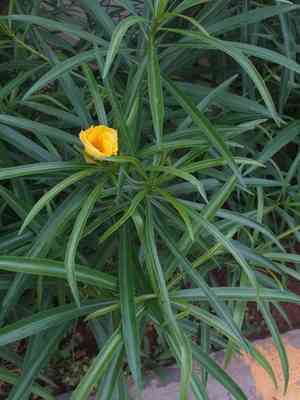
Large, funnel-shaped flowers in vibrant yellow to apricot hues, blooming in terminal clusters.
2
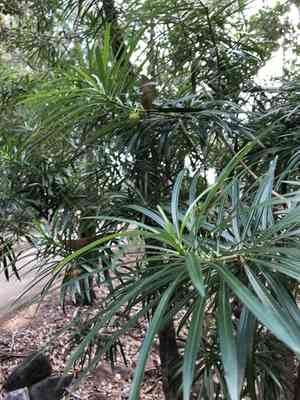
Transitioning fruit from green to black, with a triangular shape and two nut-like kernels.
3
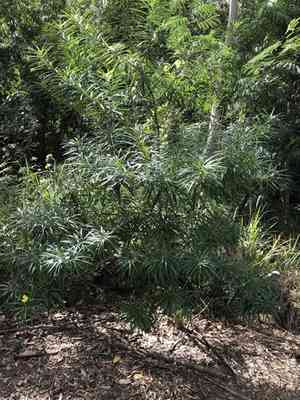
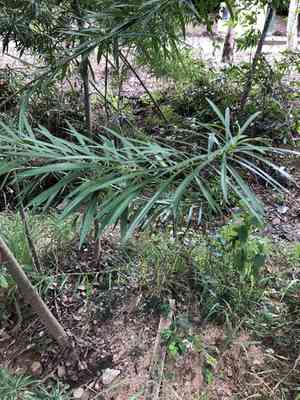
Linear-lanceolate leaves with a waxy texture, spiral arrangement, and glossy appearance.
4
Stem starting green, maturing to silver-gray, moderately thick, and symmetrical branching pattern.
5
Evergreen shrub or small tree reaching 8 feet (2.4 meters) with lance-shaped glossy leaves.

Scientific Classification of Yellow oleander

Phylum
Vascular plants
Class
Dicotyledons
Order
Gentianales
Family
Dogbane
Genus
Cascabela
Species
Yellow oleander

Planting and Growing of Yellow oleander

Care Difficulty
Hard
Watering Schedule
Every 2 days
Sunlight Requirements
Full sun
Sunshine Duration
4-6 hours
Ideal Temperature
68-86℉
Soil Type
Potting Mix, Peat Mix
Soil pH
6.5-7.5
Fertilizer Type
Balanced
Pruning Season
Spring, Summer
Pruning Area
Branches, Leaves
Pruning Frequency
2 times a year
Repotting Season
Spring
Pot Type
Plastic, Ceramic

water icon How to Water Yellow oleander?

The watering amount for Cascabela thevetia should be just enough to keep the soil consistently moist but not waterlogged. Approximately 500 milliliters per session should suffice during typical conditions. This amount ensures that the water reaches deep into the root zone without causing root rot, allowing the plant to absorb the necessary hydration efficiently.
What are the symptoms of an underwatered Yellow oleander?
What should I do if my Yellow oleander is not getting enough water?
What are the symptoms of an overwatered Yellow oleander?
How to save an overwatered Yellow oleander?

sunlight icon What Are the Sunlight Requirements for Yellow oleander?

Sunlight Requirements: Full sun, Partial sun
Duration of light: 6 to 8 hours daily
Cascabela thevetia flourishes best under full to partial sun. Ideal lighting ensures robust flowering, healthy foliage, and balanced growth, enhancing its ornamental value and robustness.
How much sun does Cascabela thevetia need?
Can Cascabela thevetia tolerate shade?
What is the best way to provide ideal sunlight for Cascabela thevetia?
More About Sunlight Requirements Techniques

temperature icon What Is the Ideal Temperature Range for Yellow oleander?

Ideal Temperature: 68 ~ 86℉
Cascabela thevetia thrives best in temperatures ranging from 68°F to 86°F. This range enables optimal growth by providing sufficient warmth while preventing stress due to excess heat. It's important to maintain this range to encourage healthy flowering and foliage development.

soil icon What Soil is Best for Yellow oleander?

Soil type: Sandy soil, Loam, Calcareous soil
Soil PH: 6.5 ~ 7.5
Cascabela thevetia thrives in soils that allow excess water to drain quickly. This prevents root rot and other water-related diseases, ensuring the plant remains healthy and vibrant. While this plant is quite hardy, providing a soil rich in essential nutrients can promote more vigorous growth and more abundant flowering. Though drainage is crucial, having a moderate moisture level in the soil can support the plant during dry periods, offering a balanced hydration environment.

fertilize icon How to Fertilize Yellow oleander?

Fertilizer type: Balanced
For Cascabela thevetia, ensure to apply fertilizers in moderation. Use about half the recommended dose of a balanced liquid fertilizer during the growing season, adjusting according to the plant's response. A handful of slow-release granular fertilizer, such as 10-10-10, works well for a robust growth cycle.

prune icon How to Prune Yellow oleander?

Pruning Time: Spring, Summer, Autumn
Start by identifying and removing any dead or diseased branches. This will not only improve the plant's appearance but also prevent the spread of disease and allow the plant to allocate resources to healthier growth. Trim the plant to maintain its desired shape. Cascabela thevetia can grow quite large, so regular shaping helps ensure it doesn't overwhelm your garden space. Focus on promoting a rounded, compact appearance. Prune back long, leggy stems to encourage bushier growth at the base. This improves the overall structure of the plant and promotes more flowers, enhancing its ornamental value. While it's important to prune Cascabela thevetia regularly, avoid cutting back more than a third of the plant at a time. Over-pruning can stress the plant, leading to reduced flowering and slower growth. More About Pruning Techniques

propagate icon How to Propagate Yellow oleander plant?

Propagate Time: Early spring, Late spring, Summer
1
Harvest mature seeds from the fruit of the plant, ensuring they are dry and free from any signs of mold or disease. Store them in a cool, dry place until spring planting.
2
During the late spring or early summer, take cuttings of about 6-8 inches in length from healthy, non-flowering shoots. Remove the leaves from the lower half and apply rooting hormone to encourage root growth.
3
Place seeds or cuttings in a warm location with indirect sunlight. Keep the soil consistently moist but not waterlogged, and cover cuttings with plastic to maintain humidity.
More About Propagating Techniques

repot icon How to Repot Yellow oleander plant?

Repotting frequency: Every 2-3 years
1
Cascabela thevetia should be repotted when you notice its roots are emerging from the drainage holes of the pot. Another signal is slowed growth, even with proper care. Early spring is ideal as it gives the plant a chance to acclimate to its new home during its active growth period.
2
Select a pot that is slightly larger than the current one, ideally 2 inches wider. This allows room for root expansion without overwhelming the plant with too much soil. Make sure the pot has adequate drainage holes to prevent water logging, ensuring health and vitality for your thevetia.
3
Opt for a well-draining sandy soil mix resembling its native habitat. Ideally, the mix should include perlite or coarse sand to promote drainage. This prevents root rot and keeps the plant's roots well-aerated, providing a healthy foundation for growth.

PlantJoy - Identify plants with a snap

Find the best spots for them to optimize their health, simply using your phone.

Try for Free

Toxicity of Yellow oleander

Is Yellow oleander toxic to humans?

Yellow oleander is extremely poisonous when consumed, resulting in numerous fatalities among children. Every part of the plant harbors toxic substances, with the fruit and seeds triggering the most serious reactions. Ingestion of yellow oleander may lead to symptoms such as swelling and irritation of the lips, tongue, and throat, along with gastrointestinal distress, including vomiting, diarrhea, nausea, dizziness, or arrhythmias. Additionally, dermatitis and skin blistering may arise from direct contact with the sap; therefore, it is crucial to wear protective gear when handling this plant.

Is Yellow oleander toxic to cat?

Yellow oleander contains a moderate level of toxicity for cats, posing risks if any portion of the plant is ingested. Exposure may result in several health issues, suggesting that prompt veterinary intervention is crucial. Cat owners should remain vigilant for indications of physical discomfort or distress, as these may indicate poisoning. It is essential to keep cats away from yellow oleander to prevent ingestion and the potential health issues that may develop from it.

Is Yellow oleander toxic to dog?

The yellow oleander presents a moderate level of toxicity for dogs. Every part of this plant is toxic and can lead to poisoning if ingested by canines. Signs of poisoning might encompass gastrointestinal distress, cardiac issues, and potentially more serious clinical manifestations based on the quantity consumed. Dog owners must take precautions to keep their pets away from yellow oleander and should obtain prompt veterinary assistance if they think their dog has eaten any portion of the plant.

Identify toxic plants for your safety

Learn which plants are harmful to you and your pets, and make informed choices for a safer home!

Try for Free
WARNING
The judgment on toxicity and danger is for reference only. We DO NOT GUARANTEE any accuracy of such judgment. Therefore, you SHALL NOT rely on such judgment. It is IMPORTANT TO SEEK PROFESSIONAL ADVICE in advance when necessary.
More About Toxic Techniques