Casasia (Casasia) (Casasia)
Also known as: Seven-year Apple
Casasias are shrubs or small trees primarily located on Caribbean islands, with one species also found in Florida.
In This Article
Attributes of Casasia (Casasia)
Lifespan
Perennial
Plant Height
1-5 meters
Spread
1-3 meters
Leaf Color
Green
Flower Size
2-5 cm
Flower Color
White
Images of Casasia (Casasia)
Quickly Identify Casasia (Casasia)
1
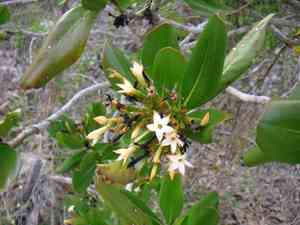
Casasia plants can be identified by their thick, leathery leaves which are typically green and glossy. The flowers are usually white and fragrant, and the fruit is often a dark color.
Scientific Classification of Casasia (Casasia)
Phylum
Magnoliophyta
Class
Magnoliopsida
Order
Gentianales
Family
Rubiaceae
Genus
Casasia
Planting and Growing of Casasia (Casasia)
Care Difficulty
Moderate
Watering Schedule
Every 3 days
Sunlight Requirements
Partial sun
Sunshine Duration
4-8 hours
Ideal Temperature
65-75℉
Soil Type
Potting Mix, Peat Mix
Soil pH
5.5-7.5
Fertilizer Type
Balanced
Pruning Season
Spring, Summer
Pruning Area
Branches, Leaves
Pruning Frequency
2 times a year
Repotting Season
Spring
Pot Type
Plastic, Ceramic
 How to Water Casasia (Casasia)?
Casasia prefers its soil to be moderately moist but not waterlogged. Ensure that you provide around 500 ml of water per session, depending on the pot size and drainage conditions. The goal is to wet the soil evenly without having excess water sitting at the bottom of the pot.
What are the symptoms of an underwatered Casasia (Casasia)?
›
What should I do if my Casasia (Casasia) is not getting enough water?
›
What are the symptoms of an overwatered Casasia (Casasia)?
›
How to save an overwatered Casasia (Casasia)?
›
 What Are the Sunlight Requirements for Casasia (Casasia)?
Partial sun exposure ensures Casasia realizes its full potential, with vibrant color, healthy growth, and prolonged life, optimizing its decorative role.
Optimal Sun Exposure
›
Solution for Ideal Light
›
Benefits of Ideal Lighting
›
 What Is the Ideal Temperature Range for Casasia (Casasia)?
For optimal growth, Casasia plants thrive best in temperatures ranging from 65°F to 75°F. This range ensures that the metabolic and physiological processes of the plant function optimally, promoting healthy growth and vibrancy in color. Maintaining this temperature will lead to increased resilience against pests and diseases.
 What Soil is Best for Casasia (Casasia)?
Casasia thrives in well-drained soils that allow excess water to quickly percolate through the ground. This prevents root rot and ensures that the plant receives adequate oxygen at the root level, promoting healthy growth. The plant benefits greatly from soils rich in organic matter. Abundant nutrients support lush foliage and robust flowering, providing the essential elements necessary for vigorous growth and resilience to pest and disease challenges. While Casasia prefers sandy soils, maintaining a balance with moisture retention is vital. Loamy soils, which hold moisture yet allow excess water to drain, help regulate root hydration in varying climate conditions.
 How to Fertilize Casasia (Casasia)?
For Casasia, it is important to provide modest but consistent feeding. Use about half the recommended amount for similar-sized shrubs, usually around 1 tablespoon for liquid fertilizers or 1/4 cup for granular fertilizers per use.
 How to Prune Casasia (Casasia)?
Start by removing any dead or damaged branches. Use sharp, sterilized pruning shears to make clean cuts. Trim back any overgrown branches to maintain the desired shape and size. Focus on maintaining an open center to allow for better airflow and sun penetration. Identify the main structure of your Casasia and trim any errant branches that disrupt the natural form. Aim for a balanced appearance by trimming evenly on all sides. Keep the top slightly narrower than the base to improve light exposure.
 How to Propagate Casasia (Casasia) plant?
1
Begin by filling pots with a well-draining potting mix. Sow Casasia seeds lightly on the soil surface, covering with a thin layer of soil. Water gently and maintain a humid environment for germination.
2
Select healthy stems and cut 4-6 inches long sections. Remove leaves from the lower half of the cutting, dip the cut end in rooting hormone, and insert into the pre-moistened potting mix.
3
Choose a flexible stem and make a small cut to encourage rooting. Bury the cut section in soil, keeping the end exposed. Secure with a U-shaped pin or similar object until roots develop.
 How to Repot Casasia (Casasia) plant?
1
Observe for signs like roots coming out of drainage holes, noticeably slowed growth despite optimal conditions, or if the soil doesn't retain moisture well. These signals indicate that Casasia needs more room or fresh soil to thrive.
2
Select a pot that is one size larger than the current one with drainage holes to prevent waterlogging. This ensures that the root system has adequate room to spread and access nutrients efficiently, promoting healthy growth.
3
Opt for a well-draining potting mix rich in organic matter. This kind of soil allows air circulation around the roots and prevents root rot by ensuring excess water is effectively drained away, maintaining ideal moisture levels.
Learn More About Casasia (Casasia) Diseases
Anthracnose
Bacterial Leaf Spot
Bacterial Soft Rot
Bacterial Wilt
Black Spot
Chemical Injury
Crown Gall
Cyst Nematode
Damping-off
Downy Mildew
Drought Stress
Fusarium Wilt
Gray Mold
Leaf Curl
Leaf Spot
Mosaic
Nutrient Deficiency
Nutrient Toxicity
Powdery Mildew
Root Rot
Root-knot Nematode
Rusts
Sooty Mold
Spider Mites
Temperature Stress
Thrips Damage
White Mold

