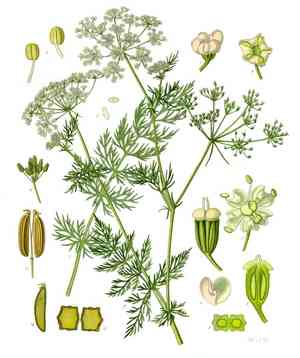
Carum (Carum) (Carum)
Also known as: Caraway, Meridian Fennel, Persian Cumin
Heracleum is a genus consisting of roughly 20 species of flowering plants in the Apiaceae family, originating from temperate areas of the Old World.
In This Article
Attributes of Carum (Carum)
Lifespan
Biennial
Plant Height
40-60 cm
Spread
Not applicable
Leaf Color
Green
Flower Size
2-5 mm
Flower Color
White or pink
Images of Carum (Carum)
Quickly Identify Carum (Carum)
1
Carum plants can be identified by their finely divided, feathery leaves and small white or pink flowers arranged in umbels. The seeds are crescent-shaped with five pale ridges.
Scientific Classification of Carum (Carum)
Phylum
Magnoliophyta
Class
Magnoliopsida
Order
Apiales
Family
Apiaceae
Genus
Carum
Planting and Growing of Carum (Carum)
Care Difficulty
Moderate
Watering Schedule
Every 4 days
Sunlight Requirements
Partial sun
Sunshine Duration
6-10 hours
Ideal Temperature
60-70℉
Soil Type
Potting Mix, Peat Mix
Soil pH
6-7.5
Fertilizer Type
Balanced
Pruning Season
Spring, Summer
Pruning Area
Branches, Leaves
Pruning Frequency
2 times a year
Repotting Season
Spring
Pot Type
Plastic, Ceramic
 How to Water Carum (Carum)?
Carum plants prefer a moderate water supply, ensuring that the soil is kept consistently moist but not waterlogged. The best way to determine the right amount is to water the plant thoroughly until water starts to drain from the bottom of the pot. This usually means around 250 ml per watering session.
What are the symptoms of an underwatered Carum (Carum)?
›
What should I do if my Carum (Carum) is not getting enough water?
›
What are the symptoms of an overwatered Carum (Carum)?
›
How to save an overwatered Carum (Carum)?
›
 What Are the Sunlight Requirements for Carum (Carum)?
Carum thrives within a 'Partial sun to Full sun' range, enhancing its growth and blooming capacity. The adequate light ensures robust foliage and aids in maintaining its aromatic properties.
What is the best location for Carum?
›
How to ensure Carum receives its needed sunlight?
›
Why is partial sun ideal for Carum?
›
 What Is the Ideal Temperature Range for Carum (Carum)?
The ideal temperature range for Carum is between 60°F and 70°F. Maintaining these temperatures helps in achieving optimal growth and health. Within this range, the plant's metabolic processes, such as photosynthesis, transpiration, and nutrient absorption, function with greatest efficiency, thereby fostering lush foliage and potentially better yields.
 What Soil is Best for Carum (Carum)?
Carum thrives in well-draining soil which prevents waterlogging. Proper drainage ensures roots receive adequate air, promoting healthier plant growth and preventing root rot. The plant prefers nutrient-rich medium, providing essential minerals that support lush foliage and organic compound formation crucial for the plant's aromatic qualities. Carum grows best in soil with a slightly acidic to neutral pH, which optimizes nutrient availability and promotes ideal growing conditions for robust development.
 How to Fertilize Carum (Carum)?
For Carum, a balanced fertilizer is optimal. It requires a moderate amount, typically diluted to half the recommended strength for liquid types. This helps prevent nutrient burn and ensures proper nutrient absorption. Each plant may have slightly different needs, so always observe its growth and appearance to tailor your fertilization strategy effectively.
 How to Prune Carum (Carum)?
Begin by identifying any dead or damaged stems and cut these back with clean, sharp scissors or pruning shears. Next, trim back any overgrown stems to maintain the plant's shape, cutting just above a node to encourage new growth. Remember to also pinch off flower heads as they fade to prolong blooming. Always ensure your tools are sanitized to avoid spreading plant diseases.
 How to Propagate Carum (Carum) plant?
1
Place the Carum seeds evenly spaced on the soil surface within the seed tray. Lightly press them into the soil without completely covering them, as they require light to germinate.
2
After sowing, gently water the seeds using a fine mist spray bottle to avoid disturbing them. Keep the soil consistently moist but not waterlogged during the germination period.
3
Maintain a warm and well-lit environment for the seeds. Ideal temperatures range between 20-25°C (68-77°F). Use a plastic dome or a clear plastic wrap over the seed tray to maintain humidity.
 How to Repot Carum (Carum) plant?
1
Carum, like many plants, shows signs that it needs repotting when its roots start to peek out from the drainage holes, or when the plant's growth stalls. The ideal time is during the early spring or autumn when the plant is not in its full growing phase, allowing it to adjust to its new environment smoothly.
2
Select a pot that is one size larger than the current one. Ensure it has sufficient drainage holes to avoid waterlogging, which can cause root rot. A slightly larger pot gives roots room to expand but prevents excessive planting space, which can retain water and compromise root health.
3
Opt for a well-draining potting mix tailored for herbs. Such soil enhances root oxygenation, mitigates risks of overwatering, and maintains appropriate moisture levels, crucial for Carum's robust growth and aromatic foliage.
Learn More About Carum (Carum) Diseases
Anthracnose
Bacterial Leaf Spot
Bacterial Soft Rot
Bacterial Wilt
Chemical Injury
Damping-off
Downy Mildew
Drought Stress
Fusarium Wilt
Gray Mold
Leaf Spot
Mosaic
Nutrient Deficiency
Nutrient Toxicity
Powdery Mildew
Root Rot
Root-knot Nematode
Rusts
Sooty Mold
Spider Mites
Temperature Stress
Thrips Damage
White Mold

