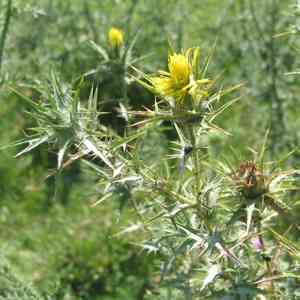
Distaff thistles (Carthamus) (Carthamus)
Also known as: Safflower, False Saffron
Distaff thistles, comprising around fifty species, are known for yielding yellow and red dyes from their flower petals. These thistles are originally from Eurasia and North Africa. In some regions like Australia, they have become invasive after being introduced.
In This Article
Attributes of Distaff thistles (Carthamus)
Lifespan
Annual
Plant Height
0.3 - 1 meters
Spread
50 - 100 cm
Leaf Color
Green
Flower Size
2 - 4 cm
Flower Color
Yellow, Orange, Red
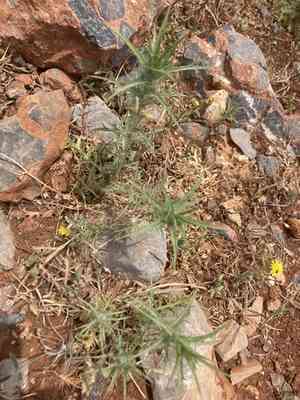
Images of Distaff thistles (Carthamus)
Quickly Identify Distaff thistles (Carthamus)
1
Carthamus can be identified by their thistle-like appearance, spiny leaves, and bright yellow to orange flowers. The plants typically have a robust, branched form and can grow up to 1 meter tall.
Scientific Classification of Distaff thistles (Carthamus)
Phylum
Magnoliophyta
Class
Magnoliopsida
Order
Asterales
Family
Asteraceae
Genus
Carthamus
Planting and Growing of Distaff thistles (Carthamus)
Care Difficulty
Easy
Watering Schedule
Every 2 days
Sunlight Requirements
Full sun
Sunshine Duration
4-8 hours
Ideal Temperature
68-77℉
Soil Type
Potting Mix, Peat Mix
Soil pH
6.5-7.5
Fertilizer Type
Balanced
Pruning Season
Spring, Summer
Pruning Area
Branches, Leaves
Pruning Frequency
2 times a year
Repotting Season
Spring
Pot Type
Plastic, Ceramic
 How to Water Distaff thistles (Carthamus)?
Carthamus, commonly known as safflower, thrives with a moderate watering scheme. Water it until the top 2 to 3 inches of soil is moist, but allow the soil to dry out between waterings to prevent root rot. Approximately 500 milliliters per session is ideal depending on soil and pot size.
What are the symptoms of an underwatered Distaff thistles (Carthamus)?
›
What should I do if my Distaff thistles (Carthamus) is not getting enough water?
›
What are the symptoms of an overwatered Distaff thistles (Carthamus)?
›
How to save an overwatered Distaff thistles (Carthamus)?
›
 What Are the Sunlight Requirements for Distaff thistles (Carthamus)?
Carthamus ideally requires full sun exposure, which means consistent sunlight coverage throughout the growing season. Access to such light levels ensures vigorous growth, promotes abundant flowering, and enriches its coloration.
What is the best light condition for Carthamus?
›
How can you ensure ideal lighting for Carthamus?
›
What benefits does ideal lighting bring to Carthamus?
›
 What Is the Ideal Temperature Range for Distaff thistles (Carthamus)?
For optimal growth of Carthamus, a temperature range of 68 to 77 degrees Fahrenheit is recommended. This range supports healthy photosynthesis and development of plant tissues, encouraging a robust growth and vibrant flowering.
 What Soil is Best for Distaff thistles (Carthamus)?
Carthamus prefers well-drained soil to prevent root rot. This ensures excess water moves away from the roots quickly, allowing them access to oxygen and nutrients. Well-drained soil promotes healthy plant growth and abundant flowering. The soil should have a balanced composition of essential nutrients like nitrogen, phosphorus, and potassium. This balance supports robust growth, enhancing the plant's ability to absorb nutrients efficiently, resulting in vibrant blooms. Carthamus thrives in warmer soil temperatures, around 60-70°F. Warm soil accelerates seed germination and root development, ensuring a strong start for the plant’s growth cycle.
 How to Fertilize Distaff thistles (Carthamus)?
For Carthamus, a balanced fertilizer with an NPK ratio of 5-5-5 is recommended. Apply approximately 20 grams of fertilizer per square meter during the growing season. Ensure the soil is moist, but not waterlogged, to maximize nutrient uptake.
 How to Prune Distaff thistles (Carthamus)?
Start by sterilizing your tools to prevent infection. Begin pruning in spring as new growth appears, cutting back to the first pair of leaves on each stem. This encourages a bushier plant. Continue with light trimming throughout the summer, removing spent flowers and managing size. Deadhead by cutting just above a fresh leaf node. This not only improves the plant's appearance but also prolongs the blooming period by redirecting energy from seed production to new growth.
 How to Propagate Distaff thistles (Carthamus) plant?
1
Begin by collecting mature seeds from the parent plant. Clean and dry the seeds thoroughly to prevent mold growth before sowing them in seed trays.
2
Select healthy stems from the parent plant for cuttings. The chosen stems should be free from disease and approximately 4-6 inches long to encourage root development.
3
Carefully dig up the parent plant and separate it into smaller sections, ensuring that each section has a part of the root system to support new growth.
 How to Repot Distaff thistles (Carthamus) plant?
1
Carthamus signals the need for repotting when its roots start to outgrow the pot and become visible through drainage holes. Another sign is when water takes longer than usual to drain after watering. Ideally, repotting should be done during the active growth periods in spring or autumn, providing the plant with optimum conditions to recover and quickly establish in the new soil.
2
Select a pot that is one size larger than the current one. Ensure it has good drainage holes to prevent waterlogged soil, which can lead to root rot. Opting for a clay or ceramic pot can help with moisture regulation, offering breathability, which benefits the root system immensely. Proper pot selection promotes robust root health and vigorous plant growth.
3
Carthamus thrives best in a well-draining soil mix containing a blend of potting soil, sand, and organic matter. The soil should be lightweight yet rich in nutrients to support the plant’s growth. A good soil mix ensures efficient drainage while providing adequate nutrients, essential for the healthy development of the plant’s roots and overall structure.

