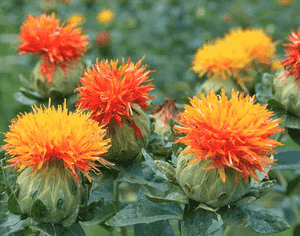
Safflower (Carthamus tinctorius)
Also known as: Dyer's saffron, Safflower oil plant, American saffron, Fake saffron
Safflower (Carthamus tinctorius) is a thistle-like annual plant that thrives in the arid regions of North America. It serves as a common but less potent alternative to saffron in culinary uses. In Japan, safflower is also valued for producing a vibrant orange-red dye used in textiles.
In This Article
Attributes of Safflower
Lifespan
Annual, Perennial, Biennial
Plant Type
Herb
Plant Height
61 cm to 91 cm
Spread
30 cm
Leaf Color
Green
Flower Size
2 cm to 4 cm
Flower Color
Orange Yellow Red
Images of Safflower
Quickly Identify Safflower
1
Safflower can be identified by its bright yellow, orange, or red flowers. The plant has thorny leaves and a bushy shape. The height usually ranges from 30 to 150 cm.
Scientific Classification of Safflower
Phylum
Vascular plants
Class
Dicotyledons
Order
Asters bellflowers fanflowers and allies
Family
Daisy
Genus
Distaff thistles
Species
Safflower
Planting and Growing of Safflower
Care Difficulty
Easy
Watering Schedule
Every 4 days
Sunlight Requirements
Full sun
Sunshine Duration
6-10 hours
Ideal Temperature
64-77℉
Soil Type
Potting Mix, Peat Mix
Soil pH
6.5-7.5
Fertilizer Type
Balanced
Pruning Season
Spring, Summer
Pruning Area
Branches, Leaves
Pruning Frequency
2 times a year
Repotting Season
Spring
Pot Type
Plastic, Ceramic
 How to Water Safflower?
For Carthamus tinctorius, water until the soil is evenly moist but not soaked, ensuring excess water can drain away. The soil should feel slightly damp to the touch, but water should never pool on top.
More About Watering Techniques→
What are the symptoms of an underwatered Safflower?
›
What should I do if my Safflower is not getting enough water?
›
What are the symptoms of an overwatered Safflower?
›
How to save an overwatered Safflower?
›
 What Are the Sunlight Requirements for Safflower?
Carthamus tinctorius ideally requires full sun exposure for about 6 to 8 hours daily. This light range ensures optimal growth, stronger stems, and vibrant blooms, enhancing the plant's ornamental and functional value.
More About Sunlight Requirements Techniques→
Optimal Sun Exposure
›
Choosing the Right Location
›
Seasonal Adjustments
›
 What Is the Ideal Temperature Range for Safflower?
The ideal temperature range for growing Carthamus tinctorius, or safflower, is between 64°F and 77°F. This range provides optimal conditions for the proper growth and development of the plant, ensuring that it can thrive and produce healthy blooms. Maintaining this temperature range helps in mitigating stress factors that adversely impact the plant's physiological functions.
 What Soil is Best for Safflower?
Carthamus tinctorius thrives best in well-drained soil. Ensuring proper draining capabilities avoids water accumulation that can lead to root rot, allowing the plant to flourish healthily. The soil should be rich in organic matter to provide essential nutrients that support robust growth. Such richness boosts the plant’s vitality and increases its resilience to pests and diseases. Moderately fertile soils are ideal, allowing Carthamus tinctorius to grow without excessive leaf growth and subsequent imbalance in plant development.
More About Soil→
 How to Fertilize Safflower?
Carthamus tinctorius, commonly known as safflower, benefits from a balanced approach to fertilization. To ensure healthy growth and abundant blooms, apply approximately 20 grams of balanced N-P-K (10-10-10) fertilizer per square meter. Adjust the amount based on soil fertility and plant health.
More About Fertilizing Techniques→
 How to Prune Safflower?
Start by removing any dead or diseased stubs from the plant. These are typically brown and brittle in appearance. Removing these not only directs the plant's energy towards healthy growth but also enhances its overall aesthetic appeal. Shape the plant by trimming back overgrown or awkwardly angled stems. This also helps improve internal airflow, reducing the likelihood of fungal diseases. Aim for a balanced look, trimming around the edges to encourage a bushier and more robust profile. To encourage more blooms, cut back the stems just above a leaf node. This encourages the plant to produce lateral branches, leading to more flower production over time. Make sure to make a clean slanting cut to prevent water accumulation and potential rot.
More About Pruning Techniques→
 How to Propagate Safflower plant?
1
Begin by sourcing high-quality safflower seeds from a reliable supplier. Examine the seeds for any signs of damage or disease. Soak the seeds in lukewarm water for about 12-24 hours to enhance germination rates.
2
Use a well-draining seed starting mix in your seed trays. Ensure the soil is slightly moistened before planting the seeds. The sowing medium should be loose to provide good aeration for the developing roots.
3
Plant the seeds at a depth of approximately 1-2 cm and cover them lightly with soil. Maintain a space of about 15-20 cm between each seed to allow for proper growth and air circulation.
 How to Repot Safflower plant?
1
Carthamus tinctorius signals its need for repotting through roots protruding from drainage holes or diminished growth. The best time is early spring when the plant is about to enter its active growth phase. Keep an eye on the plant's vigor, and if it seems to struggle, it might be time for a fresh start in a new pot.
2
Select a pot that is one size larger than the current one, ensuring it has adequate drainage holes. The increased space will allow roots to expand without becoming waterlogged, promoting healthier, more robust growth. A slightly larger pot also minimizes the risks of transplant shock and helps in efficient root development.
3
Opt for a well-draining potting mix that mimics the native conditions of Carthamus tinctorius. A mix of potting soil, sand, and perlite is ideal, as it facilitates proper aeration and water drainage. This type of soil helps prevent root rot and accommodates the plant's need for both moisture and dryness cycles.
Learn More About Safflower Diseases
Anthracnose
Bacterial Leaf Spot
Bacterial Soft Rot
Bacterial Wilt
Chemical Injury
Cyst Nematode
Damping-off
Downy Mildew
Drought Stress
Fusarium Wilt
Gray Mold
Leaf Spot
Mosaic
Nutrient Deficiency
Nutrient Toxicity
Powdery Mildew
Root Rot
Root-knot Nematode
Rusts
Sooty Mold
Spider Mites
Temperature Stress
Thrips Damage
White Mold



