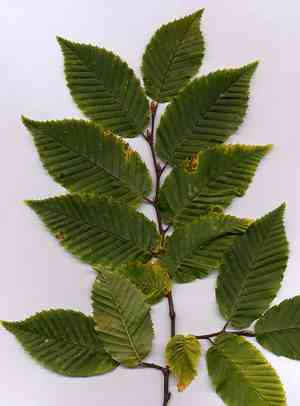
Hornbeams (Carpinus) (Carpinus)
Also known as: Hornbeam
Hornbeam trees produce wood that is highly valued for its strength and durability. This hard wood is ideal for making tool handles, flooring, and furniture, as well as items like mallets and musical instruments. Its dense and tough nature has earned it the nickname 'Ironwood,' highlighting its exceptional hardness and resistance to wear.
In This Article
Attributes of Hornbeams (Carpinus)
Lifespan
Perennial
Plant Height
10 to 20 meters
Spread
5 to 10 meters
Leaf Color
Green in summer, turning yellow to orange in autumn
Flower Size
Not significant (small catkins)
Flower Color
Yellow-green
Images of Hornbeams (Carpinus)
Quickly Identify Hornbeams (Carpinus)
1
Hornbeams can be identified by their smooth, grayish bark and their distinctive, serrated leaves which have a crinkled appearance. The trees also produce small, inconspicuous flowers and winged nutlets as fruits.
Scientific Classification of Hornbeams (Carpinus)
Phylum
Magnoliophyta
Class
Magnoliopsida
Order
Fagales
Family
Betulaceae
Genus
Carpinus
Planting and Growing of Hornbeams (Carpinus)
Care Difficulty
Moderate
Watering Schedule
Every 3 days
Sunlight Requirements
Partial sun
Sunshine Duration
4-8 hours
Ideal Temperature
60-75℉
Soil Type
Potting Mix, Peat Mix
Soil pH
6.5-7.5
Fertilizer Type
Balanced
Pruning Season
Spring, Summer
Pruning Area
Leaves, Branches
Pruning Frequency
2 times a year
Repotting Season
Spring
Pot Type
Plastic, Ceramic
 How to Water Hornbeams (Carpinus)?
For Carpinus, the watering volume should ensure the soil is moist but not soggy. A good rule of thumb is to water until it begins to drain from the bottom of the pot, suggesting the entire root mass is moistened. The plant appreciates consistent moisture but should not stand in water, which can lead to root rot.
What are the symptoms of an underwatered Hornbeams (Carpinus)?
›
What should I do if my Hornbeams (Carpinus) is not getting enough water?
›
What are the symptoms of an overwatered Hornbeams (Carpinus)?
›
How to save an overwatered Hornbeams (Carpinus)?
›
 What Are the Sunlight Requirements for Hornbeams (Carpinus)?
Carpinus prefers partial sun, with filtered or dappled light. This balance supports photosynthesis, ensuring healthy growth and vibrant foliage. Optimal light reduces stress, promoting disease resistance and enhancing overall plant health and productivity.
How much sun does Carpinus need?
›
What are the solutions for providing ideal light?
›
What are the benefits of ideal lighting for Carpinus?
›
 What Is the Ideal Temperature Range for Hornbeams (Carpinus)?
Carpinus thrives best in temperatures ranging from 60°F to 75°F. This range provides a conducive environment that supports optimal photosynthesis and growth rate. Maintaining this temperature ensures robust health and vibrant foliage.
 What Soil is Best for Hornbeams (Carpinus)?
Carpinus thrives in nutrient-rich soil that supports robust growth and vibrant foliage. Providing a fertile substrate ensures that the plant receives the essential nutrients for optimal health. Ensuring well-drained soil prevents waterlogging, which can lead to root rot in Carpinus. Proper drainage allows roots to breathe and promotes healthy vascular function. Maintaining consistent soil moisture helps Carpinus develop strong root systems. While the plant does not tolerate drought, avoiding soil saturation is crucial to prevent fungal diseases.
 How to Fertilize Hornbeams (Carpinus)?
For the Carpinus, a balanced 10-10-10 liquid fertilizer is ideal. When applying, use about 1 tablespoon per gallon of water during active growth periods. Ensure the soil is moist before fertilizing to prevent root burn or over-fertilization.
 How to Prune Hornbeams (Carpinus)?
Begin by removing any dead or diseased wood. This will help improve the plant's overall health. Next, trim back any crossing branches to prevent damage and ensure proper airflow. Focus on creating an open and well-balanced structure that allows sunlight to penetrate the canopy, promoting robust growth. Formative pruning is crucial in the early years of Carpinus to establish a strong framework. Start by selecting a central leader and remove competing shoots. Ensure lateral branches are evenly spaced to distribute weight evenly. This method helps in developing a structurally sound plant, ideal for urban and landscape settings.
 How to Propagate Hornbeams (Carpinus) plant?
1
Gather seeds from mature Carpinus trees during their seeding period. Ensure seeds are fully developed and mature to increase germination success. Sonicate them gently to remove any debris.
2
Select healthy branches with a diameter of around 1/4 to 1/2 inch. Use clean and sharp pruning shears to cut 4-6 inch long cuttings, ideally with a few sets of leaves on the upper section.
3
Choose a suitable rootstock and healthy scion from a Carpinus tree. Make matching clean cuts on both and bind them firmly together using grafting tape to encourage successful fusion and growth.
 How to Repot Hornbeams (Carpinus) plant?
1
You should consider repotting your Carpinus when you notice that its roots are circling the pot or growing through drainage holes. Another indicator is if the plant experiences stunted growth or water doesn't penetrate the soil easily. Spring and Autumn are ideal seasons, as the plant is not in its dormant phase.
2
Select a pot that is one size larger to allow sufficient room for growth, ensuring it has adequate drainage holes. A pot that's too large can lead to excessive soil moisture, which promotes root rot. The right pot will encourage healthy root development and provide stability to the plant.
3
Opt for a well-draining loamy soil mix, ideally with organic matter content to ensure good aeration and moisture retention. The right soil mix will prevent waterlogging and facilitate root growth, contributing to a healthier and more resilient plant.

