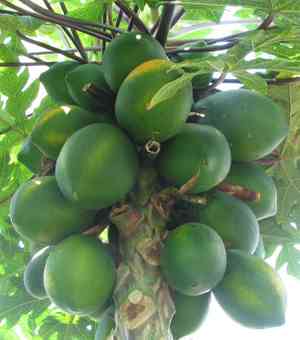
Papaya (Carica) (Carica)
Also known as: Papaya, Pawpaw, Tree melon
Papayas are fast-growing, small trees common in tropical regions, known for their large, sweet fruits with vibrant yellow-orange flesh. These fruits are typically enjoyed fresh, added to salads, smoothies, and desserts, or cooked in various dishes. In some areas of India and Southeast Asia, even the green, unripe papayas are used in cooking, often in salads or pickles.
In This Article
Attributes of Papaya (Carica)
Lifespan
Perennial
Plant Height
5 to 10 meters
Spread
2 to 3 meters
Leaf Color
Deep green
Flower Size
2.5 to 3 cm
Flower Color
White to yellow
Images of Papaya (Carica)
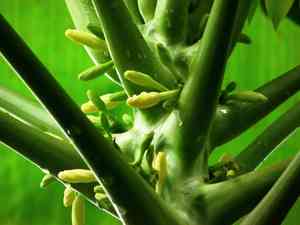
Quickly Identify Papaya (Carica)
1
Papaya plants have a distinctive single, hollow stem that can grow 5-10 meters tall with scars where leaves and fruit were attached. The leaves are large, up to 70 cm in diameter, and deeply lobed. Its fruit changes from green to yellow or orange when ripe.
Scientific Classification of Papaya (Carica)
Phylum
Tracheophyta
Class
Magnoliopsida
Order
Brassicales
Family
Caricaceae
Genus
Carica
Planting and Growing of Papaya (Carica)
Care Difficulty
Easy
Watering Schedule
Every 2 days
Sunlight Requirements
Full sun
Sunshine Duration
4-8 hours
Ideal Temperature
71-86℉
Soil Type
Potting Mix, Peat Mix
Soil pH
6.5-7.5
Fertilizer Type
Balanced
Pruning Season
Spring, Summer
Pruning Area
Branches, Leaves
Pruning Frequency
2 times a year
Repotting Season
Spring
Pot Type
Plastic, Ceramic
 How to Water Papaya (Carica)?
For Carica plants, water them until you notice that excess moisture drains from the bottom of the pot. This ensures that the root system is thoroughly hydrated without being waterlogged. Aim for about 500 ml of water per session, ensuring the soil remains moist but not soggy.
What are the symptoms of an underwatered Papaya (Carica)?
›
What should I do if my Papaya (Carica) is not getting enough water?
›
What are the symptoms of an overwatered Papaya (Carica)?
›
How to save an overwatered Papaya (Carica)?
›
 What Are the Sunlight Requirements for Papaya (Carica)?
Carica plants flourish best with access to full sun or partial sun. The ideal sun exposure fosters robust growth, healthy foliage, and substantial fruit yields.
Why is full sun necessary?
›
How to achieve ideal lighting?
›
What are the benefits of ideal lighting?
›
 What Is the Ideal Temperature Range for Papaya (Carica)?
Carica plants thrive best in temperatures ranging from 71°F to 86°F. These conditions ensure optimal photosynthesis rates and healthy growth. Maintaining this temperature range minimizes stress and promotes lush foliage and fruit development.
 What Soil is Best for Papaya (Carica)?
Carica plants thrive in well-drained soils that prevent waterlogging, which can lead to root rot. Such soil allows for proper air circulation, ensuring healthy root development and robust growth. While Carica plants love well-drained soils, they also require soil that retains sufficient moisture to keep the roots hydrated. This balance is crucial for maintaining the plant's vitality in warm climates. These plants prefer nutrient-rich soil, abundant in organic matter. This richness boosts the plant's nutrient uptake, supporting lush foliage and fruit production, making the soil a critical element in successful cultivation.
 How to Fertilize Papaya (Carica)?
For Carica, it is essential to use a balanced approach for fertilizing. Employ a general-purpose fertilizer at a concentration of 5-10-10. Ensure a gentle application to avoid nutrient burn, especially in younger plants. Adjust based on soil conditions and growth stage.
 How to Prune Papaya (Carica)?
Begin by removing any dead, diseased, or damaged branches to prevent the spread of infections. 2. Cut back any crossing branches to ensure they do not rub against each other, as this can cause wounds. 3. Trim new growth to keep the plant compact, focusing on cutting just above a leaf node for precise regrowth. 4. Finally, focus on shaping the plant to ensure sunlight penetration and air circulation, which are crucial for healthy fruit development. Inspect the plant to identify older branches needing removal. Older branches typically have thicker stems and less productive leaves, and they may also inhibit the growth of younger, more vigorous shoots. Prune these back to the base or a healthy bud.
 How to Propagate Papaya (Carica) plant?
1
Start by cleaning and drying the seeds thoroughly. This process ensures that no fungus or bacteria interfere during germination. For best results, soak the seeds in warm water for 24 hours to soften the seed coat and hasten the germination process.
2
Use sharp, sterilized scissors to take cuttings from a healthy parent plant. Cuttings should be about 6-8 inches in length. Remove the lower leaves and dip the cut end in rooting hormone. This helps accelerate root growth and improves the chances of successful propagation.
3
Once seeds or cuttings are prepared, plant them in a well-draining soil mix. Ensure the soil is kept moist but not waterlogged. Place the pots or trays in a warm area with indirect sunlight. Consistent moisture and warmth are key to successful propagation.
 How to Repot Papaya (Carica) plant?
1
Repot your Carica when you notice roots coming out of the drainage holes. Another signal is if the plant's growth appears stunted or it dries out faster than usual after watering.
2
Choose a pot that is 2-3 inches larger in diameter than the current one. A pot with good drainage helps prevent root rot and allows the plant to thrive healthily in its new environment.
3
Opt for a well-draining soil mix that retains some moisture but doesn't stay soggy. This type of soil supports the growth and prevents diseases by ensuring roots are neither too dry nor too damp.
Toxicity
Ingestion
WARNING
The judgment on toxicity and danger is for reference only. We DO NOT GUARANTEE any accuracy of such judgment. Therefore, you SHALL NOT rely on such judgment. It is IMPORTANT TO SEEK PROFESSIONAL ADVICE in advance when necessary.
Learn More About Papaya (Carica) Diseases
Anthracnose
Bacterial Leaf Spot
Bacterial Soft Rot
Bacterial Wilt
Crown Gall
Cyst Nematode
Damping-off
Drought Stress
Fusarium Wilt
Gray Mold
Leaf Spot
Mosaic
Nutrient Deficiency
Nutrient Toxicity
Powdery Mildew
Root Rot
Root-knot Nematode
Sooty Mold
Spider Mites
Temperature Stress
Thrips Damage
White Mold

