Papaya(Carica papaya)

Papaya (Carica papaya)

Also known as: Pawpaw

Papaya, a fruit-producing plant native to southern Mexico and Central America, offers sweet and juicy fruits when ripe. The plant's milky sap contains an enzyme called papain, which is widely used as a meat tenderizer but can be toxic if consumed in large quantities. Growing papaya in your garden can attract various bird species, adding life to your landscape.

Attributes of Papaya

Lifespan
Perennial
Plant Type
Tree
Plant Height
6 m to 10 m
Spread
2.5 m
Leaf Color
Green
Flower Size
3 cm to 5 cm
Flower Color
Yellow White

ForwardPlant - Identify plants with a snap

Identify and diagnose plants, get toxicity alerts, and explore safety guides for all types of fungi.

Try for Free

Images of Papaya

Papaya(Carica papaya)

Quickly Identify Papaya

1
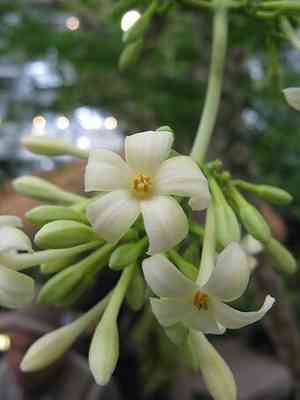
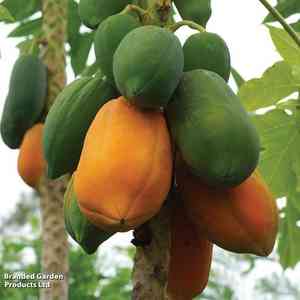
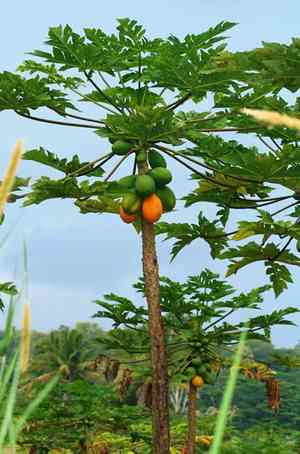
Papaya trees can be identified by their single trunk with no branches, large deeply lobed leaves, and the presence of year-round fruits in various stages of maturity. Flowers are often fragrant and appear on older wood or directly on the trunk.

Scientific Classification of Papaya

Phylum
Vascular plants
Class
Dicotyledons
Order
Mustards, capers, and allies
Family
Papaya
Genus
Papaya
Species
Papaya

Planting and Growing of Papaya

Care Difficulty
Easy
Watering Schedule
Every 8 days
Sunlight Requirements
Full sun
Sunshine Duration
6-10 hours
Ideal Temperature
70-90℉
Soil Type
Potting Mix, Peat Mix
Soil pH
6.5-7.5
Fertilizer Type
Balanced
Pruning Season
Spring, Summer
Pruning Area
Branches, Leaves
Pruning Frequency
Once a year
Repotting Season
Spring
Pot Type
Plastic, Ceramic

water icon How to Water Papaya?

Carica papaya thrives with consistent soil moisture but not standing water. Water generously, allowing around 1500 ml to soak thoroughly down to the roots. The soil should be moist but never waterlogged, ensuring excess water can freely drain away. Adjust based on temperature and humidity.
What are the symptoms of an underwatered Papaya?
What should I do if my Papaya is not getting enough water?
What are the symptoms of an overwatered Papaya?
How to save an overwatered Papaya?
More About Watering Techniques

sunlight icon What Are the Sunlight Requirements for Papaya?

Sunlight Requirements: Full sun, Partial sun
Duration of light: 6 to 8 hours
Carica papaya flourishes in full and partial sun, ideally under 6 to 8 hours of direct sunlight. This light range stimulates robust growth, efficient nutrient use, and higher fruit yields, replicating its tropical origins.
What is the best sunlight condition for Carica papaya?
How can I ensure Carica papaya gets the right amount of sunlight?
What benefits does ideal lighting provide for Carica papaya?
More About Sunlight Requirements Techniques

temperature icon What Is the Ideal Temperature Range for Papaya?

Ideal Temperature: 70 ~ 90℉
The ideal temperature range for the growth of Carica papaya is between 70°F and 90°F. This range provides optimal conditions for photosynthesis and growth, ensuring the plant maintains a healthy metabolism. Such temperatures also promote flower and fruit development, which is crucial for papayas. Exposure to these temperatures helps the plant withstand occasional fluctuations without suffering from stress or damage.

soil icon What Soil is Best for Papaya?

Soil type: Sandy soil, Loam, Sandy loam
Soil PH: 6.5 ~ 7.5
Carica papaya thrives best in well-drained soils that prevent waterlogging, ensuring the roots get ample air and nutrients. Good drainage helps the plant to grow robust and produce sweet, juicy fruits. Papaya plants require soil rich in organic matter to provide essential nutrients needed for their rapid growth and fruit development. Fertile soil supports healthy foliage and enhances fruit size and quality. While papayas need good drainage, they also perform well in soils that retain moderate moisture without being too wet. Proper moisture levels help maintain leaf health and fruit consistency. More About Soil

fertilize icon How to Fertilize Papaya?

Fertilizer type: Balanced
For Carica papaya, it's crucial not to overwhelm the plant with excessive nutrients. About 250 grams of balanced 10-10-10 fertilizer applied per plant per month during the growing season is typically recommended. Adjustments may be needed depending on soil fertility and plant health. More About Fertilizing Techniques

prune icon How to Prune Papaya?

Pruning Time: Spring, Summer
Begin by removing any dead, damaged, or diseased branches. Thin out crowded areas to improve light penetration and air circulation within the canopy. Shape the tree by cutting back branches that cross over each other or grow too vertically. This keeps the tree balanced and healthy. Remove any suckers or shoots growing at the base of the tree to prevent them from sapping nutrients needed by fruit-bearing branches. More About Pruning Techniques

propagate icon How to Propagate Papaya plant?

Propagate Time: Early spring, Late spring, Early summer
1
Soak the seeds in lukewarm water for 24 to 48 hours prior to planting. This helps soften the seed coat, increasing the chances of successful germination.
2
Plant the seeds in a well-draining potting mix about half an inch deep. Keep the soil consistently moist and place the container in a warm environment for optimal germination.
3
Select healthy, non-flowering stems and cut them with a sharp knife at an angle. Plant these cuttings in a pot with moistened potting mix and cover them with a plastic bag to maintain humidity.
More About Propagating Techniques

repot icon How to Repot Papaya plant?

Repotting frequency: Once every 1-2 years
1
Carica papaya needs repotting when you notice the roots are circling the pot or growing out from the drainage holes. Another sign is slow growth despite regular care. Ideally, check in spring or summer when the plant is more capable of handling stress.
2
Select a pot with good drainage and an appropriate size, typically 2-3 inches larger than the current one. This allows room for growth and prevents water from stagnating at the roots, reducing the risk of rot and promoting healthier development.
3
Opt for a well-draining, nutrient-rich soil mixture. A blend of organic compost and perlite can be ideal. This type of soil ensures adequate water retention while preventing waterlogging, offering the plant a conducive environment to thrive.

ForwardPlant - Identify plants with a snap

Find the best spots for them to optimize their health, simply using your phone.

Try for Free

Toxicity of Papaya

Is Papaya toxic to cat?

Papaya carries a low risk of toxicity for cats if ingested in significant amounts. The main issue stems from the unripe fruit, which may cause physical discomfort and exhibit illness symptoms in cats. After such ingestion, pet owners should closely monitor their cats for any alterations in behavior or health, and in cases of suspected poisoning, it is crucial to promptly consult a veterinarian to safeguard the well-being of the affected feline.

Is Papaya toxic to dog?

Papaya is identified as having mild toxicity for dogs. If consumed in large quantities, dogs may experience poisoning from this plant. The unripe fruit of papaya is particularly hazardous and should be kept away from pets. Should a dog consume a considerable amount of the unripe fruit, they might show symptoms like gastrointestinal distress or other mild reactions. Dog owners must watch their pets closely and restrict access to these fruits. If a dog ingests papaya and exhibits signs of poisoning, it is vital to seek prompt veterinary assistance to guarantee appropriate treatment and recovery.

Identify toxic plants for your safety

Learn which plants are harmful to you and your pets, and make informed choices for a safer home!

Try for Free
WARNING
The judgment on toxicity and danger is for reference only. We DO NOT GUARANTEE any accuracy of such judgment. Therefore, you SHALL NOT rely on such judgment. It is IMPORTANT TO SEEK PROFESSIONAL ADVICE in advance when necessary.
More About Toxic Techniques