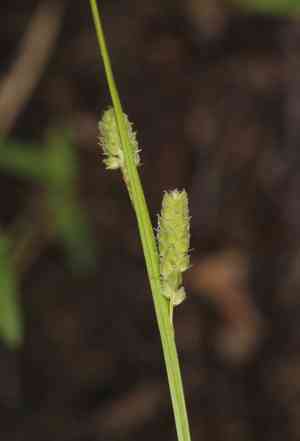
Swan's sedge (Carex swanii)
Also known as: Swann's Sedge
Swan's sedge, named after botanist Charles Walter Swan (1838-1921), is a clump-forming, moisture-loving plant frequently used in ornamental landscaping, especially around pond edges. Often confused with species like Carex virescens, Swan's sedge is distinguishable by its slender stems and upright growth habit.
In This Article
Attributes of Swan's sedge
Lifespan
Perennial
Plant Type
Grass
Plant Height
30 cm to 91 cm
Spread
30 cm to 60 cm
Leaf Color
Green
Flower Size
Small, less than 1 cm
Flower Color
Brownish-Green
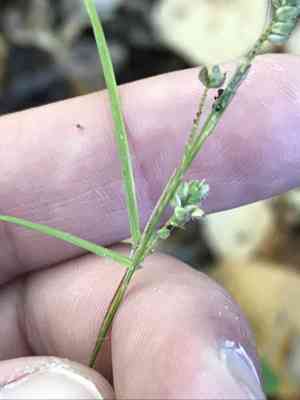
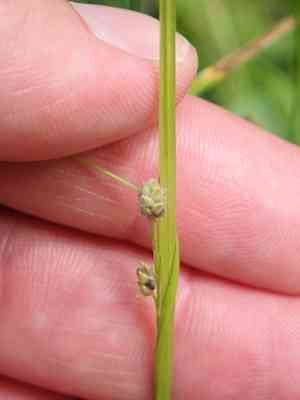
Images of Swan's sedge


Quickly Identify Swan's sedge
1
Swann\'s Sedge can be identified by its slender, arching grass-like leaves and the dense, tufted clumps it forms. The plants produce small, brownish-green flower spikes typically in the summer.
Scientific Classification of Swan's sedge
Phylum
Vascular plants
Class
Monocotyledons
Order
Poales
Family
Sedge
Genus
True sedges
Species
Swan's sedge
Planting and Growing of Swan's sedge
Care Difficulty
Easy
Watering Schedule
Every 2 days
Sunlight Requirements
Partial sun
Sunshine Duration
4-6 hours
Ideal Temperature
50-77℉
Soil Type
Potting Mix, Peat Mix
Soil pH
6.5-7.5
Fertilizer Type
Balanced
Pruning Season
Spring, Summer
Pruning Area
Branches, Leaves
Pruning Frequency
2 times a year
Repotting Season
Spring
Pot Type
Plastic, Ceramic
 How to Water Swan's sedge?
For Carex swanii, it's essential to water deeply but infrequently, allowing soil moisture to penetrate roots thoroughly. Aim for around 150 ml, ensuring the soil is moist but not soggy, mimicking its natural damp woodland conditions.
What are the symptoms of an underwatered Swan's sedge?
›
What should I do if my Swan's sedge is not getting enough water?
›
What are the symptoms of an overwatered Swan's sedge?
›
How to save an overwatered Swan's sedge?
›
 What Are the Sunlight Requirements for Swan's sedge?
Carex swanii prefers partial sun to full shade, balancing between 2 and 6 hours of indirect sunlight daily. This range prevents leaf scorching while supporting optimal growth and vitality.
What is the ideal light condition for Carex swanii?
›
How can I provide the ideal light for Carex swanii?
›
What benefits does ideal lighting bring to Carex swanii?
›
 What Is the Ideal Temperature Range for Swan's sedge?
Carex swanii thrives well in mild temperature conditions. The ideal temperature range for optimal growth is between 50 to 77 degrees Fahrenheit. This range ensures adequate enzymatic and physiological processes necessary for the plant's growth. Maintaining this temperature aids in photosynthesis, nutrient uptake, and overall health of the plant.
 What Soil is Best for Swan's sedge?
Carex swanii thrives best in well-drained soil that prevents waterlogging while retaining essential moisture. This enables it to access nutrients effectively, promoting robust growth. The plant benefits from soil that retains moisture effectively, ensuring it remains hydrated, especially in dry conditions. This moisture retention aids in continuous nutrient uptake. Soil that is rich in organic matter provides the nutrients essential for the health and vibrancy of Carex swanii, supporting its foliage and overall vitality.
 How to Fertilize Swan's sedge?
For Carex swanii, aim to use a balanced fertilizer. Liquid fertilizers should be diluted to 50% of the recommended strength. Apply approximately 150 ml per plant if using liquid fertilizer, ensuring even distribution over the soil surface.
 How to Prune Swan's sedge?
Begin by identifying and removing damaged, yellowing, or dead leaves, cutting at an angle for a cleaner finish. For overgrown clumps, remove up to one-third of the oldest stems from the center to encourage airflow and new growth. Finally, shape the plant by trimming around the edges, enhancing its appearance. Dispose of cuttings properly to prevent fungal growth.
More About Pruning Techniques→
 How to Propagate Swan's sedge plant?
1
Harvest seeds from mature Carex swanii plants in late summer by shaking the seed heads into a paper bag. Ensure seeds are dry before storing them in a cool, dark place.
2
Fill seed trays with a well-draining potting mix. Ensure the soil is moist but not waterlogged to provide an ideal environment for the seeds to germinate.
3
Sow the seeds lightly on the surface of the soil and cover them with a thin layer of vermiculite. Place the trays in a bright area but out of direct sunlight.
 How to Repot Swan's sedge plant?
1
Carex swanii needs repotting when its roots fill the current pot, usually every 2-3 years, or when you notice that the growth is stunted and the soil dries out too quickly after watering. Repotting is best during early spring or autumn when the plant is not under heat stress.
2
Select a pot that is one size larger than the current one to give roots enough room to grow without overwhelming them with too much unutilized space. A pot with drainage holes is ideal to prevent waterlogging, which can harm Carex swanii's roots.
3
Opt for a well-drained sandy soil mix that supports robust root growth. This type of soil allows excess water to escape easily, preventing root rot and ensuring the roots are consistently provided with oxygen.



