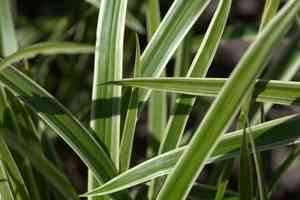
Morrow's sedge (Carex morrowii)
Also known as: Goldband Sedge, Japanese Sedge
Morrow's sedge is an appealing grass often used to enhance woodland or rock gardens. This plant's leaves exhibit more vibrant colors when grown under the shade of medium-sized shrubs and trees. The scientific name for Morrow's sedge is Carex morrowii, and it is named in honor of Dr. James Morrow, who discovered the plant in Japan during the years 1853-1854.
In This Article
Attributes of Morrow's sedge
Lifespan
Perennial, Annual
Plant Type
Grass
Plant Height
30 cm to 46 cm
Spread
30 cm to 45 cm
Leaf Color
Green White
Flower Size
Small, less than 1 inch (2.5 cm)
Flower Color
Yellow Green Brown Cream
Images of Morrow's sedge
Quickly Identify Morrow's sedge
1
Robust mounding form, 12-18 inches (30-46 cm) tall.
2
Dark green, flat leaves, 1/4-1/2 inch (6-12 mm) wide, up to 12 inches (30 cm) long.
3
Sparse, small clustered flowers, greenish-brown, 0.1-0.2 inches (2-5 mm).
4
Lack of showy petals; instead, scale-like structures enclosing reproductive parts.
5
Distinct white-edged leaves enhance ornamental appeal and aid in plant identification.
Scientific Classification of Morrow's sedge
Phylum
Vascular plants
Class
Monocotyledons
Order
Poales
Family
Sedge
Genus
True sedges
Species
Morrow's sedge
Planting and Growing of Morrow's sedge
Care Difficulty
Easy
Watering Schedule
Every 2 days
Sunlight Requirements
Partial sun
Sunshine Duration
6-10 hours
Ideal Temperature
60-75℉
Soil Type
Potting Mix, Peat Mix
Soil pH
6.5-7.5
Fertilizer Type
Balanced
Pruning Season
Spring, Summer
Pruning Area
Branches, Leaves
Pruning Frequency
2 times a year
Repotting Season
Spring
Pot Type
Plastic, Terracotta
 How to Water Morrow's sedge?
For Carex morrowii, ensure the soil is moist but not waterlogged. About 250 milliliters per watering should suffice, saturating the soil to its root level. Check if the top inch of the soil is dry before watering again.
What are the symptoms of an underwatered Morrow's sedge?
›
What should I do if my Morrow's sedge is not getting enough water?
›
What are the symptoms of an overwatered Morrow's sedge?
›
How to save an overwatered Morrow's sedge?
›
 What Are the Sunlight Requirements for Morrow's sedge?
Partial shade, ensuring about two to four hours of indirect or morning sun. This balance promotes healthy, vibrant foliage and prevents stress or leaf scorch.
More About Sunlight Requirements Techniques→
Preferred Light Conditions
›
Solutions for Ideal Light
›
Benefits of Ideal Lighting
›
 What Is the Ideal Temperature Range for Morrow's sedge?
Carex morrowii thrives best in temperatures ranging from 60 to 75°F. This range allows the plant to photosynthesize efficiently, promoting robust growth. Maintaining these temperatures helps ensure that the plant does not experience undue stress, which can result in slow growth or disease susceptibility.
 What Soil is Best for Morrow's sedge?
Carex morrowii thrives in well-drained soil, which is crucial for preventing root rot and promoting healthy, vigorous growth. Well-drained soil ensures optimal water retention without waterlogging, providing the plant with the necessary moisture while avoiding excess. This plant prefers soil with moderate moisture levels. Consistent moisture helps support its lush, green foliage and keeps the plant vibrant. However, it should not be left in overly saturated conditions, as this could lead to root damage. A soil enriched with organic matter is beneficial for Carex morrowii, providing essential nutrients that fuel its growth. Organic material improves soil structure, aeration, and fertility, creating an ideal environment for thriving.
 How to Fertilize Morrow's sedge?
For Carex morrowii, it is important to use balanced fertilizers. When using liquid fertilizer, dilute it to half the recommended strength to prevent root burn. Typically, about 10-20 ml per liter of water is adequate. For slow-release fertilizers, a small handful (approximately 30-50 grams) around the base of the plant is sufficient.
 How to Prune Morrow's sedge?
Begin by assessing the plant for dead or damaged leaves, cutting them at the base to maintain overall health. Trim back any overgrown areas to encourage a more compact growth habit. Use sharp, sterilized shears to make clean cuts and aim to maintain the natural shape of the plant. Avoid cutting too close to the soil level to prevent any harm to the root system.
 How to Propagate Morrow's sedge plant?
1
Choose a healthy and mature Carex morrowii plant for division. A plant that is too young might not survive the stress of division. Look for a specimen with several shoots emerging from the base, as these are signs of a well-established root system.
2
Water the plant thoroughly a day before dividing. This reduces stress on the plant by ensuring it has enough moisture. A hydrated plant is more resilient to the process and will be less likely to suffer from transplant shock.
3
Use the sharp spade to dig around the base of the plant, lifting it from the soil. Gently pull apart the sections, or use the spade to cut through tough roots. Ensure each section has a good portion of roots attached. Immediately replant each section in well-prepared soil.
 How to Repot Morrow's sedge plant?
1
Carex morrowii shows signs of needing a new pot when its roots start circling the inside of its current container or poking out of drainage holes. If you notice slower growth or the plant frequently dries out, these are also indicators it's time to repot. Spring and summer are ideal times because the plant is actively growing and can recover more swiftly from the repotting process.
2
Opt for a pot that is only 1-2 inches larger in diameter than the current one. This size allows the roots to expand without the risk of overwatering, as too large a pot can retain too much moisture, leading to root rot. Look for one with adequate drainage holes, ensuring excess water can escape, reducing the chance of waterlogging.
3
Use a well-draining potting mix consisting of a mixture of peat, pine bark, and perlite. This blend ensures optimal air circulation and drainage while retaining essential moisture. It provides the right balance that Carex morrowii needs for healthy root development and vibrant growth.



