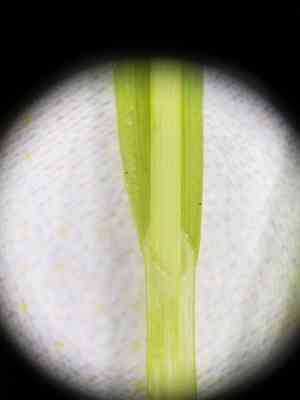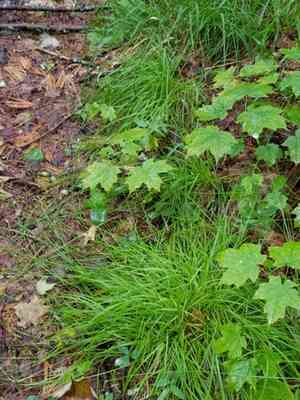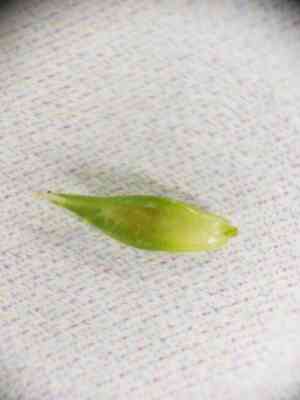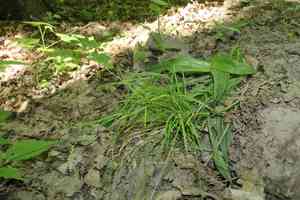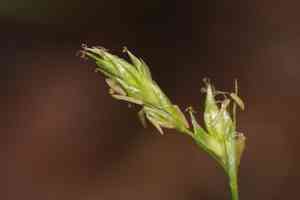
Dewey's sedge(Carex deweyana)

Dewey's sedge (Carex deweyana)

Also known as: Round-fruited short-scaled sedge

Dewey's sedge (Carex deweyana) is a perennial plant typically found in shaded woodland areas. It features narrow, grass-like leaves that form dense tufts at the base. The stems are slender, triangular, and can grow significantly taller than the leaves, reaching up to 91 cm in height.

From late spring to early summer, it produces several small flower spikes, with male and female flowers on the same plant. These spikes give way to small, non-edible fruits. Dewey's sedge tends to grow in clusters, spreading through short rhizomes. It thrives in moist, shaded environments, such as forest understories and near streams, and is beneficial for soil stabilization.

Attributes of Dewey's sedge

Lifespan
Perennial
Plant Type
Grass
Plant Height
15 cm to 91 cm
Spread
Not typically measured, forms dense clumps
Leaf Color
Green
Flower Size
Small, spikelets about 10-20 mm long
Flower Color
White Yellow Green

ForwardPlant - Identify plants with a snap

Identify and diagnose plants, get toxicity alerts, and explore safety guides for all types of fungi.

Try for Free

Images of Dewey's sedge

Dewey's sedge(Carex deweyana)

Quickly Identify Dewey's sedge

1
Carex deweyana can be identified by its triangular stems, arching leaves, and small, narrow spikes that hold the seeds. It has a more delicate and slender appearance compared to other sedges.

Scientific Classification of Dewey's sedge

Phylum
Vascular plants
Class
Monocotyledons
Order
Poales
Family
Sedge
Genus
True sedges
Species
Dewey's sedge

Planting and Growing of Dewey's sedge

Care Difficulty
Easy
Watering Schedule
Every 2 days
Sunlight Requirements
Full shade
Sunshine Duration
4-8 hours
Ideal Temperature
50-77℉
Soil Type
Potting Mix, Peat Mix
Soil pH
5.5-7.5
Fertilizer Type
Balanced
Pruning Season
Spring, Summer
Pruning Area
Branches, Leaves
Pruning Frequency
2 times a year
Repotting Season
Spring
Pot Type
Terracotta, Plastic

water icon How to Water Dewey's sedge?

For Carex deweyana, water until the soil is thoroughly moist. Aim for around 250 ml per watering to ensure all roots receive moisture. Letting the soil dry slightly in between can help prevent root rot.
What are the symptoms of an underwatered Dewey's sedge?
What should I do if my Dewey's sedge is not getting enough water?
What are the symptoms of an overwatered Dewey's sedge?
How to save an overwatered Dewey's sedge?

sunlight icon What Are the Sunlight Requirements for Dewey's sedge?

Sunlight Requirements: Full shade, Partial sun
Duration of light: 2 to 4 hours
Carex deweyana prefers partial sun to full shade environments. Ideal lighting ensures lush foliage, reduces stress, and fosters optimal photosynthesis, enhancing the plant's adaptive capabilities.
Optimal Lighting Query
Solutions for Ideal Lighting
Benefits of Ideal Lighting

temperature icon What Is the Ideal Temperature Range for Dewey's sedge?

Ideal Temperature: 50 ~ 77℉
The ideal temperature range for Carex deweyana is between 50°F and 77°F. In this range, the plant experiences optimal growth conditions that support healthy leaf and root development.

soil icon What Soil is Best for Dewey's sedge?

Soil type: Loam, Sandy loam, Peat soil
Soil PH: 5.5 ~ 7.5
Carex deweyana flourishes in soils that are moderately to highly moisture-retentive, which supports its preference for damp habitats. Such conditions prevent drying out during dry spells, ensuring consistent growth. This plant thrives in nutrient-rich soils that provide essential minerals for growth. Rich soil ensures lush and healthy foliage, as nutrients fuel the plant's metabolic processes. The presence of organic matter in soil is crucial for Carex deweyana, as it enhances soil structure and fertility. Organic matter improves aeration and water retention capacity, fostering a beneficial environment for root systems.

fertilize icon How to Fertilize Dewey's sedge?

Fertilizer type: Balanced
For Carex deweyana, it is important to apply a balanced amount of fertilizer to support healthy growth. Typically, applying a dilute liquid fertilizer solution with a 10-10-10 NPK ratio is effective. Use half the recommended strength per the packaging instructions during the growing season.

prune icon How to Prune Dewey's sedge?

Pruning Time: Spring, Summer, Autumn
Start by removing any dead or diseased foliage by cutting back to the base of the plant. Trim the outer edges to maintain shape, ensuring to cut at an angle for optimal water runoff. If necessary, thin out crowded areas to improve air circulation and sunlight penetration. Every few years, consider cutting back the entire plant to a height of a few inches. This promotes vigorous new growth and rejuvenates the plant. Ensure you do this at the beginning of its active growing season. More About Pruning Techniques

propagate icon How to Propagate Dewey's sedge plant?

Propagate Time: Spring, Early spring
1
Fill seed trays with a well-draining, sterile potting mix. Ensure the mix is moist but not soaked. Lightly press down to create an even surface for seed distribution.
2
Scatter Carex deweyana seeds evenly across the surface of the prepared seed tray. Cover lightly with a thin layer of soil, as these seeds require some light exposure to germinate effectively.
3
In spring, dig up established clumps of Carex deweyana using a garden spade. Split the clump into smaller sections, ensuring each has roots and shoots. Replant immediately to avoid desiccation.
More About Propagating Techniques

repot icon How to Repot Dewey's sedge plant?

Repotting frequency: Annually or biennially
1
Carex deweyana shows it's time for repotting when root-bound signs appear, such as roots peeping through drainage holes or a slowdown in growth. The ideal timing is during active growth phases in spring or summer when the plant can quickly adapt to its new environment.
2
Choosing the right pot for Carex deweyana involves opting for one that is 2-3 inches larger than the current pot. This provides adequate space for root expansion and ensures proper drainage. A pot with drainage holes is essential to prevent waterlogging, which could be detrimental to the plant's health.
3
The ideal soil for Carex deweyana is a well-draining potting mix, which mimics its native environment. Incorporating materials like perlite or sand into the potting soil improves drainage. This prevents root rot and promotes healthy root growth, providing optimal conditions for the plant's wellbeing.

ForwardPlant - Identify plants with a snap

Find the best spots for them to optimize their health, simply using your phone.

Try for Free