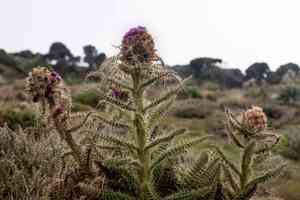
Plumeless thistles (Carduus) (Carduus)
Also known as: Plumeless thistle, Winged thistle
Plumeless thistles, also referred to as plumeless thistless, are flowering plants known for their spiky appearance. Their flower heads typically come in shades of purple, pink, and occasionally white. These plants are often regarded as toxic or noxious and are considered invasive weeds in various regions globally.
In This Article
Attributes of Plumeless thistles (Carduus)
Lifespan
Biennial
Plant Height
30 to 150 centimeters
Spread
Variable; can spread widely depending on growing conditions
Leaf Color
Green with silvery undersides
Flower Size
3 to 5 centimeters
Flower Color
Purple
Images of Plumeless thistles (Carduus)

Quickly Identify Plumeless thistles (Carduus)
1
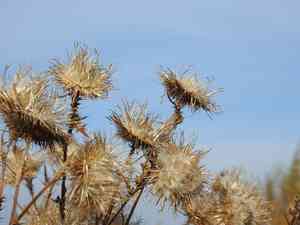
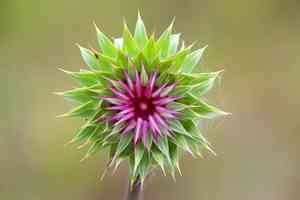
Identifying Carduus involves looking for its spiny leaves and stems, and its distinctive purple, globe-shaped flower heads. The leaves often have a feather-like appearance with a spiked edge.
Scientific Classification of Plumeless thistles (Carduus)
Phylum
Magnoliophyta
Class
Magnoliopsida
Order
Asterales
Family
Asteraceae
Genus
Carduus
Planting and Growing of Plumeless thistles (Carduus)
Care Difficulty
Moderate
Watering Schedule
Every 2 days
Sunlight Requirements
Full sun
Sunshine Duration
4-8 hours
Ideal Temperature
60-75℉
Soil Type
Potting Mix, Peat Mix
Soil pH
6-8
Fertilizer Type
Balanced
Pruning Season
Spring, Summer
Pruning Area
Branches, Leaves
Pruning Frequency
Once a year
Repotting Season
Spring
Pot Type
Plastic, Ceramic
 How to Water Plumeless thistles (Carduus)?
Carduus plants appreciate a thorough soak, but ensure the soil is well-drained to avoid waterlogging. It's best to water until about 500 ml has been applied, ensuring the soil is moist but not soggy. The aim is to mimic a mild natural rainfall which tends to be just enough to provide moisture without oversaturation.
What are the symptoms of an underwatered Plumeless thistles (Carduus)?
›
What should I do if my Plumeless thistles (Carduus) is not getting enough water?
›
What are the symptoms of an overwatered Plumeless thistles (Carduus)?
›
How to save an overwatered Plumeless thistles (Carduus)?
›
 What Are the Sunlight Requirements for Plumeless thistles (Carduus)?
Carduus prefers full sun to partial sun, thriving optimally under 6 to 8 hours of light daily. Ideal lighting promotes healthy growth, strong structure, and profuse blooming.
What is the ideal light intensity for Carduus?
›
How to ensure Carduus gets enough light indoors?
›
What are the benefits of ideal lighting for Carduus?
›
 What Is the Ideal Temperature Range for Plumeless thistles (Carduus)?
What is the ideal temperature range for growing Carduus? The ideal temperature range for growing Carduus is between 60°F and 75°F. This range helps to ensure healthy growth and development. It is important to keep the plant within these temperatures to maximize its potential.
 What Soil is Best for Plumeless thistles (Carduus)?
Carduus thrives in well-drained soils, which allow excess water to flow away, preventing root rot and ensuring healthy growth. A well-drained soil also provides ample aeration, which is essential for the beneficial soil microorganisms that support plant health. A nutrient-rich soil is vital for Carduus as it supports robust growth and flowering. Incorporating organic matter like compost or aged manure can enhance soil fertility, providing a steady nutrient release that promotes sustained growth and resilience against pests. Carduus prefers soil with moderate moisture retention, ensuring moisture availability during dry spells while preventing waterlogging. This balance facilitates consistent hydration and nutrient uptake, ensuring vibrant growth and foliage health.
 How to Fertilize Plumeless thistles (Carduus)?
Carduus plants are not particularly demanding when it comes to fertilization. Regular garden soil usually suffices, but for optimal growth, apply a balanced liquid fertilizer. During active growth seasons, use approximately a diluted concentration to avoid burning the foliage. This conservative approach helps maintain vigor without overburdening the plant.
 How to Prune Plumeless thistles (Carduus)?
Begin by identifying dead, damaged, or especially leggy stems. Look for parts of the plant that are crowding or shading others, as these can be removed to allow more air and sunlight. Utilize sharp pruning shears to make clean cuts. This minimizes damage to the plant tissue, promotes faster healing, and reduces the risk of disease entry. Trim stems back to their base or where they join a larger stem, taking care not to remove too much foliage, as this could stress the plant. Aim for a clean, angled cut to prevent water accumulation.
 How to Propagate Plumeless thistles (Carduus) plant?
1
Start by filling the seed tray with sterile potting mix, leaving some space at the top. Gently pat the surface to create a smooth, even layer. Ensure the mix is well-moistened but not soaking wet.
2
Scatter Carduus seeds evenly across the surface of the potting mix. Lightly press them into the soil without fully covering them, as they need light for germination. Water gently to settle the seeds in place.
3
Place the seed tray in a warm area with indirect light. Maintain a consistent moisture level by misting as needed. Optimal temperature for germination is around 15-20°C.
 How to Repot Plumeless thistles (Carduus) plant?
1
Carduus typically requires repotting when its roots start poking out of the drainage holes or if the water seems to be sitting on top of the soil for too long, indicating compacted roots. Early Spring or Autumn, during their growing periods, are ideal times for repotting to minimize stress on the plant.
2
Select a pot that is slightly larger than the current one, ideally one or two inches wider. This gives the roots room to spread without causing water pooling, which can lead to root rot. Ensure that the pot has sufficient drainage holes to prevent water from sitting at the bottom.
3
A loamy, well-draining soil is essential for Carduus to prevent waterlogging, which can lead to root rot. The soil should be enriched with organic matter to provide the necessary nutrients for growth while remaining airy enough to allow for proper root expansion.
Toxicity
Ingestion, skin contact
WARNING
The judgment on toxicity and danger is for reference only. We DO NOT GUARANTEE any accuracy of such judgment. Therefore, you SHALL NOT rely on such judgment. It is IMPORTANT TO SEEK PROFESSIONAL ADVICE in advance when necessary.
Learn More About Plumeless thistles (Carduus) Diseases
Anthracnose
Bacterial Leaf Spot
Bacterial Soft Rot
Bacterial Wilt
Black Spot
Chemical Injury
Crown Gall
Cyst Nematode
Damping-off
Downy Mildew
Drought Stress
Fusarium Wilt
Gray Mold
Leaf Curl
Leaf Spot
Mosaic
Nutrient Deficiency
Nutrient Toxicity
Powdery Mildew
Root Rot
Root-knot Nematode
Rusts
Sooty Mold
Spider Mites
Temperature Stress
Thrips Damage
White Mold

