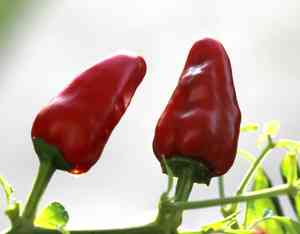
Capsicum annuum var. conoides (Capsicum annuum var. conoides)
Also known as: conoides pepper, conical pepper
Capsicum annuum var. conoides is a dynamic variety that flourishes in warm environments, characterized by its bushy growth pattern. The plant produces distinctively cone-shaped peppers, which can be red, green, yellow, or orange, hanging prominently among dense leaves. Known for their varying levels of spiciness, these peppers may serve as a natural deterrent to herbivores. Additionally, their appealing colors and flavors attract humans, who play a key role in dispersing the seeds, thereby aiding in the plant's propagation.
In This Article
Attributes of Capsicum annuum var. conoides
Lifespan
Annual
Plant Type
Herb
Plant Height
0.5 to 1.0 meters
Spread
N/A
Leaf Color
Green
Flower Size
1-2 cm
Flower Color
White
Quickly Identify Capsicum annuum var. conoides
1
To identify Capsicum annuum var. conoides, look for conical-shaped fruits that are smaller and more tapered than typical bell peppers. The leaves are ovate-lanceolate with a glossy green surface. The flowers are white and small, appearing at the nodes.
Scientific Classification of Capsicum annuum var. conoides
Phylum
Vascular plants
Class
Dicotyledons
Order
Nightshades, bindweeds, gooseweeds, and allies
Family
Nightshade
Genus
Capsicum
Species
Capsicum annuum var. conoides
Planting and Growing of Capsicum annuum var. conoides
Care Difficulty
Easy
Watering Schedule
Every 4 days
Sunlight Requirements
Full sun
Sunshine Duration
4-6 hours
Ideal Temperature
70-85℉
Soil Type
Potting Mix, Peat Mix
Soil pH
6.5-7.5
Fertilizer Type
Balanced
Pruning Season
Spring, Summer
Pruning Area
Branches, Leaves
Pruning Frequency
2 times a year
Repotting Season
Spring
Pot Type
Plastic, Terracotta
 How to Water Capsicum annuum var. conoides?
Capsicum annuum var. conoides prefers its soil to be consistently moist but never waterlogged. Water until the soil is damp to about 6 inches deep, ensuring the water reaches the root zone completely. The best practice is to allow the top inch of soil to dry out between waterings. Adjust according to the plant’s environment and size.
What are the symptoms of an underwatered Capsicum annuum var. conoides?
›
What should I do if my Capsicum annuum var. conoides is not getting enough water?
›
What are the symptoms of an overwatered Capsicum annuum var. conoides?
›
How to save an overwatered Capsicum annuum var. conoides?
›
 What Are the Sunlight Requirements for Capsicum annuum var. conoides?
Capsicum annuum var. conoides thrives in full to partial sun conditions, ideally receiving 6 to 8 hours of sunlight. Consistent light ensures robust growth and fruit production.
What is the best lighting condition for Capsicum annuum var. conoides?
›
How can I achieve the ideal lighting for my plant indoors?
›
What are the benefits of ideal lighting conditions for this plant?
›
 What Is the Ideal Temperature Range for Capsicum annuum var. conoides?
The ideal temperature range for growing Capsicum annuum var. conoides is between 70°F to 85°F. Within this range, the plant can effectively photosynthesize, absorb nutrients, and grow steadily without stress. Maintaining these temperatures ensures optimal fruit set and flavor development.
 What Soil is Best for Capsicum annuum var. conoides?
Capsicum annuum var. conoides thrives best in nutrient-rich soil. This means that the soil should be well-amended with organic matter or compost. Ensuring your soil is rich in nutrients fosters robust plant growth and leads to a productive harvest, with peppers that are both plentiful and flavorful. Drainage is a crucial factor when cultivating this pepper variety. Well-drained soils prevent waterlogging, which can lead to root rot, a deadly condition for Capsicum plants. By maintaining soil with excellent drainage, you promote healthy root systems, facilitating nutrient uptake and ensuring plant vitality. Capsicum annuum var. conoides prefers warmer soil temperatures. Planting in soil that retains warmth allows for faster germination and accelerates early growth stages. This is particularly important in regions with cooler climate zones, where soil warmth can make a substantial difference in growth success.
 How to Fertilize Capsicum annuum var. conoides?
Capsicum annuum var. conoides thrives when given the proper amount of fertilizer. Generally, for liquid fertilizers, follow the manufacturer's instructions, usually diluting it to half strength. Apply approximately 1 cup of this diluted fertilizer per plant each time. For slow-release fertilizers, use about 10 grams per plant, ensuring even distribution around the base.
 How to Prune Capsicum annuum var. conoides?
Identify any dead, damaged, or diseased branches first. Use pruning shears to cut these branches back to a healthy part of the plant to prevent disease spread and stimulate new growth. After dealing with the unhealthy parts, look for excessive foliage that may be shading flowers or fruits. Trim these to allow more sunlight to reach the plant, which can enhance fruit production. Next, focus on shaping the plant. Trim back any leggy growth to promote a fuller and more balanced appearance. This can also help in supporting a better fruit-bearing structure. Once you have completed pruning, disinfect your tools with a mixture of water and bleach. This will help prevent any diseases from spreading to other plants in your garden.
More About Pruning Techniques→
 How to Propagate Capsicum annuum var. conoides plant?
1
Begin by selecting healthy seeds and soaking them in lukewarm water for a few hours. This helps to soften the seed coat and can promote quicker germination.
2
Select a healthy stem without flowers or buds. Cut a length of 4 to 6 inches just below a node. Remove the lower leaves to reduce water loss and prepare for rooting.
3
Place seeds in a prepared seed tray or plant the prepared cuttings into a well-drained potting mix. Keep the soil moist but not waterlogged to encourage root development.
 How to Repot Capsicum annuum var. conoides plant?
1
Capsicum annuum var. conoides requires repotting when the roots start poking out of the drainage holes, indicating root-bound conditions. Additionally, if the soil dries out too quickly after watering, it's time for a new pot and fresh soil.
2
Select a pot that is one size larger than the current one, with good drainage holes. This allows the roots to spread comfortably, supporting better growth and preventing waterlogging, which can lead to root rot.
3
Choose a well-draining soil mix that retains some moisture but allows excess water to escape easily. A mix containing peat, perlite, and vermiculite works wonders, promoting healthy root development and preventing compacted soil.
Learn More About Capsicum annuum var. conoides Diseases
Anthracnose
Bacterial Leaf Spot
Bacterial Soft Rot
Bacterial Wilt
Chemical Injury
Damping-off
Downy Mildew
Drought Stress
Fusarium Wilt
Gray Mold
Late Blight
Leaf Curl
Leaf Spot
Mosaic
Nutrient Deficiency
Nutrient Toxicity
Powdery Mildew
Root Rot
Root-knot Nematode
Sooty Mold
Spider Mites
Temperature Stress
Thrips Damage
White Mold



