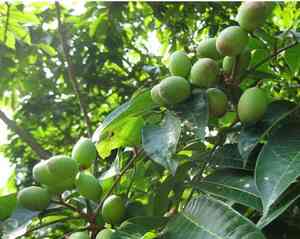
Chinese white olive (Canarium album)
Also known as: Soft Canarium, Chinese Olive, White Olive
The Chinese white olive, despite its name, is not related to the true olive. This evergreen tree produces olive-like fruits with edible pulp and seeds. Widely cultivated in East Asia, the fruits and seeds are commonly available in food markets. The fruit can be consumed fresh or preserved similarly to traditional olives. Additionally, the seeds are used to produce culinary oil.
In This Article
Attributes of Chinese white olive
Lifespan
Perennial
Plant Type
Tree
Plant Height
10 m to 35 m
Spread
1.5 m
Leaf Color
Dark Green
Flower Size
15 cm to 30 cm
Flower Color
White
Quickly Identify Chinese white olive
1
Canarium album can be identified by its broad, dark green, pinnate leaves, and its distinctive olive-like fruits that turn purplish-black when mature. The tree also exudes a resin when its bark is cut.
Scientific Classification of Chinese white olive
Phylum
Vascular plants
Class
Dicotyledons
Order
Maples, mangos, mahogany, citrus, and allies
Family
Torchwood
Genus
Canarium
Species
Chinese white olive
Planting and Growing of Chinese white olive
Care Difficulty
Easy
Watering Schedule
Every 4 days
Sunlight Requirements
Partial sun
Sunshine Duration
6-12 hours
Ideal Temperature
77-86℉
Soil Type
Potting Mix, Peat Mix
Soil pH
5.5-7.5
Fertilizer Type
Balanced
Pruning Season
Spring, Summer
Pruning Area
Branches, Leaves
Pruning Frequency
2 times a year
Repotting Season
Spring
Pot Type
Plastic, Ceramic
 How to Water Chinese white olive?
Canarium album prefers a moderate amount of water, allowing the soil to dry slightly between waterings. Each watering session should be around 250 ml, which helps maintain the soil's moisture without oversaturating it. The key is to ensure the top inch of soil has dried out a bit before watering again.
What are the symptoms of an underwatered Chinese white olive?
›
What should I do if my Chinese white olive is not getting enough water?
›
What are the symptoms of an overwatered Chinese white olive?
›
How to save an overwatered Chinese white olive?
›
 What Are the Sunlight Requirements for Chinese white olive?
Partial sun or full sun conditions favor Canarium album. With this light range, the plant can efficiently photosynthesize, enhancing its growth, vitality, and resistance to pests and diseases, ultimately supporting a robust and lush appearance.
More About Sunlight Requirements Techniques→
What is the best location for Canarium album?
›
How can light be optimized for Canarium album?
›
What benefits does ideal light provide Canarium album?
›
 What Is the Ideal Temperature Range for Chinese white olive?
The ideal temperature for cultivating Canarium album ranges between 77°F and 86°F. This range ensures optimal growth and physiological functioning of the plant, helping it to flourish. Maintaining this temperature range promotes efficient metabolic processes and boosts overall health.
 What Soil is Best for Chinese white olive?
Canarium album thrives in well-drained soils which prevent waterlogging. This ensures the roots get enough air and reduces the risk of root rot, promoting healthy growth. For optimal growth, Canarium album prefers nutrient-rich soils that support its robust development and fruit production, ensuring the plant receives essential minerals like nitrogen and phosphorus. While it prefers well-drained soil, Canarium album also benefits from soils that retain some moisture, aiding in consistent nutrient uptake and maintaining lush foliage.
 How to Fertilize Chinese white olive?
For Canarium album, the general rule of thumb is to apply approximately 1/2 cup of balanced granular fertilizer per 1 inch of trunk diameter for mature trees. For liquid fertilizers, use a diluted solution that follows the manufacturer's instructions, often mixing a few teaspoons per gallon of water.
 How to Prune Chinese white olive?
Consider the optimal pruning seasons, which are spring and autumn. During these times, the plant is less stressed, promoting rapid recovery and minimising potential damage. When cutting branches, ensure you cut at a 45-degree angle. This angle helps avoid water buildup on the cut site, thereby reducing the risk of fungal infections.
More About Pruning Techniques→
 How to Propagate Chinese white olive plant?
1
For seed propagation, ensure you select mature and healthy seeds. In cutting propagation, choose disease-free, robust stems from the parent plant.
2
A mix of sand, soil, and compost in equal parts is ideal for fostering young plant growth. This medium ensures adequate drainage and nutrient balance for seedlings and cuttings.
3
Plant seeds in a seedling tray or insert cuttings into a prepared growth medium. Water them gently and ensure they are placed in a warm, humid environment to promote root development.
 How to Repot Chinese white olive plant?
1
Repot Canarium album when you observe roots growing out of the drainage holes, soil drying out too quickly, or slower growth. These signs indicate the plant is outgrowing its current pot. Ideally, repotting should be done during spring or early summer when the plant is in its active growth phase, aiding a swift recovery.
2
Opt for a pot that is 1-2 inches larger in diameter than the current one with good drainage holes. This promotes better root growth and prevents waterlogging. Clay pots are ideal as they allow for breathability, regulating moisture levels, and supporting the plant's overall health.
3
Use a well-draining soil mix composed of loam, sand, and organic matter. This mix prevents root rot by allowing excess water to drain while providing necessary nutrients. It mimics the plant’s natural environment and supports its growth and health efficiently.
Learn More About Chinese white olive Diseases
Anthracnose
Bacterial Leaf Spot
Bacterial Soft Rot
Bacterial Wilt
Crown Gall
Damping-off
Downy Mildew
Drought Stress
Fusarium Wilt
Gray Mold
Leaf Curl
Leaf Spot
Mosaic
Nutrient Deficiency
Nutrient Toxicity
Powdery Mildew
Root Rot
Root-knot Nematode
Rusts
Sooty Mold
Spider Mites
Temperature Stress
Thrips Damage
White Mold



