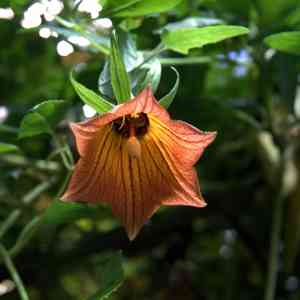
Canarina (Canarina) (Canarina)
Also known as: Canary bellflower, Canary Island bellflower
Canarina plants are herbaceous perennials that grow as vines. They feature uniquely shaped, bell-like flowers that are typically vibrant in color.
In This Article
Attributes of Canarina (Canarina)
Lifespan
Perennial
Plant Height
Up to 2 meters
Spread
Not applicable, as it is a trailing plant
Leaf Color
Green
Flower Size
5 to 7 centimeters
Flower Color
Orange, Red
Images of Canarina (Canarina)
Quickly Identify Canarina (Canarina)
1
Canarina plants can be identified by their unique bell-shaped flowers, usually in shades of orange or red, and their fleshy, trailing stems.
Scientific Classification of Canarina (Canarina)
Phylum
Tracheophyta
Class
Magnoliopsida
Order
Asterales
Family
Campanulaceae
Genus
Canarina
Planting and Growing of Canarina (Canarina)
Care Difficulty
Moderate
Watering Schedule
Every 3 days
Sunlight Requirements
Partial sun
Sunshine Duration
6-10 hours
Ideal Temperature
59-68℉
Soil Type
Potting Mix, Peat Mix
Soil pH
6.5-7.5
Fertilizer Type
Balanced
Pruning Season
Spring, Summer
Pruning Area
Branches, Leaves
Pruning Frequency
2 times a year
Repotting Season
Spring
Pot Type
Plastic, Ceramic
 How to Water Canarina (Canarina)?
For Canarina, the watering amount should ensure the soil is moist but never soggy. Aim for around 250 milliliters per watering session. This ensures the roots receive sufficient moisture without waterlogging, promoting healthy growth.
What are the symptoms of an underwatered Canarina (Canarina)?
›
What should I do if my Canarina (Canarina) is not getting enough water?
›
What are the symptoms of an overwatered Canarina (Canarina)?
›
How to save an overwatered Canarina (Canarina)?
›
 What Are the Sunlight Requirements for Canarina (Canarina)?
Canarina prefers partial sun with some full sun, ideally 3 to 6 hours daily, which helps sustain its growth, promote flowering, and maintain a healthy, disease-resistant stature.
What is the best lighting condition for Canarina?
›
How can you ensure Canarina gets ideal light?
›
What benefits does ideal lighting provide for Canarina?
›
 What Is the Ideal Temperature Range for Canarina (Canarina)?
The ideal temperature range for Canarina is between 59°F and 68°F. This range provides a conducive environment for growth, mirroring the plant's native conditions in the Canary Islands. Within this temperature bracket, Canarina can perform its physiological processes optimally, leading to healthy growth patterns and robust flowering.
 What Soil is Best for Canarina (Canarina)?
Canarina thrives in well-drained soil that prevents water stagnation around the roots. Good drainage mitigates root rot and ensures the plant can efficiently absorb nutrients. The plant prefers soil with moderate fertility, as too rich soil might encourage excessive foliage at the expense of flowers. Balanced fertility supports robust blooming. While drainage is crucial, maintaining a certain level of moisture aids in the plant's healthy growth. Regular watering keeps the soil consistently moist without waterlogging.
 How to Fertilize Canarina (Canarina)?
Canarina benefits from a balanced fertilizer application. Use a water-soluble fertilizer diluted to half strength every two weeks during the growing season. For slow-release fertilizers, apply a light layer of granules to the soil surface, ensuring even coverage over the root zone, but avoid direct contact with the stems.
 How to Prune Canarina (Canarina)?
Start by using clean and sharp pruning shears to avoid damaging the plant. Focus on removing dead or damaged stems, as these can hinder growth. Trim overgrown stems to maintain a neat appearance, cutting just above a node to encourage bushier growth. Ensure the plant has enough space for air circulation to prevent fungal growth and diseases.
 How to Propagate Canarina (Canarina) plant?
1
Before sowing, soak the seeds in water for 24 hours to soften the seed coat and enhance germination rates. This step is crucial for breaking dormancy and stimulating growth.
2
Sow the seeds in a seed tray filled with a light, well-draining potting mix. Cover them lightly with soil and maintain consistent moisture levels without overwatering to avoid damping off.
3
Select a healthy, non-flowering stem from the mother plant. Cut a 4-6 inch long piece, remove the lower leaves, and dip the cut end in rooting hormone to enhance root development.
 How to Repot Canarina (Canarina) plant?
1
Canarina should be repotted when its roots begin to grow out of the drainage holes, a sign that it's outgrowing its current pot. Additionally, if the soil drains water too quickly, it may be compacted and a repotting is due.
2
Select a pot that is one size larger than the current one to provide growing space for roots. Ensure it has drainage holes to prevent water accumulation, which can lead to root rot, ensuring a healthy, thriving environment for Canarina.
3
Opt for a loamy, well-draining soil mix to ensure proper air circulation and moisture retention. These characteristics promote healthy root growth and prevent waterlogging, safeguarding Canarina from common fungal diseases.
Learn More About Canarina (Canarina) Diseases
Anthracnose
Bacterial Leaf Spot
Bacterial Soft Rot
Bacterial Wilt
Black Spot
Chemical Injury
Crown Gall
Cyst Nematode
Damping-off
Downy Mildew
Drought Stress
Fusarium Wilt
Gray Mold
Leaf Curl
Leaf Spot
Mosaic
Nutrient Deficiency
Nutrient Toxicity
Powdery Mildew
Root Rot
Root-knot Nematode
Rusts
Sooty Mold
Spider Mites
Temperature Stress
Thrips Damage
White Mold

