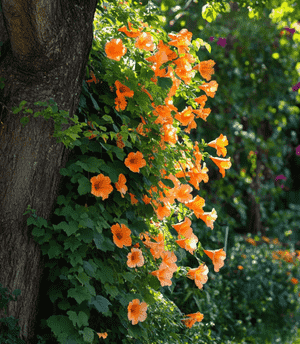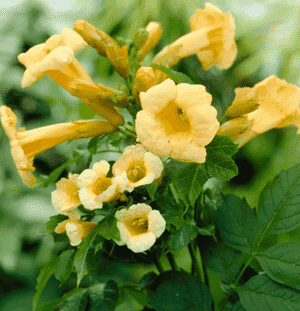
Trumpet creeper(Campsis radicans)

Trumpet creeper (Campsis radicans)

Also known as: Cow itch vine, Trumpet vine

The trumpet vine, also known as Campsis radicans, is a climbing plant native to eastern North America. Its vibrant, trumpet-shaped flowers attract hummingbirds, drawn to the nectar inside.

Attributes of Trumpet creeper

Lifespan
Perennial
Plant Type
Vine
Plant Height
6 m to 12 m
Spread
1.2 m to 3 m
Leaf Color
Green
Flower Size
2.5 cm to 8 cm
Flower Color
Orange Red Yellow

PlantJoy - Identify plants with a snap

Identify and diagnose plants, get toxicity alerts, and explore safety guides for all types of fungi.

Try for Free

Images of Trumpet creeper

Trumpet creeper(Campsis radicans)

Quickly Identify Trumpet creeper

1
Opposite compound leaves with 7-11 elliptic leaflets up to 4 inches long.
2
Red trumpet-shaped flowers in clusters of 4-12, attracting hummingbirds.
3
Elongated bean-like seed capsules that split open, releasing 2-winged seeds for wind dispersal.
4
Trunk with pale brown scaly bark, developing furrowed ridges and grooves over time.
5
Vigorous growth habit with multiple woody stems and small aerial rootlets for adherence.

Scientific Classification of Trumpet creeper

Phylum
Vascular plants
Class
Dicotyledons
Order
Mints plantains olives and allies
Family
Bignonia
Genus
Trumpet vine
Species
Trumpet creeper

Planting and Growing of Trumpet creeper

Care Difficulty
Easy
Watering Schedule
Every 6 days
Sunlight Requirements
Full sun
Sunshine Duration
8-12 hours
Ideal Temperature
65-85℉
Soil Type
Potting Mix, Peat Mix
Soil pH
6-8
Fertilizer Type
Balanced
Pruning Season
Spring, Summer
Pruning Area
Branches, Leaves
Pruning Frequency
2 times a year
Repotting Season
Spring
Pot Type
Plastic, Ceramic

water icon How to Water Trumpet creeper?

When watering Campsis radicans, ensure that the soil is thoroughly soaked, with excess water draining from the bottom of the pot. This vine prefers a generous amount of water that reaches its roots, but make sure not to leave it waterlogged.
What are the symptoms of an underwatered Trumpet creeper?
What should I do if my Trumpet creeper is not getting enough water?
What are the symptoms of an overwatered Trumpet creeper?
How to save an overwatered Trumpet creeper?
More About Watering Techniques

sunlight icon What Are the Sunlight Requirements for Trumpet creeper?

Sunlight Requirements: Full sun, Partial sun
Duration of light: 6 to 8 hours
Campsis radicans ideally benefits from full to partial sun, promoting lush growth and ample flowering. Consistent exposure to this light range ensures vibrant health, robust flowering, and the attraction of pollinators like hummingbirds.
Question: What are the optimal sunlight requirements for Campsis radicans?
Question: How can I ensure my Campsis radicans gets enough sun without damage?
Question: Can partial sun conditions support Campsis radicans growth?
More About Sunlight Requirements Techniques

temperature icon What Is the Ideal Temperature Range for Trumpet creeper?

Ideal Temperature: 65 ~ 85℉
Campsis radicans, commonly known as trumpet vine, prefers warm temperatures for optimal growth. An ideal temperature range of 65°F to 85°F helps facilitate vigorous growth and blooming. These temperatures mimic its natural habitat, providing conditions conducive to robust root and foliage development.

soil icon What Soil is Best for Trumpet creeper?

Soil type: Loam, Sandy loam
Soil PH: 6 ~ 8
Campsis radicans thrives in well-drained soil as it prevents root rot by allowing excess water to escape efficiently. This reduces the risk of disease and ensures healthy growth. Rich soils provide essential nutrients like nitrogen, phosphorus, and potassium. Campsis radicans benefits from these nutrients with robust foliage and vibrant flowers. The soil should retain enough moisture to support the vine's rapid growth without becoming waterlogged. Consistent moisture aids in the development of strong roots and foliage. More About Soil

fertilize icon How to Fertilize Trumpet creeper?

Fertilizer type: Balanced
For Campsis radicans, use a balanced liquid fertilizer at half strength to provide essential nutrients without overwhelming the plant. Apply approximately 1/2 cup of liquid fertilizer solution per square foot of soil. Ensure thorough watering before and after fertilization for optimal absorption. More About Fertilizing Techniques

prune icon How to Prune Trumpet creeper?

Pruning Time: Spring, Summer, Autumn, Winter
Ensure your pruning shears are sharp and clean to make precise cuts without causing damage to the plant. Sharp tools ensure clean cuts and reduce the stress on the plant, promoting quicker healing and reducing infection risks. Campsis radicans can ooze sap when cut, which might be irritating to the skin. It’s advisable to wear gloves and use a tarp underneath to catch the dripping sap, thus keeping your pruning area clean and reducing potential irritation. Post-pruning, always clear away the trimmed plant material and fallen leaves. This helps prevent disease buildup and pest infestation while keeping the garden area tidy and reducing problems associated with decay. More About Pruning Techniques

propagate icon How to Propagate Trumpet creeper plant?

Propagate Time: Spring, Late Spring, Early Summer
1
Collect seeds from mature pods in late autumn. Allow the pods to dry and crack open, then extract the seeds, which should be stored in a cool and dry place until spring.
2
Select healthy, semi-hardwood stems in late spring or early summer. Cut 6-10 inches long sections, removing the lower leaves to prepare them for rooting.
3
Bend a low-growing stem to the ground in early summer. Remove a small section of bark, cover it with soil to promote root growth, and secure it with a peg or rock.
More About Propagating Techniques

repot icon How to Repot Trumpet creeper plant?

Repotting frequency: Every 2-3 years
1
For Campsis radicans, the ideal time to repot is when you notice roots emerging from the drainage holes and the plant showing stunted growth or wilting despite regular watering. Typically, the best season is early to mid-spring when the plant awakens from dormancy and prepares for vigorous growth.
2
Select a pot that is approximately 2 inches larger in diameter than the current one. Ensure it has ample drainage holes to prevent water retention. Opting for a breathable material like terracotta can also aid in oxygenating the roots, promoting healthier growth and preventing root rot.
3
A well-draining potting mix composed predominantly of loamy soil is ideal. This soil mix provides the necessary balance of moisture retention and aeration, which is crucial for Campsis radicans to thrive. Adding some perlite or sand can further enhance drainage, preventing waterlogging.

PlantJoy - Identify plants with a snap

Find the best spots for them to optimize their health, simply using your phone.

Try for Free

Toxicity of Trumpet creeper

Is Trumpet creeper toxic to humans?

Trumpet creeper possesses a mild level of toxicity if its flowers or leaves are consumed. Individuals may experience symptoms such as abdominal discomfort or digestive issues. Additionally, direct contact with the sap of this plant can result in skin irritation. This irritation, also referred to as contact dermatitis, may manifest as redness, swelling, and itching. Instances of poisoning from trumpet creeper are most often due to unintentional contact or accidental ingestion, as these vines are commonly found in gardens.

Is Trumpet creeper toxic to cat?

The trumpet creeper is recognized as a toxic species for cats, emphasizing the need for caution among feline caregivers. If a cat inadvertently consumes any portion of the trumpet creeper, it can lead to poisoning, given that all parts of the plant are deemed harmful. Following ingestion, a cat might show signs of discomfort or illness, yet the exact toxic compounds causing these symptoms remain unidentified. Therefore, it is crucial for cat owners to stay alert, and if their pet exhibits any abnormal behaviors after exposure to trumpet creeper, they should urgently seek professional veterinary assistance.

Is Trumpet creeper toxic to dog?

The trumpet creeper is identified as a toxic plant for dogs. If any part of this plant is consumed, dogs can suffer poisoning, as all its components are deemed poisonous. Ingestion may lead to symptoms such as gastrointestinal disturbances, vomiting, and diarrhea. It is essential for dog owners to closely supervise their pets and restrict their access to trumpet creeper, particularly since dogs may unintentionally consume portions of the plant. If a dog does ingest trumpet creeper, it is critical to obtain prompt veterinary assistance to secure the best possible outcome for the animal.

Identify toxic plants for your safety

Learn which plants are harmful to you and your pets, and make informed choices for a safer home!

Try for Free
WARNING
The judgment on toxicity and danger is for reference only. We DO NOT GUARANTEE any accuracy of such judgment. Therefore, you SHALL NOT rely on such judgment. It is IMPORTANT TO SEEK PROFESSIONAL ADVICE in advance when necessary.
More About Toxic Techniques