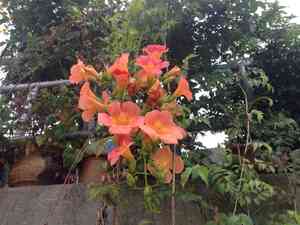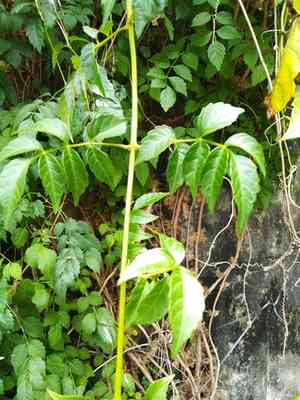
Chinese trumpet creeper(Campsis grandiflora)

Chinese trumpet creeper (Campsis grandiflora)

Also known as: Chinese trumpet Vine

The Chinese Trumpet Creeper (Campsis grandiflora) is a rapidly growing deciduous vine. It features dark green foliage and is renowned for its trumpet-shaped blossoms that appear in the summer. These flowers come in various shades of orange, such as coral, apricot, and true orange. The vine can grow up to 10 meters tall.

Attributes of Chinese trumpet creeper

Lifespan
Perennial
Plant Type
Vine
Plant Height
3 m to 10 m
Spread
1.8 m to 2.5 m
Leaf Color
Green
Flower Size
6 cm to 7 cm
Flower Color
Orange Red Yellow Pink Gold

ForwardPlant - Identify plants with a snap

Identify and diagnose plants, get toxicity alerts, and explore safety guides for all types of fungi.

Try for Free

Images of Chinese trumpet creeper

Chinese trumpet creeper(Campsis grandiflora)

Quickly Identify Chinese trumpet creeper

1
Large leaves persist June-October, providing lush backdrop for showy orange-red trumpet-shaped blooms.
2
Fruits are 3-5 inches long, split open when ripe with 2-winged seeds for wind dispersal.
3
Opposite, pinnately compound leaves with 7-9 elliptic leaflets, 2-4 inches long, coarsely serrate.
4
Flowers in terminal panicles, 6-8 orange-red trumpet-shaped blooms with yellow interiors.
5
Vigorous vine reaching lengths of up to 30 feet, not susceptible to frost damage.

Scientific Classification of Chinese trumpet creeper

Phylum
Vascular plants
Class
Dicotyledons
Order
Mints plantains olives and allies
Family
Bignonia
Genus
Trumpet vine
Species
Chinese trumpet creeper

Planting and Growing of Chinese trumpet creeper

Care Difficulty
Easy
Watering Schedule
Every 8 days
Sunlight Requirements
Full sun
Sunshine Duration
6-10 hours
Ideal Temperature
60-77℉
Soil Type
Potting Mix, Peat Mix
Soil pH
6.5-7.5
Fertilizer Type
Balanced
Pruning Season
Spring, Summer
Pruning Area
Branches, Leaves
Pruning Frequency
2 times a year
Repotting Season
Spring
Pot Type
Plastic, Ceramic

water icon How to Water Chinese trumpet creeper?

Campsis grandiflora, known for its vibrant trumpet-shaped flowers, requires thorough watering. A good rule of thumb is to ensure the soil is saturated but not waterlogged, providing approximately 1000 ml of water per watering session.
What are the symptoms of an underwatered Chinese trumpet creeper?
What should I do if my Chinese trumpet creeper is not getting enough water?
What are the symptoms of an overwatered Chinese trumpet creeper?
How to save an overwatered Chinese trumpet creeper?

sunlight icon What Are the Sunlight Requirements for Chinese trumpet creeper?

Sunlight Requirements: Full sun, Partial sun
Duration of light: 6 to 8 hours
Campsis grandiflora thrives in full sun to partial sun conditions, ideally receiving 6 to 8 hours of sunlight daily. Ample light will ensure robust growth and prolific flowering.
What type of sunlight does Campsis grandiflora prefer?
What is the best location for Campsis grandiflora?
How can you enhance light exposure for Campsis grandiflora that doesn't get enough sun?
More About Sunlight Requirements Techniques

temperature icon What Is the Ideal Temperature Range for Chinese trumpet creeper?

Ideal Temperature: 60 ~ 77℉
Campsis grandiflora thrives best within the temperature range of 60°F to 77°F. These conditions allow for optimal growth, as they mimic the warm and humid climates that the plant is naturally accustomed to. Maintaining these temperatures ensures healthy foliage and vibrant blooms.

soil icon What Soil is Best for Chinese trumpet creeper?

Soil type: Loam, Sandy loam
Soil PH: 6.5 ~ 7.5
Campsis grandiflora thrives in nutrient-rich soil, providing the essential minerals and organic matter for robust growth. A fertile foundation aids in the development of vibrant blooms and lush foliage, with nutrients supporting the plant’s overall health and resilience. Proper drainage is crucial for Campsis grandiflora to prevent waterlogging and root rot. Well-drained soil ensures that excess moisture can escape, protecting the roots and encouraging healthy plant growth. This condition is vital for maintaining a thriving vine. While drainage is important, the soil should retain enough moisture to sustain the plant’s needs. Moisture retentive soil balances hydration, preventing the plant from drying out and supporting its growth during periods of scarce rainfall or dry spells. More About Soil

fertilize icon How to Fertilize Chinese trumpet creeper?

Fertilizer type: Balanced
Campsis grandiflora responds well to moderate amounts of fertilizer, as too much can damage the roots. Generally, for liquid fertilizers, use a diluted concentration of about half the strength recommended on the product label. For solid fertilizers, scatter 50-100 grams per plant around the base, ensuring it is distributed evenly. More About Fertilizing Techniques

prune icon How to Prune Chinese trumpet creeper?

Pruning Time: Spring, Summer, Autumn
Start by cutting away any dead or diseased branches. This prevents the spread of disease and allows sunlight and air to circulate freely. Trim back long, straggly branches to maintain the desired shape of the plant. This not only keeps the plant tidy but encourages denser growth. Cut away excess branches that crowd the plant, particularly those crossing each other. This improves air circulation and reduces the risk of fungal diseases. More About Pruning Techniques

propagate icon How to Propagate Chinese trumpet creeper plant?

Propagate Time: Spring, Early spring, Late spring, Summer
1
Select healthy stems from the parent plant and cut sections roughly 6 inches long. Remove the lower leaves to expose nodes and dip the cut ends in rooting hormone.
2
Insert the cut ends into a well-draining potting mix or a combination of sand and peat moss. Ensure at least two nodes are beneath the surface to encourage root growth.
3
Cover the cuttings with a clear plastic bag or place them in a propagator to retain humidity. Regularly mist the cuttings and keep the environment warm to promote root formation.
More About Propagating Techniques

repot icon How to Repot Chinese trumpet creeper plant?

Repotting frequency: Every 2-3 years
1
Campsis grandiflora needs repotting when growth slows down or when roots circle the pot, indicating cramped space. Ideally, perform this task in spring or autumn to minimize stress and encourage healthier growth and richer flowering.
2
Select a pot with good drainage that is one size larger than the current one. A slightly bigger pot allows for root expansion without overwhelming the plant, ensuring optimum nutrient absorption and stability.
3
Opt for a well-draining loamy soil mix enriched with organic matter. This type of soil allows excess water to escape easily, preventing root rot, and provides essential nutrients for robust plant development.

ForwardPlant - Identify plants with a snap

Find the best spots for them to optimize their health, simply using your phone.

Try for Free

Toxicity of Chinese trumpet creeper

Is Chinese trumpet creeper toxic to humans?

The Chinese trumpet creeper carries a low toxicity risk for humans, potentially triggering allergic reactions. Exposure to any part of the plant, either through direct touch or ingestion, can result in poisoning. The entire plant is deemed toxic, and individuals who come into contact with it may suffer from symptoms such as skin irritation or dermatitis. Ingesting the Chinese trumpet creeper can elicit more serious reactions, including gastrointestinal issues manifested as nausea, vomiting, and diarrhea. Therefore, it is crucial for individuals to exercise caution around the Chinese trumpet creeper, particularly when handling it, to avert accidental poisoning.

Is Chinese trumpet creeper toxic to cat?

The Chinese trumpet creeper presents a moderate toxicity risk to felines, who may come into contact with toxins by touching any section of the plant or inadvertently consuming it. Importantly, every part of the plant has the capacity to inflict harm. Upon exposure, cats might display typical signs of physical distress or illness. As these symptoms could worsen, it is crucial to obtain prompt veterinary assistance to safeguard the health of the affected cat.

Is Chinese trumpet creeper toxic to dog?

The Chinese trumpet creeper presents a mild toxicity hazard to dogs. This plant can poison canines either through direct skin contact or unintentional ingestion. Every part of the plant is toxic, and exposure may result in a range of symptoms in dogs. Dog owners should be alert for potential poisoning indicators, which may encompass gastrointestinal disturbances like vomiting and diarrhea, along with possible dermatitis from skin exposure. In the event that a dog displays any such symptoms after interacting with the Chinese trumpet creeper, it is crucial to obtain prompt veterinary attention to secure the best possible outcome for the pet.

Identify toxic plants for your safety

Learn which plants are harmful to you and your pets, and make informed choices for a safer home!

Try for Free
WARNING
The judgment on toxicity and danger is for reference only. We DO NOT GUARANTEE any accuracy of such judgment. Therefore, you SHALL NOT rely on such judgment. It is IMPORTANT TO SEEK PROFESSIONAL ADVICE in advance when necessary.
More About Toxic Techniques