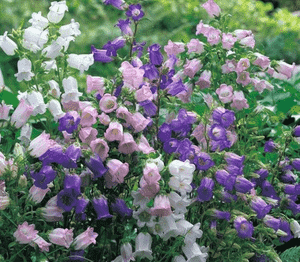
Canterbury bells (Campanula medium)
Also known as: Cup and saucer
The Canterbury bells (*Campanula medium*) have distinctive bell-shaped blooms, which is how they got their name. Originating from Southern Europe, these flowers hold a special place in floriography, symbolizing gratitude and faith. Notably, they were among the flowers cultivated by Thomas Jefferson at his Monticello estate.
In This Article
Attributes of Canterbury bells
Lifespan
Biennial, Perennial, Annual
Plant Type
Herb
Plant Height
10 cm to 1.2 m
Spread
30 cm to 45 cm
Leaf Color
Green
Flower Size
3 cm to 5 cm
Flower Color
White Pink Blue Purple Lavender Violet
Images of Canterbury bells
Quickly Identify Canterbury bells
1
Erect stems 2-3 feet (60-90 cm) tall, reddish-brown with bristly hairs for rough texture.
2
Large, bell-shaped flowers in blue, purple, or white hues, forming a unique cup-and-saucer profile.
3
Distinctly lanceolate to elliptical basal leaves with serrated edges, stalked; upper leaves smaller, sessile.
4
Tall spikes with 2-inch (5 cm) wide bell-shaped blooms in vibrant colors from late spring to mid-summer.
5
Flowers lack strong scent, visually appealing for pollinators, emphasizing bell-like shape.
Scientific Classification of Canterbury bells
Phylum
Vascular plants
Class
Dicotyledons
Order
Asters bellflowers fanflowers and allies
Family
Bellflower
Genus
Bellflowers
Species
Canterbury bells
Planting and Growing of Canterbury bells
Care Difficulty
Moderate
Watering Schedule
Every 4 days
Sunlight Requirements
Partial sun
Sunshine Duration
6-10 hours
Ideal Temperature
60-70℉
Soil Type
Potting Mix, Peat Mix
Soil pH
6.5-7.5
Fertilizer Type
Balanced
Pruning Season
Spring, Summer
Pruning Area
Branches, Leaves
Pruning Frequency
2 times a year
Repotting Season
Spring
Pot Type
Plastic, Ceramic
 How to Water Canterbury bells?
Campanula medium requires a moderate watering regime. Ensure the soil is evenly moist, but not waterlogged. The best practice is to water until the excess begins to drain through the bottom of the pot, ensuring all roots receive hydration.
More About Watering Techniques→
What are the symptoms of an underwatered Canterbury bells?
›
What should I do if my Canterbury bells is not getting enough water?
›
What are the symptoms of an overwatered Canterbury bells?
›
How to save an overwatered Canterbury bells?
›
 What Are the Sunlight Requirements for Canterbury bells?
Ideal light for Campanula medium is partial to full sun, where it receives morning light and afternoon shade. This balance supports robust growth and blooming.
More About Sunlight Requirements Techniques→
How much light does Campanula medium need?
›
How to achieve ideal lighting for Campanula medium?
›
Benefits of ideal lighting for Campanula medium
›
 What Is the Ideal Temperature Range for Canterbury bells?
The ideal temperature range for cultivating Campanula medium, also known as Canterbury Bells, is between 60°F and 70°F. This temperature range is optimal for ensuring the plant has robust growth and produces abundant flowers. At these temperatures, the plant can efficiently photosynthesize and respirate, promoting vigorous foliage and flowering while minimizing stress.
 What Soil is Best for Canterbury bells?
Campanula medium thrives in well-draining soil that prevents waterlogging. This helps the roots to breathe and reduces the risk of root rot, ensuring a healthy growth. Maintaining a soil pH between 6.5 and 7.5 is crucial, as it allows the plant to absorb nutrients effectively. This optimal pH range supports vibrant blooms and lush foliage. Soil should be moderately rich in nutrients to support Campanula medium's growth. A balanced nutrient supply promotes strong stems and an abundance of flowers.
More About Soil→
 How to Fertilize Canterbury bells?
For Campanula medium, the recommended fertilizer dosage is moderate. Apply approximately half the recommended dosage of a balanced 10-10-10 liquid fertilizer every two weeks. Too much fertilizer can harm the plant, while too little might not provide enough nutrients for optimal growth.
More About Fertilizing Techniques→
 How to Prune Canterbury bells?
Begin your pruning session by clearly identifying any dead, diseased, or damaged stems. These can usually be spotted by their brown appearance and lack of foliage. Carefully remove them using sharp, sterile pruning shears to prevent the spread of disease. Trim excess growth to maintain the desired shape of your plant. Focus on creating an open center to enhance air circulation, which helps prevent mildew and pests. Cut back stems to just above a leaf node where needed to encourage outward growth. Regularly deadhead spent flowers to encourage the plant to direct energy towards producing new blooms. Cut the flower stem back to the nearest set of healthy leaves or new buds, ensuring an ongoing display of flowers.
More About Pruning Techniques→
 How to Propagate Canterbury bells plant?
1
Begin with selecting high-quality and viable seeds for propagation. Always choose seeds from reputable suppliers to ensure they are disease-free and capable of germination. Before planting, inspect seeds for any signs of damage or malformations.
2
Prepare a well-draining growing medium, such as a mix of peat and perlite. This medium will provide adequate moisture retention while ensuring optimal drainage, preventing root rot in young seedlings. Fill seed trays with this prepared mixture.
3
After spreading seeds onto the growing medium, lightly cover them with a thin layer of soil. Water gently to avoid dislodging the seeds, ensuring the medium is evenly moist. Maintain moisture with a fine mist spray to support germination.
 How to Repot Canterbury bells plant?
1
Observe Campanula medium for cues like roots protruding from the pot's drainage holes or slowed growth. These signs strongly suggest the plant has outgrown its current container and requires repotting for healthy development.
2
Select a pot that is one size larger than the current one with ample drainage holes. A well-chosen pot prevents waterlogging, promoting healthy root expansion and preventing rot, leading to robust plant growth.
3
Opt for a well-draining potting mix rich in organic matter. This soil type allows sufficient drainage yet retains the moisture needed, providing Campanula medium with balanced hydration for thriving health.
Learn More About Canterbury bells Diseases
Anthracnose
Bacterial Leaf Spot
Bacterial Soft Rot
Bacterial Wilt
Black Spot
Chemical Injury
Crown Gall
Cyst Nematode
Damping-off
Downy Mildew
Drought Stress
Fusarium Wilt
Gray Mold
Leaf Curl
Leaf Spot
Mosaic
Nutrient Deficiency
Nutrient Toxicity
Powdery Mildew
Root Rot
Root-knot Nematode
Rusts
Sooty Mold
Spider Mites
Temperature Stress
Thrips Damage
White Mold



